
Explore This Issue
December 2025About a year ago, I was caring for a patient with a difficult hospital course: fibula free flap reconstruction for a mandibular osteoradionecrosis defect, poor wound healing, and tracheostomy. I visited him to perform an ultrasound study of his microvasculature as part of a novel research study and felt encouraged as I watched the velocity–time curves of his anastomosed vessels and the excellent perfusion of the skin paddle. He was trying to communicate by occluding his tracheostomy, without success. Frustrated, he wrote on his whiteboard: “Why can’t AI solve this?
To me, rebuilding a functional and symmetric mandible from a fibula is one of the most striking examples of surgical ingenuity and master technique. To him, the hospitalization was a reminder of what modern surgery could not restore. In his eyes, the communication barrier underscored a gap: Could our technology meet a human need at the bedside?
The term artificial intelligence itself has become omnipresent during my years in residency. I first heard about ChatGPT during my internship when colleagues were using it to summarize scientific papers for quick interpretation. Since then, nearly everyone I know has folded some form of AI into their daily routine. Even patients often mention it in clinic, as an accessible way to research suspected conditions or ask post-operative questions. WebMD and Dr. Google have morphed into ChatGPT.
Clinician caution around AI usually reflects missing validation and oversight, not necessarily aversion to technology. To capture the skepticism AI sometimes meets, consider this perspective from Eric Gantwerker, MD, a pediatric otolaryngologist at Cohen Children’s Medical Center at Northwell Health: “The AI you use today is the worst AI you will ever use—it gets better by the day, and hallucinations and fake references are much improved from even six months ago. People who avoid AI have often not tried the right tools or adapted them to the proper use case for their workflow.”
From my background in computer science, I realize that these systems generate probabilistic outputs from patterns in data, and that can be useful only when performance is proven in our specific patient populations. In medicine, where decisions must be reproducible and accountable, AI outputs need to be externally validated.
However, even if many models are not fully interpretable, that is acceptable if we have transparent performance metrics, documented failure modes, and clinician oversight. The need for proof is echoed by Ian McCulloh, PhD, Johns Hopkins computer science professor, who frames adoption in concrete terms: “Perhaps the biggest barrier to clinical adoption is the uncertainty over whether AI actually improves patient outcomes or is just a trend. If we expect AI to influence care, measure it like any intervention: prospective trials when feasible, clear benchmarks, and routine monitoring.” He points to a simple “Byrne Test”: When stakes and feasibility warrant, run a randomized trial and treat AI like any other clinical intervention, “the same way we test pharmaceuticals and devices.”
Yet, AI is already showing up in useful, focused ways. AI scribes built into the electronic health record (EHR) can produce notes faster and make note-taking feel less burdensome for clinicians, with early studies reporting time savings and better workflow (JAMA Network Open. doi: 10.1001/jamanetworkopen.2024.60637). Dr. Gantwerker said about EHR integration, “The biggest near-term win is facilitating the patient encounter. Ambient listening technology and point-of-care decision support tools may make our job easier. We all experience burnout from spending too much time charting and information overload from working in the EHR, and I think AI is the solution.”
That perspective is echoed by Murugappan Ramanathan, MD, professor of otolaryngology–head and neck surgery and vice director of clinical operations at Johns Hopkins Health Care and Surgery Center in Bethesda, Md., “The integration of AI scribes into clinic has resulted in more meaningful patient interactions and reduced the documentation burden, much of which occurs after hours, especially in our department. Preliminarily, we have seen that our department faculty have also been able to increase the number of patients seen in a clinic session, as well, which has improved patient access without adding more sessions.”
Inbox help is emerging, too. AI-drafted replies can cut the effort needed to answer patient messages, if teams keep quality checks in place (JAMA Network Open. doi: 10.1001/jamanetworkopen.2024.3201). In head and neck cancer, models that read imaging and pathology can help flag characteristics like extranodal extension; some studies show performance on par with human readers, but most of this work still needs real-world testing before routine use (Laryngoscope.doi.org/10.1002/lary.70194). In laryngology, reviews find promising accuracy for voice-disorder tools, while noting the lack of prospective clinical trials so far (Otolaryngologists Head Neck Surg. doi.org/10.1002/ohn.636). In rhinology, automated CT scoring is moving toward multi-site validation to help standardize how we describe radiologic disease. (Int Forum Allergy Rhinol. doi.org/10.1002/alr.23410).
These tools can ease routine work and improve consistency, even when physician input is required to validate their accuracy. In the surgical training realm, Dr. Gantwerker supports using AI to augment study time and synthesis, using “AI as virtual tutors and for summarizing and synthesizing large amounts of data. Leveraging tools like Google’s NotebookLM can help create study guides, learning podcasts, and multiple-choice questions, and can pull specific data from reference PDFs,” he said. These varied applications have the potential to drastically improve efficiency, even if they do not replace necessary human judgment.
But even with these advancements, that whiteboard question stays with me: “Why can’t AI solve this?” because it reflects both the promise and the limits of these tools.
The limits are most apparent to me in two arenas: the operating room and face-to-face conversations with a patient. The breadth of otolaryngology–head and neck surgery demands improvisation and creativity. This past year, I have spent hours learning how to trace out the end branches of the facial nerve and use the thinnest suture to anastomose arteries and veins. Every operation is individualized, shaped by anatomy, prior treatment, and patient goals, requiring delicate precision that is not yet replicable by a machine. Likewise, in clinic, every patient encounter is sacred: reassuring someone their cancer has not returned, counseling about reconstruction, or offering empathy after bad news. These discussions rely on connection, not computation. For a surgical patient, reassurance comes from a subspecialty expert at the bedside: hands, headlight, endoscope, careful review of imaging, and real listening.
As we think about what “good enough” looks like in deployment, Dr. McCulloh offers a simple threshold: “AI does not need to be perfect. It needs to reliably do better than manual processes replete with human error. Baseline existing decisions and diagnoses against clinician consensus; if AI performs reliably better and removes some human error, we should seriously consider integrating it into practice.”
Thoughtful integration and adoption are critical to its success in clinical practice. As Dr. Ramanathan notes, this means “working with faculty champions within your institution to help make the transition.”
AI will continue to expand its role in medicine. As a resident, I’m part of the first generation of surgeons to enter practice with AI already in the background. It’s not a question of if we will use these tools or if they will replace us, but how responsibly we can integrate them into our clinical and surgical training. Used well, AI may reduce burnout, streamline care, and advance innovative research. But when patients look for guidance, reassurance, and surgical expertise, they are not asking for an algorithm, large language model, or generative output. They are asking for a trusted otolaryngologist.
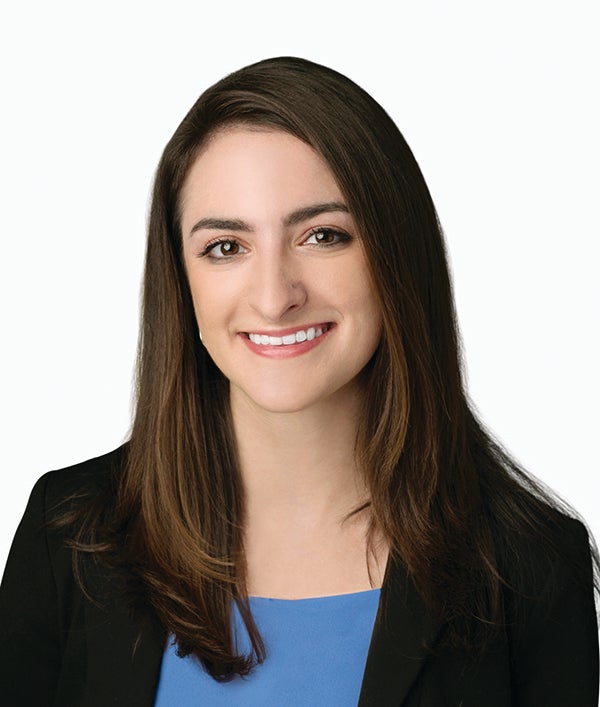
Dr. Berges
Dr. Berges is a PGY-4 resident in the department of otolaryngology–head and neck surgery at Johns Hopkins University in Baltimore and a resident member of the ENTtoday editorial board.
Leave a Reply