
Artificial intelligence (AI) is a topic that simultaneously captures our imagination and provokes hesitation. While its promise is vast, the rapid pace of technological advancement can feel difficult for busy surgeons and educators to follow, let alone integrate meaningfully into daily practice. Yet AI is no longer a distant or theoretical concept. It is already being deployed across healthcare systems, influencing how we deliver care, educate trainees, and select the next generation of physicians.
At the Society of University Otolaryngologists (SUO) Annual Meeting held in Washington, D.C., in November 2025, a panel moderated by Mas Takashima, MD, was convened to offer a pragmatic view of how AI is being implemented across clinical operations and residency training. The discussion focused on three domains of immediate relevance to academic otolaryngology: improving operating room efficiency, leveraging AI-driven data analytics to reduce inpatient readmissions and mortality, and reshaping resident education and selection. While a degree of apprehension toward AI is understandable, the collective experience presented at this panel suggests that thoughtful, incremental adoption can yield meaningful benefits without sacrificing human judgment or professional values.
AI in Otolaryngology Residency Selection: the AAMC–Thalamus Collaboration
The session opened with a discussion on AI in resident selection and featured Ioannis Koutroulis, MD, PhD, associate dean of MD Admissions at George Washington University, speaking on behalf of the Association of American Medical Colleges (AAMC), alongside Alex Thomson, cofounder of Medicratic, the company whose AI platform was later incorporated into Thalamus. Their segment led the panel and focused on how emerging AI tools may reshape residency recruitment.
Otolaryngology residency programs face steadily rising application volumes, intensifying the challenge of performing a thorough, holistic review. Faculty must evaluate academic metrics, personal attributes, letters of recommendation, and institutional fit while balancing clinical responsibilities. During the opening portion of the panel, speakers discussed how AI-assisted review tools are being introduced as decision support systems rather than replacements for human judgment.
The AAMC has partnered with Thalamus to expand access to Cortex, an AI-assisted screening platform designed to organize and structure applicant information. Beginning with the 2026 recruitment cycle, electronic residency application service (ERAS) programs, including all otolaryngology residencies, will have access to these tools without additional cost. This marks the first recruitment season in which AI-supported holistic review may become widely available across the specialty.
Platform Overview
Cortex functions primarily as an information management system. It uses document parsing and natural language processing to extract and organize data from transcripts, personal statements, and letters of recommendation into structured dashboards. Importantly, it does not generate automated rank lists or final decisions. Instead, programs build customized scorecards that reflect their own educational priorities. Multiple reviewers can score applicants using shared rubrics, and the system aggregates evaluations to support consistency across faculty reviewers.
Speakers emphasized that the technology intends to reduce administrative burden and standardize review workflows rather than dictate outcomes. For programs reviewing hundreds of applications, structured filtering and centralized scoring may allow faculty to devote more time to qualitative discussion of promising candidates. In theory, this could strengthen holistic review by enabling deeper engagement rather than superficial screening.
Advantages of AI-Assisted Review
Potential advantages include improved scalability, standardized evaluation frameworks, and analytics that allow programs to assess their recruitment trends over time. Masking selected applicant fields during early review stages may also reduce anchoring bias and encourage competency-based assessment. These features align with broader conversations in medical education about fairness, transparency, and structured decision-making.
Challenges and Considerations
However, the panel also stressed the importance of caution. AI systems inherit the assumptions embedded in their training data and workflow design. Without active auditing, algorithmic tools risk reinforcing existing inequities rather than correcting them. A growing body of literature notes that most AI systems used in residency selection lack long-term bias audits and external validation. Faculty oversight, therefore, remains essential.
Transparency represents another key concern. Applicants may worry that automated tools reduce the human dimension of selection. Speakers emphasized that AI must remain a support mechanism, with final decisions clearly residing in human review. Programs adopting these systems will need to communicate openly about how AI is used and how applicant data is protected.
Finally, the National Resident Matching Program does not incorporate AI into match decisions, underscoring that recruitment tools should guide—not replace—faculty deliberation. Successful implementation will depend less on the technology itself and more on how responsibly institutions integrate it into established educational values.
In this context, AI-assisted screening should be viewed as an evolving infrastructure tool, one that can enhance organization and consistency, but whose ethical and educational implications require continuous oversight. For otolaryngology programs navigating growing applicant pools, the discussion highlighted an emerging reality—AI is entering the recruitment landscape, and its impact will depend on how thoughtfully it is governed.
AI to Improve Operating Room Efficiency
Beyond recruitment, AI is increasingly being applied to operational challenges within academic medical centers. Omar Ahmed, MD, presented Houston Methodist’s experience with Apella, an AI-enabled platform designed to improve operating room (OR) efficiency through real-time workflow visibility and objective data capture.
OR inefficiency remains a persistent challenge, driven by throughput limitations, delays, and reliance on inaccurate electronic health record timestamps. Apella was implemented with three goals: increasing surgical volume without extending block time, identifying sources of delay within the OR, and providing real-time visibility into daily surgical operations.
Unlike traditional retrospective analytics, Apella uses ambient sensing and AI to generate accurate perioperative timestamps. Real-time text notifications allow teams to respond proactively to workflow disruptions as they occur. Following implementation, Houston Methodist observed a 28% reduction in overtime, a 16% decrease in turnover time, and an estimated 40,000 minutes of staff time saved. Importantly, improved OR utilization enabled completion of 33 additional cases per month without expanding block time or operating hours.
These findings highlight the limitations of electronic health record-derived metrics and demonstrate how AI-driven platforms can support scalable improvements in efficiency, staff satisfaction, and sustainability.
Reducing Readmissions and Mortality Through AI Analytics
AI is also being leveraged to address inpatient outcomes. Houston Methodist’s partnership with the Health Data Analytics Institute (HDAI) illustrates how AI-driven risk stratification can identify patients at elevated risk for readmission and mortality. By integrating clinical, demographic, and utilization data, HDAI enables targeted post-discharge interventions rather than uniform care pathways.
Analysis revealed that patients in the highest-risk quintile accounted for approximately 70% of 30-day mortality. Lack of follow-up within the first 14 days post-discharge was associated with worse outcomes, and certain skilled nursing facilities and long-term acute care hospitals demonstrated markedly higher adverse event rates. These insights prompted targeted operational changes, including enhanced follow-up protocols and revised discharge planning.
This experience underscores the potential of AI-enabled analytics to support proactive, data-driven strategies that extend beyond the inpatient setting and improve continuity of care.
Reimagining Resident Education with AI
The panel also explored AI’s role in resident education, emphasizing a shift from passive content consumption toward interactive, personalized learning. Google NotebookLM was presented as an example of how AI can function as a controlled learning assistant grounded in educator-selected source material. The platform analyzes uploaded articles, textbooks, and guidelines, generating summaries and answering questions with direct citations, thus reinforcing evidence-based learning.
Features such as interactive mind maps, contextual chat, flashcards, quizzes, and rapid report generation allow educators to create customizable curricula efficiently. While AI-generated outputs do not replace expert judgment, they provide a powerful framework for enhancing engagement, supporting self-directed learning, and streamlining curriculum development.
Conclusion
Artificial intelligence is no longer speculative in otolaryngology; it is already influencing how we operate, educate, and recruit. The experiences shared at the SUO Annual Meeting demonstrate that, when implemented thoughtfully, AI can enhance efficiency, support fairness, and improve outcomes without diminishing the central role of human expertise. The path forward is not wholesale adoption, but deliberate, principled integration that aligns technology with the core values of academic medicine.
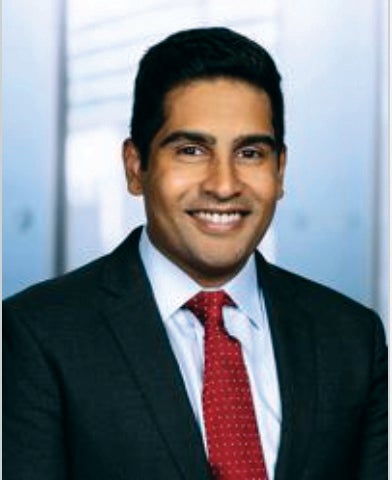
Dr. Ahmed

Dr. Krane
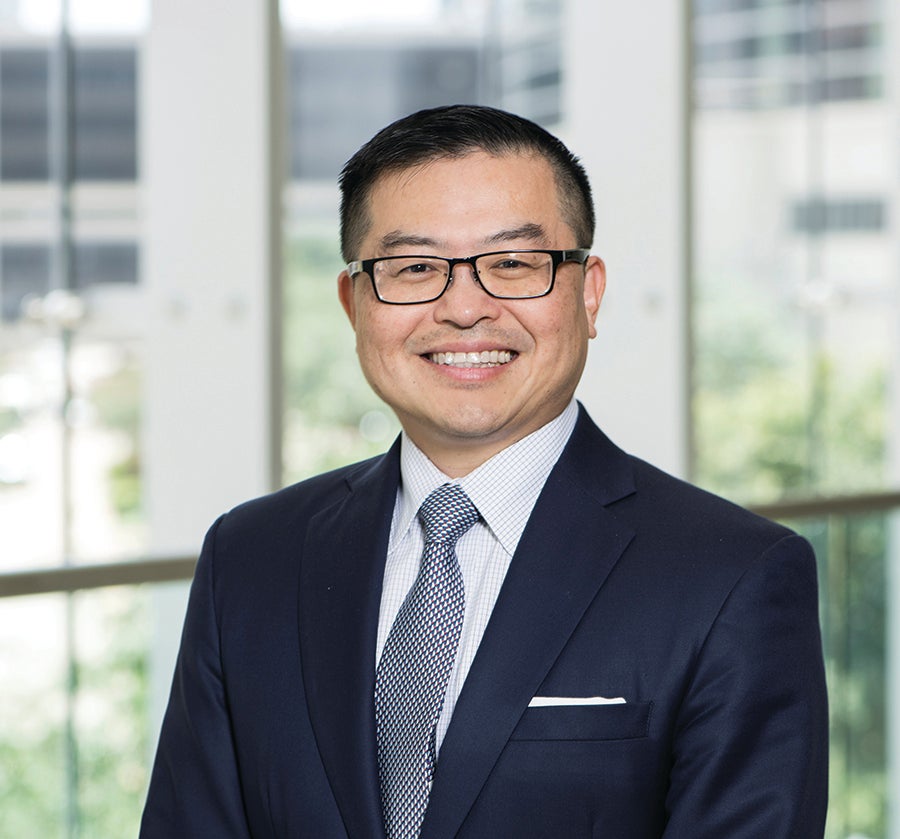
Dr. Tollefson

Dr. Tollefson
Dr. Ahmed is an associate professor in the division of rhinology and skull base surgery and director of clinical research in the department of otolaryngology, head and neck surgery at Houston Methodist Academic Institute at Weill Cornell Medical College in Houston. Dr. Krane is an assistant professor at Oregon Health and Science University in Portland, Ore. Dr. Takashima is chair of the department of otolaryngology at Houston Methodist Academic Institute at Weill Cornell Medical College in Houston. Dr. Tollefson is a professor and director of facial plastic and reconstructive surgery at the University of California–Davis in Sacramento, Calif. He is also director of the UC Davis Cleft and Craniofacial Team, serves on the American Board of Otolaryngology– Head and Neck Surgery board of directors, and is editor-in-chief for Facial Plastic Surgery and Aesthetic Medicine Journal.
Leave a Reply