• Home
  • Practice Focus
    • Facial Plastic/Reconstructive
    • Head and Neck
    • Laryngology
    • Otology/Neurotology
    • Pediatric
    • Rhinology
    • Sleep Medicine
    • How I Do It
    • TRIO Best Practices
  • Business of Medicine
    • Health Policy
    • Legal Matters
    • Practice Management
    • Technology
    • AI
  • Literature Reviews
    • Facial Plastic/Reconstructive
    • Head and Neck
    • Laryngology
    • Otology/Neurotology
    • Pediatric
    • Rhinology
    • Sleep Medicine
  • Career
    • Medical Education
    • Professional Development
    • Resident Focus
  • ENT Perspectives
    • ENT Expressions
    • Everyday Ethics
    • From TRIO
    • The Great Debate
    • Letter From the Editor
    • Rx: Wellness
    • The Voice
    • Viewpoint
    • SUO Corner
  • TRIO Resources
    • Triological Society
    • The Laryngoscope
    • Laryngoscope Investigative Otolaryngology
    • TRIO Combined Sections Meetings
    • COSM
    • Related Otolaryngology Events

© Laryngoscope

September 18, 2016

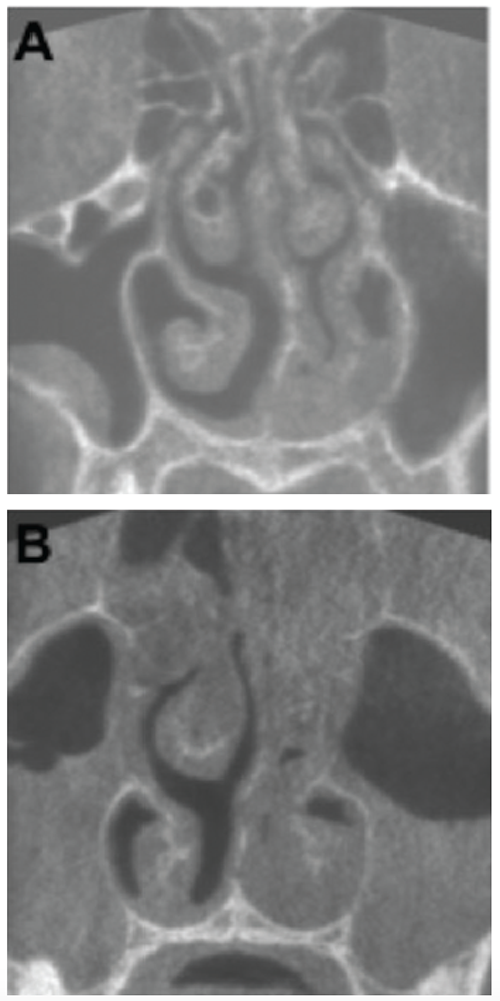
KA) Coronal plane of a CBCT scan from a patient three days after onset of symptoms. Haller cell and concha bullosa are present on the right side, and a cyst is present in the right maxillary sinus. The nasal septum is deviated to the left (19.4°). Both osteomeatal complexes are open, and other paranasal sinus mucosal abnormalities are not present. (B) Coronal plane of a CBCT scan from a patient nine days after onset of symptoms. There are air-liquid levels in the left maxillary sinus and gas bubbles in the right. The patient underwent maxillary sinus aspiration, which was cultured for Haemophilus influenzae.

KA) Coronal plane of a CBCT scan from a patient three days after onset of symptoms. Haller cell and concha bullosa are present on the right side, and a cyst is present in the right maxillary sinus. The nasal septum is deviated to the left (19.4°). Both osteomeatal complexes are open, and other paranasal sinus mucosal abnormalities are not present. (B) Coronal plane of a CBCT scan from a patient nine days after onset of symptoms. There are air-liquid levels in the left maxillary sinus and gas bubbles in the right. The patient underwent maxillary sinus aspiration, which was cultured for Haemophilus influenzae.

ENTtoday - https://www.enttoday.org/article/ars-spread-paranasal-sinuses-omc-obstruction-may-not-etiological-factors-bacterial-ars-development/ent_0916_pg15a/

KA) Coronal plane of a CBCT scan from a patient three days after onset of symptoms. Haller cell and concha bullosa are present on the right side, and a cyst is present in the right maxillary sinus. The nasal septum is deviated to the left (19.4°). Both osteomeatal complexes are open, and other paranasal sinus mucosal abnormalities are not present. (B) Coronal plane of a CBCT scan from a patient nine days after onset of symptoms. There are air-liquid levels in the left maxillary sinus and gas bubbles in the right. The patient underwent maxillary sinus aspiration, which was cultured for Haemophilus influenzae.