
Rural otolaryngology patients experience disparities relative to their urban counterparts. These disparities range from lower rates of tonsillectomies among children with sleep-disordered breathing and longer periods of profound hearing loss before cochlear implantation to greater mortality from head and neck cancer (Otolaryngol Head Neck Surg. doi: 10.1177/0194599821993383; Otol Neurotol. doi: 10.1097/MAO.0000000000001197; Otolaryngol Head Neck Surg. doi: 10.1177/01945998211019278). Reasons for these disparities are multifactorial and are influenced by various socioeconomic factors (Otolaryngol Head Neck Surg. doi: 10.1177/01945998211068822).
While we cannot address all factors that contribute to rural otolaryngology disparities, a potential area we can take ownership of is rural access to otolaryngology care. Unfortunately, a disproportionately low number of otolaryngologists practice in rural settings compared to cities (Laryngoscope. doi: 10.1002/lary.30809). Data indicate this inequity is likely to worsen, with 2.9 otolaryngologists per 100,000 population forecasted to practice in major cities in 2030, while the availability of rural otolaryngologists is forecasted to decline 0.2 to 0.7 per 100,000 (Laryngoscope. doi: 10.1002/lary.30809).
Disparities in rural communities are unlikely to improve and could worsen if the availability of otolaryngologists continues to decline. What then is causing this lack of rural otolaryngologists, and what can be done to address this problem?
Clinical, academic, financial, personal, regional, and training factors all influence where an otolaryngologist practices. We cannot address all factors that influence whether an otolaryngologist chooses to practice in an urban or rural setting. Residency programs can recruit trainees interested in practicing in rural, underserved areas, however. Recruiting some residents interested in rural otolaryngology is a simple, actionable item that residency programs can implement to potentially address this shortage.
Unfortunately, there may be bias in the otolaryngology resident selection process that dissuades programs from matching such applicants. Of particular interest is the standardized letter of recommendation (SLOR), which includes an emphasis on whether an applicant is likely to pursue an academic career. The focus of this commentary is to discuss how the SLOR may be influencing the growing shortage of rural otolaryngologists.
Rural communities require comprehensive otolaryngologists to diagnose, triage, and treat a broad spectrum of pathologies, although the scope of an individual rural otolaryngologist is influenced by the specific needs of the community they serve. A comprehensive rural otolaryngologist may contribute to research by evaluating their clinical experience. Due to logistics often accompanying rural practice and the growing shortage of rural otolaryngologists, however, these surgeons are unlikely to contribute the same degree of time and resources to research as otolaryngologists at urban, academic centers. This is supported by the findings from the 2022 Otolaryngology Workforce Study, where nearly all academic otolaryngologists practiced in urban settings (The 2022 Otolaryngology Workforce. https://tinyurl.com/2mvaczrn). Unfortunately, analysis of the SLOR indicates that the residency selection process may be promoting the recruitment of academic-focused and, therefore, more fellowship-trained and urban-based otolaryngologists instead of the comprehensive otolaryngologists that rural areas need.
In 2012, the SLOR was introduced by the Otolaryngology Program Directors Organization to objectify and simplify the residency application review and selection process (Laryngoscope. doi: 10.1002/lary.23866). The SLOR contains 12 questions, including 10 scale-based questions, and a section for commentary at the end. Most of the questions focus on an applicant’s knowledge, work ethic, interpersonal skills, research, and relationship with the letter writer.
One question, however, promotes discussion about the goals of our current residency selection process: “Commitment to Academic Medicine— Likelihood of pursuing a research/ academic career after residency.” If comprehensive otolaryngologists are needed to care for rural communities, why is it necessary to consider the likelihood that a residency applicant will pursue an academic career when selecting trainees? Is the SLOR encouraging a selection bias against applicants who desire to practice comprehensive otolaryngology?
Multiple studies have evaluated the SLOR. A retrospective analysis of one application cycle indicated responses to scale-based questions were skewed to reflect higher scores and could not differentiate between candidates (Otolaryngol Head Neck Surg. doi: 10.1177/0194599815623525). Another retrospective study indicated there was no correlation between a letter writer’s perception of an applicant’s commitment to academic medicine and their objective application data, including test scores, research, and other experiences (Laryngoscope. doi: 10.1002/ lary.28054). While the SLOR does appear to reduce review time (Laryngoscope. doi: 10.1002/lary.23866) and reduce writer gender bias (Laryngoscope. doi: 10.1002/lary.26619), the previous findings suggest that the SLOR appears to have limited to no utility in differentiating applicants. Furthermore, no analyses of correlations between SLOR scale scores and resident performance or career selection have been conducted. These findings raise questions regarding the continued use of the SLOR, especially the question of highlighting one career track.
Given that the mean commitment to academic medicine was clustered around the 85th percentile on the SLOR responses (Otolaryngol Head Neck Surg. doi: 10.1177/0194599815623525), applicants and/or letter writers could feel pressured to communicate a desire to pursue academic otolaryngology in order to match. We may also be encouraging students and residents to pursue academics and fellowship training over comprehensive otolaryngology. We should be training some otolaryngologists interested in pursuing fellowships, academics, and expanding the field through research. But the purpose of graduate medical education is to train physicians with diverse interests so that all Americans can be served. Thus, training clinically oriented, comprehensive otolaryngologists is equally important to provide equitable patient care throughout the U.S., particularly for underserved rural regions.
If a residency applicant is passionate about bringing care to a rural community, they are unlikely to have an academic-focused career after residency. Thus, an applicant who communicates this desire could yield a “low” mark on this standardized question in the letter of recommendation, which could be detrimental to an applicant, given the overwhelmingly positive rankings observed on scale-based SLOR questions. This raises concern that the otolaryngology residency application process may be biased toward individuals interested in pursuing academic careers while concomitantly selecting against applicants passionate about bringing comprehensive clinical services to rural communities.
We suggest that the process to address the shortage of rural otolaryngologists begin with removing the SLOR question about an applicant’s likelihood of pursuing an academic career. This will allow for the otolaryngology graduate medical education system to cater to all career pathways and the diverse care needs in the U.S. We should not be so focused on training academic otolaryngologists that the importance of comprehensive otolaryngologists is overlooked. Instead, we should recruit residency applicants with diverse career goals to advance the care of all otolaryngology patients.

Dr. Falk
Dr. Falk is a third-year otolaryngology resident at Eastern Virginia Medical School at Old Dominion University in Norfolk, Va.
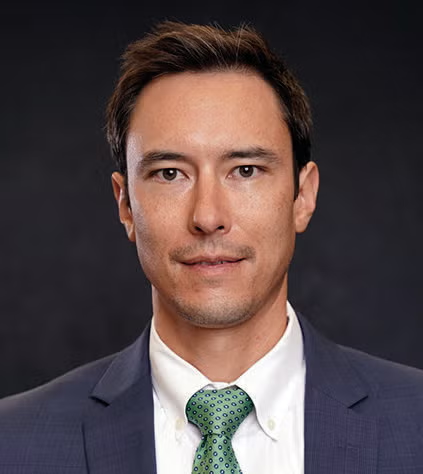
Dr. Mark
Dr. Mark is an associate professor at Eastern Virginia Medical School at Old Dominion University in Norfolk, Va., and the associate program director for its department of otolaryngology residency program.
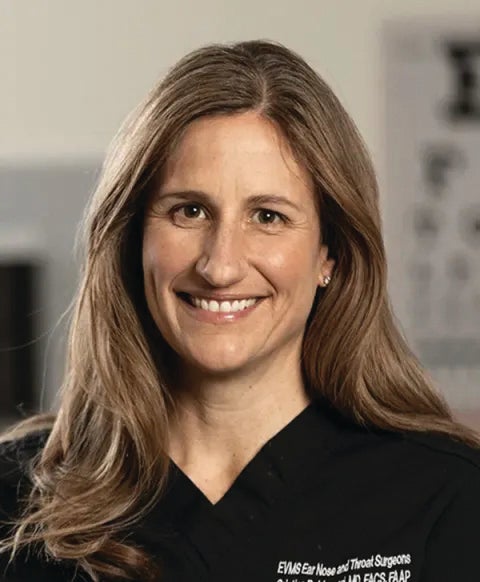
Dr. Baldassari
Dr. Baldassari is a professor at Eastern Virginia Medical School at Old Dominion University’s department of otolaryngology in Norfolk, Va., and vice chair for the department’s research.
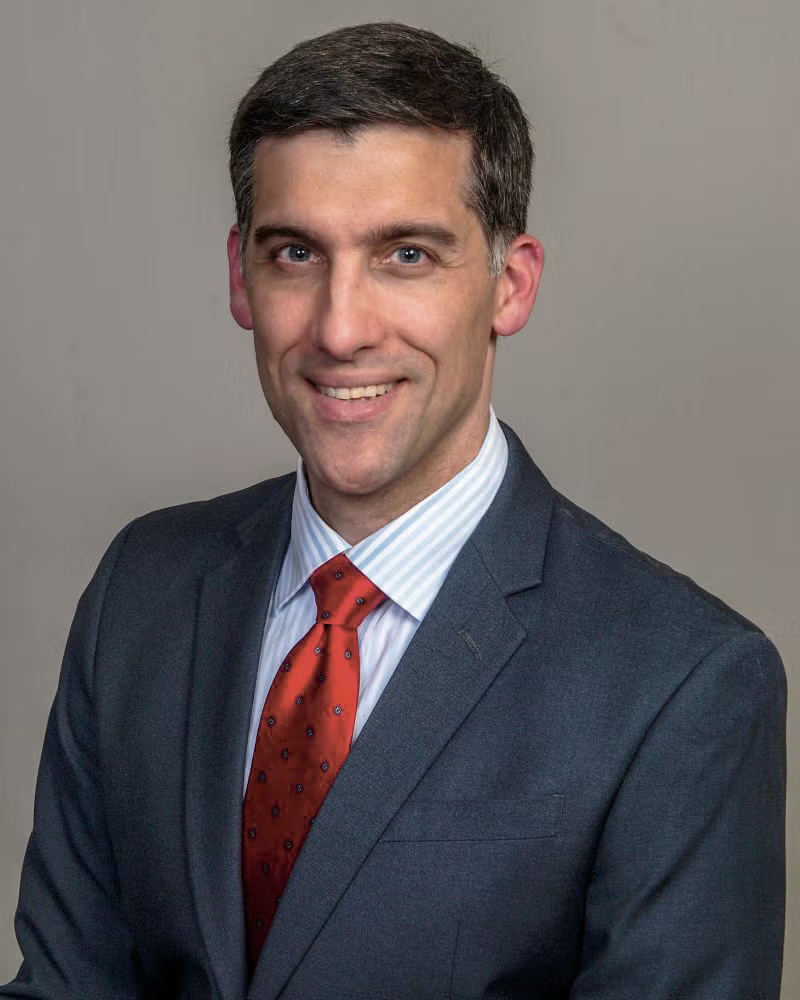
Dr. Tompkins
Dr. Tompkins is an otolaryngologist at Ohio ENT & Allergy Physicians in Columbus, Ohio, and chair of the American Academy of Otolaryngology–Head and Neck Surgery’s workforce task force.
Leave a Reply