• Home
  • Practice Focus
    • Facial Plastic/Reconstructive
    • Head and Neck
    • Laryngology
    • Otology/Neurotology
    • Pediatric
    • Rhinology
    • Sleep Medicine
    • How I Do It
    • TRIO Best Practices
  • Business of Medicine
    • Health Policy
    • Legal Matters
    • Practice Management
    • Technology
    • AI
  • Literature Reviews
    • Facial Plastic/Reconstructive
    • Head and Neck
    • Laryngology
    • Otology/Neurotology
    • Pediatric
    • Rhinology
    • Sleep Medicine
  • Career
    • Medical Education
    • Professional Development
    • Resident Focus
  • ENT Perspectives
    • ENT Expressions
    • Everyday Ethics
    • From TRIO
    • The Great Debate
    • Letter From the Editor
    • Rx: Wellness
    • The Voice
    • Viewpoint
    • SUO Corner
  • TRIO Resources
    • Triological Society
    • The Laryngoscope
    • Laryngoscope Investigative Otolaryngology
    • TRIO Combined Sections Meetings
    • COSM
    • Related Otolaryngology Events

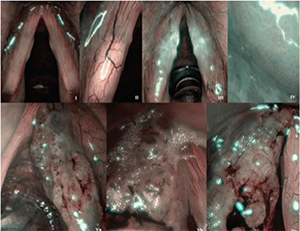
Examples of different Ni classification types applied in studied group of patients. Type I: thin, interconnected vessels. Type II: enlarged vessel diameter. Type III: vascular patterns obscured by white mist. Type IV: small regularly distributed dots. Type Va: solid or hollow thick brown spots with various shapes. Type Vb: destroyed loop, its remnants are visible as line-like shapes. Type Vc: combination of type Va and Vb, irregular distribution.

October 14, 2016

Examples of different Ni classification types applied in studied group of patients. Type I: thin, interconnected vessels. Type II: enlarged vessel diameter. Type III: vascular patterns obscured by white mist. Type IV: small regularly distributed dots. Type Va: solid or hollow thick brown spots with various shapes. Type Vb: destroyed loop, its remnants are visible as line-like shapes. Type Vc: combination of type Va and Vb, irregular distribution.

Examples of different Ni classification types applied in studied group of patients. Type I: thin, interconnected vessels. Type II: enlarged vessel diameter. Type III: vascular patterns obscured by white mist. Type IV: small regularly distributed dots. Type Va: solid or hollow thick brown spots with various shapes. Type Vb: destroyed loop, its remnants are visible as line-like shapes. Type Vc: combination of type Va and Vb, irregular distribution.

ENTtoday - https://www.enttoday.org/article/narrow-band-imaging-improves-observer-reliability/ent_1016_9a/

Examples of different Ni classification types applied in studied group of patients. Type I: thin, interconnected vessels. Type II: enlarged vessel diameter. Type III: vascular patterns obscured by white mist. Type IV: small regularly distributed dots. Type Va: solid or hollow thick brown spots with various shapes. Type Vb: destroyed loop, its remnants are visible as line-like shapes. Type Vc: combination of type Va and Vb, irregular distribution.