• Home
  • Practice Focus
    • Facial Plastic/Reconstructive
    • Head and Neck
    • Laryngology
    • Otology/Neurotology
    • Pediatric
    • Rhinology
    • Sleep Medicine
    • How I Do It
    • TRIO Best Practices
  • Business of Medicine
    • Health Policy
    • Legal Matters
    • Practice Management
    • Technology
    • AI
  • Literature Reviews
    • Facial Plastic/Reconstructive
    • Head and Neck
    • Laryngology
    • Otology/Neurotology
    • Pediatric
    • Rhinology
    • Sleep Medicine
  • Career
    • Medical Education
    • Professional Development
    • Resident Focus
  • ENT Perspectives
    • ENT Expressions
    • Everyday Ethics
    • From TRIO
    • The Great Debate
    • Letter From the Editor
    • Rx: Wellness
    • The Voice
    • Viewpoint
    • SUO Corner
  • TRIO Resources
    • Triological Society
    • The Laryngoscope
    • Laryngoscope Investigative Otolaryngology
    • TRIO Combined Sections Meetings
    • COSM
    • Related Otolaryngology Events

The figure shows how AI can be implemented to support otolaryngology practices. A large amount of data is generated from clinical interactions (e.g., office visits, imaging studies, surgeries, pathology), which can then be used to build machine learning algorithms, which can in turn be used to provide clinical decision support. © Graphic by Selina Zapata Bur

February 6, 2019

The figure shows how AI can be implemented to support otolaryngology practices. A large amount of data is generated from clinical interactions (e.g., office visits, imaging studies, surgeries, pathology), which can then be used to build machine learning algorithms, which can in turn be used to provide clinical decision support. © Graphic by Selina Zapata Bur

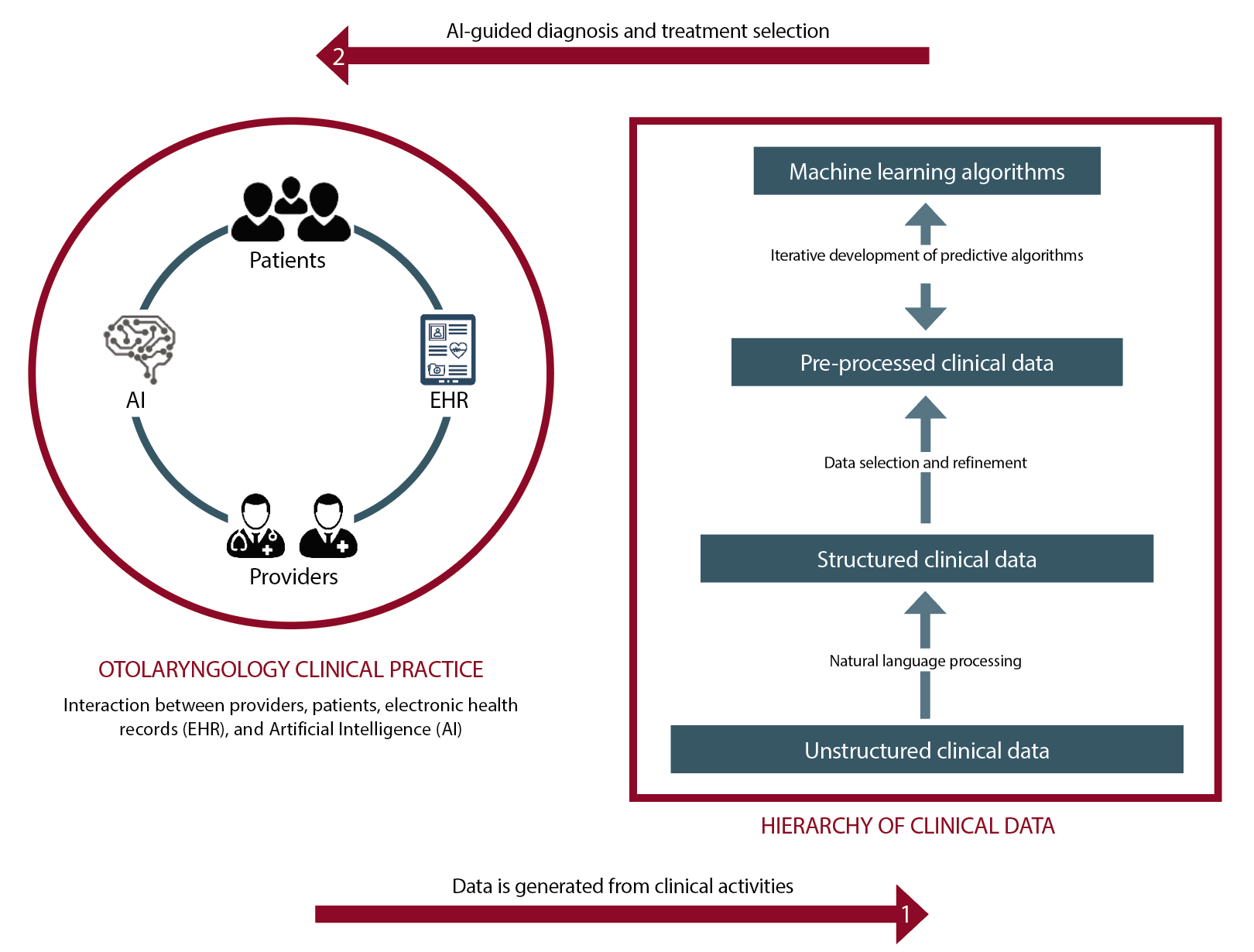
The figure shows how AI can be implemented to support otolaryngology practices. A large amount of data is generated from clinical interactions (e.g., office visits, imaging studies, surgeries, pathology), which can then be used to build machine learning algorithms, which can in turn be used to provide clinical decision support.

© Graphic by Selina Zapata Bur

ENTtoday - https://www.enttoday.org/article/what-enhanced-recovery-after-surgery-protocols-mean-for-otolaryngology/ent_0219_pg27a/

The figure shows how AI can be implemented to support otolaryngology practices. A large amount of data is generated from clinical interactions (e.g., office visits, imaging studies, surgeries, pathology), which can then be used to build machine learning algorithms, which can in turn be used to provide clinical decision support. © Graphic by Selina Zapata Bur