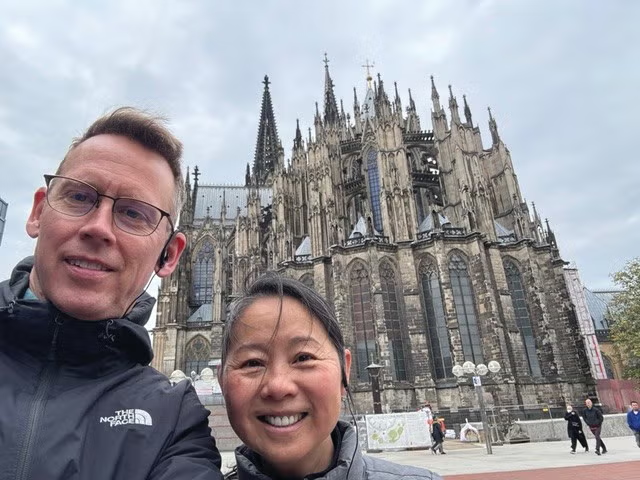
Dr. Wei and husband Dave in Köln.
Once inside the cathedral, I performed a ritual of pressing my palm against the cool, gray stone wall to try and comprehend how this cathedral took more than six centuries to build! The stone was smooth from perhaps millions of hands that had touched it before mine. Standing there, I thought about how different the builders’ concept of time must have been. Each mason worked knowing he would never live to see the spires finished. Their work stretched across generations— patient, faithful, enduring. What it took to build a cathedral like this can be so easily destroyed in a matter of seconds throughout human history, from the tragedy of war and violence.
Explore This Issue
January 2026What a contrast for the world we live in as physicians and surgeons, our daily reality measured and experienced in minutes and hours, with self-imposed and structured deadlines, clinical or otherwise. Racing against the clock and schedules from the operating room, clinics, performance metrics, emails, and countless challenges to fix (not including quality and safety initiatives), just to mitigate our own burnout and optimize our tasks and goals within our complex healthcare systems, amidst the social challenges of the patients that we serve. The training environment and culture in healthcare prize efficiency, productivity, and speed. I cherish such moments in every cathedral visited, where the walls and stones whisper the lesson I needed: Not all work is meant to be completed in our lifetime. Some of the most meaningful contributions are those we begin but never finish. Training future generations of physicians and surgeons, restoring function, improving the quality of, and even saving, lives, means that we sustain humanity even if we never realize our contributions and the impact of what we do daily.
Perhaps well-being and wellness in our modern world begin with reclaiming a different relationship with time—not as something to conquer, but as something to honor.
The Caregiver’s Gaze
Over the final days of the cruise, several passengers made comments to me that were humbling and embarrassing. After boarding a motorcoach for an excursion, as well as during buffet lines for breakfast and dinner, lovely gentlemen and women made similar remarks: “I just want you to know I have been moved watching how you take care of your parents. It’s beautiful how you care for them.” I smiled and thanked them, but I was very surprised. What did they mean? Helping my frail mother, who walks slowly due to both hip fractures that require hardware, but is unable to have a hip replacement due to severe osteoporosis? Ordering for them, as, despite speaking conversational English, they are intimidated by the menus? Constantly making sure no one tripped or fell, and they kept up with the tour groups? Bringing them hot tea when sitting in the lounge before dinner? One passenger explained, “Don’t get me wrong, my kids are good kids, but this would never happen.”
Leave a Reply