• Home
  • Practice Focus
    • Facial Plastic/Reconstructive
    • Head and Neck
    • Laryngology
    • Otology/Neurotology
    • Pediatric
    • Rhinology
    • Sleep Medicine
    • How I Do It
    • TRIO Best Practices
  • Business of Medicine
    • Health Policy
    • Legal Matters
    • Practice Management
    • Tech Talk
    • AI
  • Literature Reviews
    • Facial Plastic/Reconstructive
    • Head and Neck
    • Laryngology
    • Otology/Neurotology
    • Pediatric
    • Rhinology
    • Sleep Medicine
  • Career
    • Medical Education
    • Professional Development
    • Resident Focus
  • ENT Perspectives
    • ENT Expressions
    • Everyday Ethics
    • From TRIO
    • The Great Debate
    • Letter From the Editor
    • Rx: Wellness
    • The Voice
    • Viewpoint
  • TRIO Resources
    • Triological Society
    • The Laryngoscope
    • Laryngoscope Investigative Otolaryngology
    • TRIO Combined Sections Meetings
    • COSM
    • Related Otolaryngology Events
  • Search

What Is a Biosimilar?

by Jennifer Fink • August 16, 2017

  • Tweet
  • Email a link to a friend (Opens in new window) Email
Print-Friendly Version

Results from Europe indicate that biosimilars are generally very safe. “In Europe, patients are switching from a branded biologic directly to a biosimilar and maintaining the same level of disease control without developing safety issues,” Hakim said.

You Might Also Like

  • What Is a Biosimilar?
  • What Otolaryngologists Need to Know about Biologics and Allergic Rhinitis
  • Are Biologics Viable Options for Treating Pediatric Illness?
  • Are New Biologics a Game Changer for Treating Nasal Polyposis?
Explore This Issue
August 2017

What Otolaryngologists Need to Know

Biologics are relatively new within the field of otolaryngology, and, so far, no biosimilars have been FDA approved for otolaryngologic indications. But given the emergence and promise of biologics in the treatment of allergy, asthma, and chronic rhinosinusitis, that may change.

Omalizumab, mepolizumab, and reslizumab are FDA approved for asthma, omalizumab is used to treat severe allergy-related asthma, and mepolizumab and reslizumab are approved for eosinophilic asthma. Benralizumab, an anti-IL-5 receptor alpha antibody, is currently being investigated as a treatment for severe asthma, and dupilumab, an interleukin-4 receptor alpha antagonist, is being evaluated for atopic dermatitis. Nemolizumab, an investigational humanized monoclonal antibody against interleukin-31, is also being investigated for resistant atopic dermatitis.

In the near future, biosimilar use in otolaryngology will likely occur primarily in the areas of allergy and immunology. In Europe, seven of the 31 products that received a positive opinion from the EMA Committee for Medicinal Products for Human Use have an indication for allergic and immune diseases (J Allergy Clin Immunol. 2017;139:1461-1464).

Biologics and biosimilars may also play a role in the treatment of chronic rhinosinusitis. “There are a fair number of biologics that are being tested for chronic rhinosinusitis,” said Stacey Gray, MD, assistant professor of otolaryngology at Harvard Medical School in Boston. “The idea is that, hopefully, this will be helpful for our patients with really recalcitrant chronic rhinosinusitis, but we’re not there yet.” Some small studies have shown potential benefit, but “a lot of the data has not actually been published yet,” Dr. Gray added. Larger, randomized-controlled trials will be necessary to determine the efficacy of biologic—and perhaps biosimilar—treatment for rhinosinusitis.

Interchangeability Is Important

For biosimilars to take off in the U.S., experts say it’s likely that drug manufacturers will have to demonstrate—and the FDA will have to confirm—interchangeability between biosimilars and their reference biologics. (To date, the biosimilars approved in the U.S. have been deemed “highly similar.”)
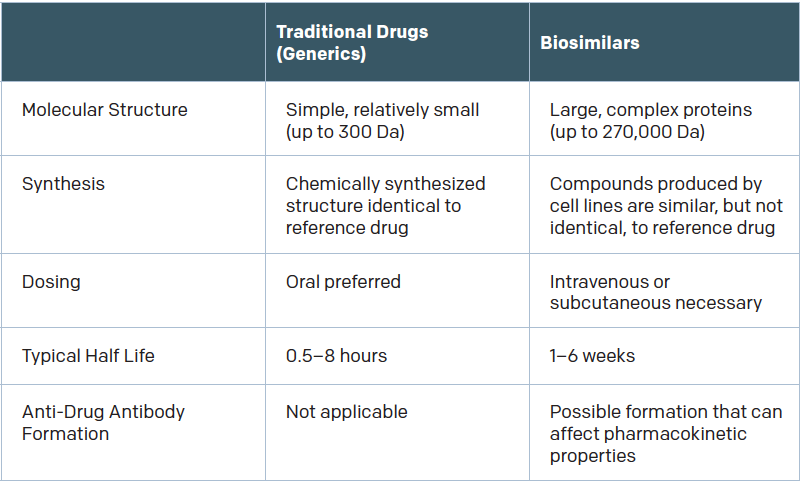
Traditional Generics vs. Biosimilars

(click for larger image) Traditional Generics vs. Biosimilars
Source: Appl Clin Trials. 2014;23:10.

Interchangeability will give both consumers and clinicians the confidence that one product is as effective as the other, and that confidence is necessary to convince people to switch from expensive biologics to likely cheaper biosimilars. In fact, until patients and clinicians are willing to switch to biosimilars, cost savings might not materialize as hoped.

Pages: 1 2 3 4 5 | Single Page

Filed Under: Features, Home Slider Tagged With: biologic drugs, biologics, biosimilar, otolaryngology, pharmaceuticalsIssue: August 2017

You Might Also Like:

  • What Is a Biosimilar?
  • What Otolaryngologists Need to Know about Biologics and Allergic Rhinitis
  • Are Biologics Viable Options for Treating Pediatric Illness?
  • Are New Biologics a Game Changer for Treating Nasal Polyposis?

The Triological SocietyENTtoday is a publication of The Triological Society.

Polls

Has your practice or department been affected by the lack of anesthesiologists?

View Results

Loading ... Loading ...
  • Polls Archive

Top Articles for Residents

  • Applications Open for Resident Members of the ENTtoday Editorial Board
  • A Resident’s View of AI in Otolaryngology
  • Call for Resident Bowl Questions
  • Resident Pearls: Pediatric Otolaryngologists Share Tips for Safer, Smarter Tonsillectomies
  • A Letter to My Younger Self: Making Deliberate Changes Can Help Improve the Sense of Belonging
  • Popular this Week
  • Most Popular
  • Most Recent
    • Bottleneck In the OR: How Anesthesiologist Shortages Threaten Surgical Care
    • Laryngeal Mask Airway Use in Tonsillectomy
    • Some Laryngopharyngeal Reflux Resists PPI Treatment
    • The Dramatic Rise in Tongue Tie and Lip Tie Treatment
    • Office Laryngoscopy Is Not Aerosol Generating When Evaluated by Optical Particle Sizer
    • The Dramatic Rise in Tongue Tie and Lip Tie Treatment
    • Rating Laryngopharyngeal Reflux Severity: How Do Two Common Instruments Compare?
    • Is Middle Ear Pressure Affected by Continuous Positive Airway Pressure Use?
    • Otolaryngologists Are Still Debating the Effectiveness of Tongue Tie Treatment
    • Keeping Watch for Skin Cancers on the Head and Neck
    • Applications Open for Resident Members of the ENTtoday Editorial Board
    • Bottleneck In the OR: How Anesthesiologist Shortages Threaten Surgical Care
    • Onboarding and Working with APPs
    • Evaluating Treatment Patterns in Bell’s Palsy Using Nationwide Employer- Sponsored Healthcare Claims
    • Randomized Trials Comparing Inferior Turbinoplasty Techniques for Nasal Obstruction

Follow Us

  • Contact Us
  • About Us
  • Advertise
  • The Triological Society
  • The Laryngoscope
  • Laryngoscope Investigative Otolaryngology
  • Privacy Policy
  • Terms of Use
  • Cookies

Wiley

Copyright © 2026 by John Wiley & Sons, Inc. All rights reserved, including rights for text and data mining and training of artificial technologies or similar technologies. ISSN 1559-4939