• Home
  • Practice Focus
    • Facial Plastic/Reconstructive
    • Head and Neck
    • Laryngology
    • Otology/Neurotology
    • Pediatric
    • Rhinology
    • Sleep Medicine
    • How I Do It
    • TRIO Best Practices
  • Business of Medicine
    • Health Policy
    • Legal Matters
    • Practice Management
    • Tech Talk
    • AI
  • Literature Reviews
    • Facial Plastic/Reconstructive
    • Head and Neck
    • Laryngology
    • Otology/Neurotology
    • Pediatric
    • Rhinology
    • Sleep Medicine
  • Career
    • Medical Education
    • Professional Development
    • Resident Focus
  • ENT Perspectives
    • ENT Expressions
    • Everyday Ethics
    • From TRIO
    • The Great Debate
    • Letter From the Editor
    • Rx: Wellness
    • The Voice
    • Viewpoint
  • TRIO Resources
    • Triological Society
    • The Laryngoscope
    • Laryngoscope Investigative Otolaryngology
    • TRIO Combined Sections Meetings
    • COSM
    • Related Otolaryngology Events
  • Search

How To: Endoscopic Anterior and Posterior Cricoid Split for Bilateral Vocal Fold Paralysis

by Nicola M. Pereira, BA, and Vikash K. Modi, MD • November 18, 2021

  • Tweet
  • Click to email a link to a friend (Opens in new window) Email
Print-Friendly Version

INTRODUCTION

Bilateral vocal fold paralysis (BVFP) is an uncommon congenital anomaly resulting from disruption of the nerve supply to the muscles of the larynx that typically presents at birth with upper airway symptoms such as stridor, chronic respiratory insufficiency, dysphagia, and respiratory distress. The etiology of this condition varies; while most cases are idiopathic, BVFP can also be the result of injury related to cardiac procedures, neurogenic disease, birth trauma, or other causes (Otolaryngol Clin North Am. 2008;41:889-901). Congenital BVFP reportedly accounts for 30% to 62% of cases of pediatric vocal cord paralysis, and can be associated with substantial upper airway obstruction requiring urgent surgical intervention in 50% of patients (Otolaryngol Head Neck Surg. 2002;126:349-355).

You Might Also Like

  • How To: Balloon-Assisted Rib Graft Placement in Endoscopic Posterior Cricoid Split Procedure
  • How To: Endoscopic Posterior Rotation Flap for Posterior Glottic Insufficiency
  • BVFP Patients Achieve Bilateral Fold Movements with Selective Laryngeal Reinnervation
  • AAO-HNSF 2012: Challenging Vocal Fold Paralysis Cases
Explore This Issue
November 2021

Historically, congenital BVFP was managed with tracheostomy to secure a stable airway and subsequent expectant management in anticipation of spontaneous resolution of the condition. Though previous studies of children with BVFP have shown that the majority of patients undergo tracheostomy for initial management of this condition, it is important to note that tracheostomy is a procedure associated with high morbidity and mortality, and should be avoided if possible (Int J Pediatr Otorhinolaryngol. 2020;138:110325). More recent studies have identified congenital BVFP management methods that succeed at securing airway patency while avoiding the need for a tracheostomy. These procedures include, but are not limited to, cricothyroid botox injection, vocal cord lateralization, arytenoidectomy, cordotomy, and, more recently, endoscopic anterior–posterior cricoid split (EAPCS) (Otolaryngol Head Neck Surg. 2002;126:349-355; Int J Pediatr Otorhinolaryngol. 2020;138:110325) (Figure 1).
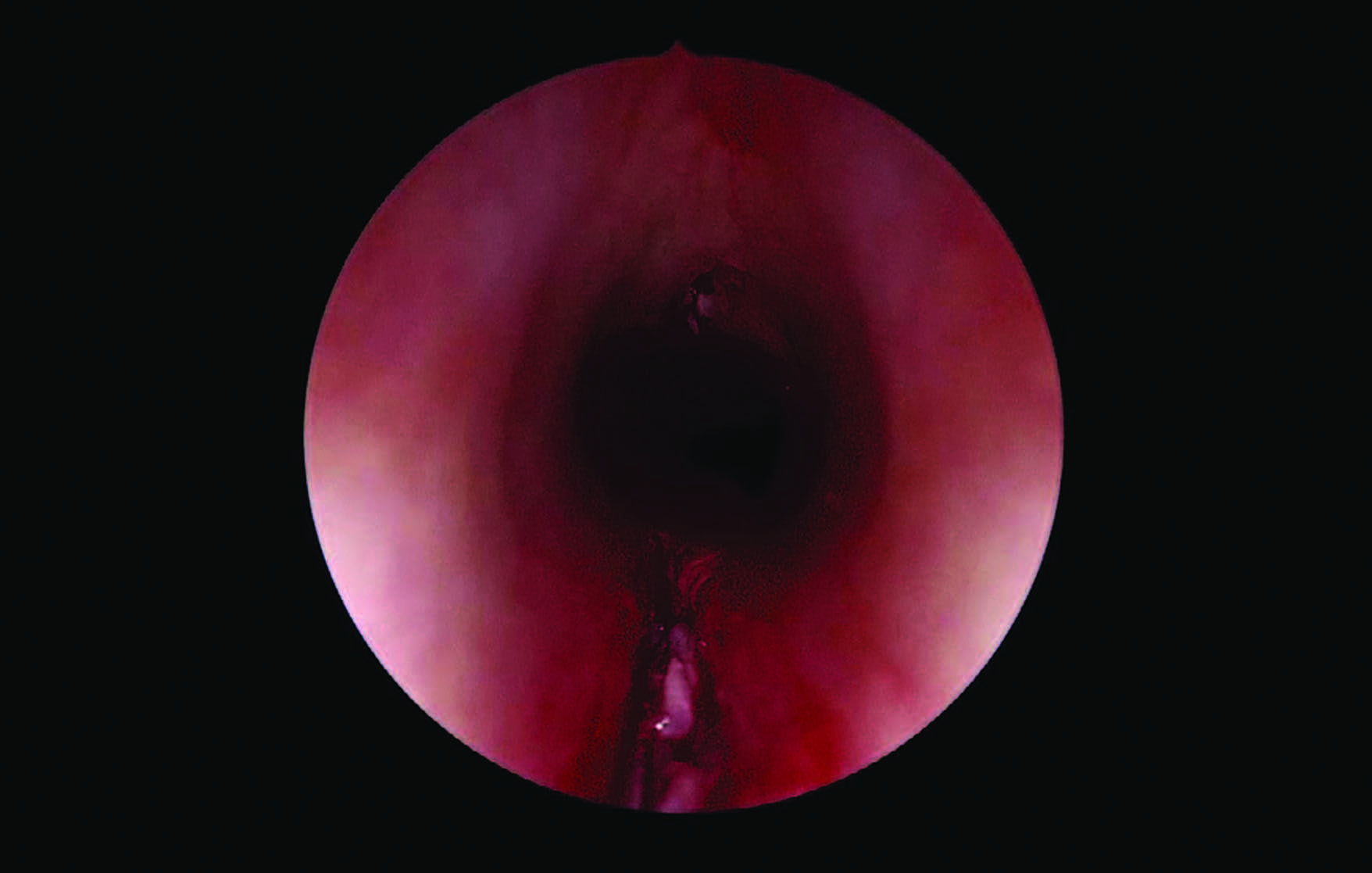
Figure 1. Zero degree Hopkins rod telescope demonstrating endoscopic anterior and posterior cricoid split. PEREIRA NM, MODI VK. LARYNGOSCOPE. DOI:10.1002/LARY.29752

While the aforementioned procedures have all been described with variable success, EAPCS has emerged as an alternative that is nondestructive and can offer a long-lasting solution to congenital BVFP while avoiding tracheostomy and minimizing the risks associated with other procedures (Int J Pediatr Otorhinolaryngol. 2020;138:110325; Laryngoscope. 2018;128:257-263). In 2017, Rutter and colleagues published a review of 19 patients who underwent EAPCS for congenital BVFP, 84% of whom were able to avoid the need for tracheostomy (Laryngoscope. 2018;128:257-263). Subsequently, Windsor and Jacobs described a series of six patients who underwent EAPCS with balloon dilation for congenital BVFP, 50% of whom were able to avoid the need for tracheostomy entirely, suggesting that EAPCS is effective in improving airway symptoms in a number of patients with this condition (Int J Pediatr Otorhinolaryngol. 2020;138:110325).

Pages: 1 2 | Single Page

Filed Under: Departments, How I Do It, Laryngology Tagged With: clinical risks, treatmentIssue: November 2021

You Might Also Like:

  • How To: Balloon-Assisted Rib Graft Placement in Endoscopic Posterior Cricoid Split Procedure
  • How To: Endoscopic Posterior Rotation Flap for Posterior Glottic Insufficiency
  • BVFP Patients Achieve Bilateral Fold Movements with Selective Laryngeal Reinnervation
  • AAO-HNSF 2012: Challenging Vocal Fold Paralysis Cases

The Triological SocietyENTtoday is a publication of The Triological Society.

Polls

Has experience as a patient influenced your professional development or demeanor?

View Results

Loading ... Loading ...
  • Polls Archive

Top Articles for Residents

  • A Resident’s View of AI in Otolaryngology
  • Call for Resident Bowl Questions
  • Resident Pearls: Pediatric Otolaryngologists Share Tips for Safer, Smarter Tonsillectomies
  • A Letter to My Younger Self: Making Deliberate Changes Can Help Improve the Sense of Belonging
  • ENTtoday Welcomes Resident Editorial Board Members
  • Popular this Week
  • Most Popular
  • Most Recent
    • The Path to Department Chair: Arriving and Thriving

    • How Audiologists and Researchers Are Shaping Military Hearing Health Practices

    • Office Laryngoscopy Is Not Aerosol Generating When Evaluated by Optical Particle Sizer

    • Rewriting the Rules of Rhinosinusitis

    • Top 10 LARY and LIO Articles of 2024

    • The Dramatic Rise in Tongue Tie and Lip Tie Treatment

    • Rating Laryngopharyngeal Reflux Severity: How Do Two Common Instruments Compare?

    • Is Middle Ear Pressure Affected by Continuous Positive Airway Pressure Use?

    • Otolaryngologists Are Still Debating the Effectiveness of Tongue Tie Treatment

    • Keeping Watch for Skin Cancers on the Head and Neck

    • Why So Loud? Rethinking the Volume of Our Everyday Experiences
    • How Audiologists and Researchers Are Shaping Military Hearing Health Practices
    • A Case for Endoscopic Surgery: How Personal Experience Influenced Pursuit of a New Skill
    • The Path to Department Chair: Arriving and Thriving
    • Rewriting the Rules of Rhinosinusitis

Follow Us

  • Contact Us
  • About Us
  • Advertise
  • The Triological Society
  • The Laryngoscope
  • Laryngoscope Investigative Otolaryngology
  • Privacy Policy
  • Terms of Use
  • Cookies

Wiley

Copyright © 2026 by John Wiley & Sons, Inc. All rights reserved, including rights for text and data mining and training of artificial technologies or similar technologies. ISSN 1559-4939