• Home
  • Practice Focus
    • Facial Plastic/Reconstructive
    • Head and Neck
    • Laryngology
    • Otology/Neurotology
    • Pediatric
    • Rhinology
    • Sleep Medicine
    • How I Do It
    • TRIO Best Practices
  • Business of Medicine
    • Health Policy
    • Legal Matters
    • Practice Management
    • Tech Talk
    • AI
  • Literature Reviews
    • Facial Plastic/Reconstructive
    • Head and Neck
    • Laryngology
    • Otology/Neurotology
    • Pediatric
    • Rhinology
    • Sleep Medicine
  • Career
    • Medical Education
    • Professional Development
    • Resident Focus
  • ENT Perspectives
    • ENT Expressions
    • Everyday Ethics
    • From TRIO
    • The Great Debate
    • Letter From the Editor
    • Rx: Wellness
    • The Voice
    • Viewpoint
  • TRIO Resources
    • Triological Society
    • The Laryngoscope
    • Laryngoscope Investigative Otolaryngology
    • TRIO Combined Sections Meetings
    • COSM
    • Related Otolaryngology Events
  • Search

An Important Warning Label We Are Missing

by Ali Ahmadizadeh, MD • December 19, 2025

  • Tweet
  • Click to email a link to a friend (Opens in new window) Email
Print-Friendly Version

Mobile devices are now an indispensable part of daily life. Their impact on how we work, socialize, and access information is undeniable. Ray Kurzweil, a prominent computer scientist and innovator, has even described the smartphone as “an extension of our brain,” and for many adults, that feels accurate.

You Might Also Like

  • Making Decisions on When to Use Off-Label Drugs
  • Medical Device Misuse vs. Off-Label Practice
  • Ethical Considerations in Off-Label Drug Prescribing
  • Mobile Computing Can Revolutionize Health Care

As physicians, however, we are trained to pair enthusiasm for innovation with vigilance about side effects. Every powerful intervention carries potential harm, and our responsibility is to recognize and mitigate that harm, especially for children.

Over the last decade, a growing body of evidence has made one thing increasingly clear: While mobile devices have transformed adult life in many positive ways, the risks they pose to young children, particularly in early childhood, may now outweigh the benefits. One of the most disturbing new normal scenes I witness, both in public and in my clinic, is parents arriving with children as young as two years old who are kept silent and motionless by a mobile device placed in their hands. Of course, most parents are not acting with malice. They are doing their best in a demanding world, often without clear guidance, and using a tool that is powerfully designed to hold a child’s attention. But when soothing a toddler repeatedly defaults to handing over a device, it displaces crucial experiences: face-to-face interaction, language exposure, sensory exploration, and unstructured play. In this sense, we may be unintentionally tolerating a new form of developmental neglect in the name of convenience and quiet, at a stage of life when the brain is most plastic and most dependent on rich, real-world input.
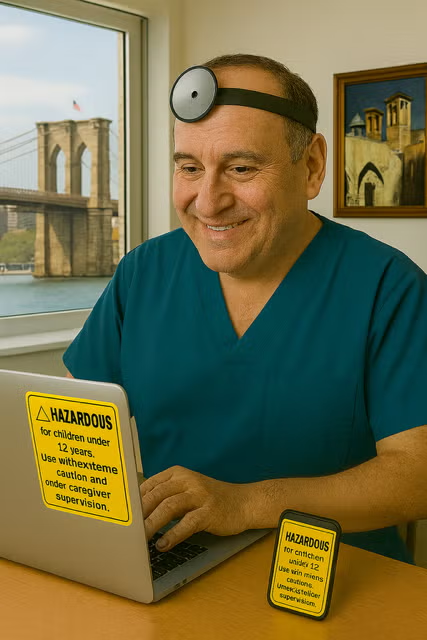
Given the strength of the guidelines and the emerging research, I believe our medical societies, and in particular the American Medical Association (AMA), in partnership with pediatric organizations, are well-positioned to advocate for a simple but powerful intervention: A mandatory label on all mobile devices stating: “Hazardous for children under 12 years. Use with extreme caution and under caregiver supervision.”

This would not criminalize parents or ban devices. Instead, it would function like warning labels on cigarettes, alcohol, or certain medications: A clear, visible reminder that these products, while useful for adults, carry special risks for developing brains. Such a label could signal to parents that early screen exposure is a serious health issue, not just a lifestyle preference. It can also encourage pediatricians and family physicians to discuss family media plans, alongside vaccines and nutrition, during routine visits. And eventually support policymakers and educators in setting age-appropriate norms for device use in homes, childcare settings, and schools.

We often speak about raising “the next generation with excellence.” That aspiration must extend beyond academic achievement to the architecture of the environments in which children grow. The evidence is now strong enough to move from quiet concern to visible warning. A simple label on mobile devices would be a modest but meaningful step in aligning our technology with our duty to protect children’s development. As physicians, it is time for us to say clearly: smartphones and tablets are powerful tools for adults, but for young children, they deserve the same level of caution we apply to any potent intervention.

Dr. Ahmadizadeh is an otolaryngologist and assistant professor in the department of otolaryngology at Northwell Health in New Hyde Park, N.Y.


Filed Under: Articles, ENT Expressions, ENT Perspectives Tagged With: ENT Expressions

You Might Also Like:

  • Making Decisions on When to Use Off-Label Drugs
  • Medical Device Misuse vs. Off-Label Practice
  • Ethical Considerations in Off-Label Drug Prescribing
  • Mobile Computing Can Revolutionize Health Care

Leave a Reply Cancel reply

Your email address will not be published. Required fields are marked *

The Triological SocietyENTtoday is a publication of The Triological Society.

Polls

Do you use TXA to reduce intraoperative and post-op bleeding?

View Results

Loading ... Loading ...
  • Polls Archive

Top Articles for Residents

  • A Resident’s View of AI in Otolaryngology
  • Call for Resident Bowl Questions
  • Resident Pearls: Pediatric Otolaryngologists Share Tips for Safer, Smarter Tonsillectomies
  • A Letter to My Younger Self: Making Deliberate Changes Can Help Improve the Sense of Belonging
  • ENTtoday Welcomes Resident Editorial Board Members
  • Popular this Week
  • Most Popular
  • Most Recent
    • Growing Use of Tranexamic Acid in Otolaryngology

    • CMS’ New Rule Aims to Streamline the Prior Authorization Process

    • Resident Pearls: Pediatric Otolaryngologists Share Tips for Safer, Smarter Tonsillectomies

    • Office Laryngoscopy Is Not Aerosol Generating When Evaluated by Optical Particle Sizer

    • Empty Nose Syndrome: Physiological, Psychological, or Perhaps a Little of Both?

    • The Dramatic Rise in Tongue Tie and Lip Tie Treatment

    • Rating Laryngopharyngeal Reflux Severity: How Do Two Common Instruments Compare?

    • Is Middle Ear Pressure Affected by Continuous Positive Airway Pressure Use?

    • Otolaryngologists Are Still Debating the Effectiveness of Tongue Tie Treatment

    • Keeping Watch for Skin Cancers on the Head and Neck

    • An Important Warning Label We Are Missing
    • Growing Use of Tranexamic Acid in Otolaryngology
    • Reconnect, Recharge, Relax, and Choose Joy This Season
    • A Resident’s View of AI in Otolaryngology
    • Faculty Mentorship of Academic Surgeons

Follow Us

  • Contact Us
  • About Us
  • Advertise
  • The Triological Society
  • The Laryngoscope
  • Laryngoscope Investigative Otolaryngology
  • Privacy Policy
  • Terms of Use
  • Cookies

Wiley

Copyright © 2025 by John Wiley & Sons, Inc. All rights reserved, including rights for text and data mining and training of artificial technologies or similar technologies. ISSN 1559-4939