• Home
  • Practice Focus
    • Facial Plastic/Reconstructive
    • Head and Neck
    • Laryngology
    • Otology/Neurotology
    • Pediatric
    • Rhinology
    • Sleep Medicine
    • How I Do It
    • TRIO Best Practices
  • Business of Medicine
    • Health Policy
    • Legal Matters
    • Practice Management
    • Technology
    • AI
  • Literature Reviews
    • Facial Plastic/Reconstructive
    • Head and Neck
    • Laryngology
    • Otology/Neurotology
    • Pediatric
    • Rhinology
    • Sleep Medicine
  • Career
    • Medical Education
    • Professional Development
    • Resident Focus
  • ENT Perspectives
    • ENT Expressions
    • Everyday Ethics
    • From TRIO
    • The Great Debate
    • Letter From the Editor
    • Rx: Wellness
    • The Voice
    • Viewpoint
    • SUO Corner
  • TRIO Resources
    • Triological Society
    • The Laryngoscope
    • Laryngoscope Investigative Otolaryngology
    • TRIO Combined Sections Meetings
    • COSM
    • Related Otolaryngology Events
  • Home
  • Practice Focus
    • Facial Plastic/Reconstructive
    • Head and Neck
    • Laryngology
    • Otology/Neurotology
    • Pediatric
    • Rhinology
    • Sleep Medicine
    • How I Do It
    • TRIO Best Practices
  • Business of Medicine
    • Health Policy
    • Legal Matters
    • Practice Management
    • Technology
    • AI
  • Literature Reviews
    • Facial Plastic/Reconstructive
    • Head and Neck
    • Laryngology
    • Otology/Neurotology
    • Pediatric
    • Rhinology
    • Sleep Medicine
  • Career
    • Medical Education
    • Professional Development
    • Resident Focus
  • ENT Perspectives
    • ENT Expressions
    • Everyday Ethics
    • From TRIO
    • The Great Debate
    • Letter From the Editor
    • Rx: Wellness
    • The Voice
    • Viewpoint
    • SUO Corner
  • TRIO Resources
    • Triological Society
    • The Laryngoscope
    • Laryngoscope Investigative Otolaryngology
    • TRIO Combined Sections Meetings
    • COSM
    • Related Otolaryngology Events
  • Search

An Otolaryngologic Quandary: Diagnosis and Treatment of Pain Syndromes of the Head and Neck

by Nierengarten, Mary Beth • December 1, 2009

  • Tweet
  • Email a link to a friend (Opens in new window) Email
Print-Friendly Version

It is important not to throw antibiotics at every inflammatory condition in the oropharynx just in case the cause may be bacterial, he said.

You Might Also Like

  • Voice and Airway Presentations of Patients with Chronic Pain Syndromes Are Clinically Indistinguishable
  • Acupuncture May Improve Pain and Xerostomia After Head and Neck Cancer Surgery
  • Wrong Diagnosis of Sinus Headache Can Lead to Inappropriate Treatment
  • New Treatment for Head and Neck Cancer Means Longer-Lasting Toxicity
Explore This Issue
December 2009

Trauma can also cause oropharyngeal pain, either by ingesting foreign bodies such as fish bones or by a blunt or penetrating (eg, knife or gunshot wound) trauma to the neck. Because a foreign body like a fish bone can scratch the pharyngeal muscosa long after the bone leaves the body, scanning is needed to show persistence or absence of the bone, said Dr. Donald.
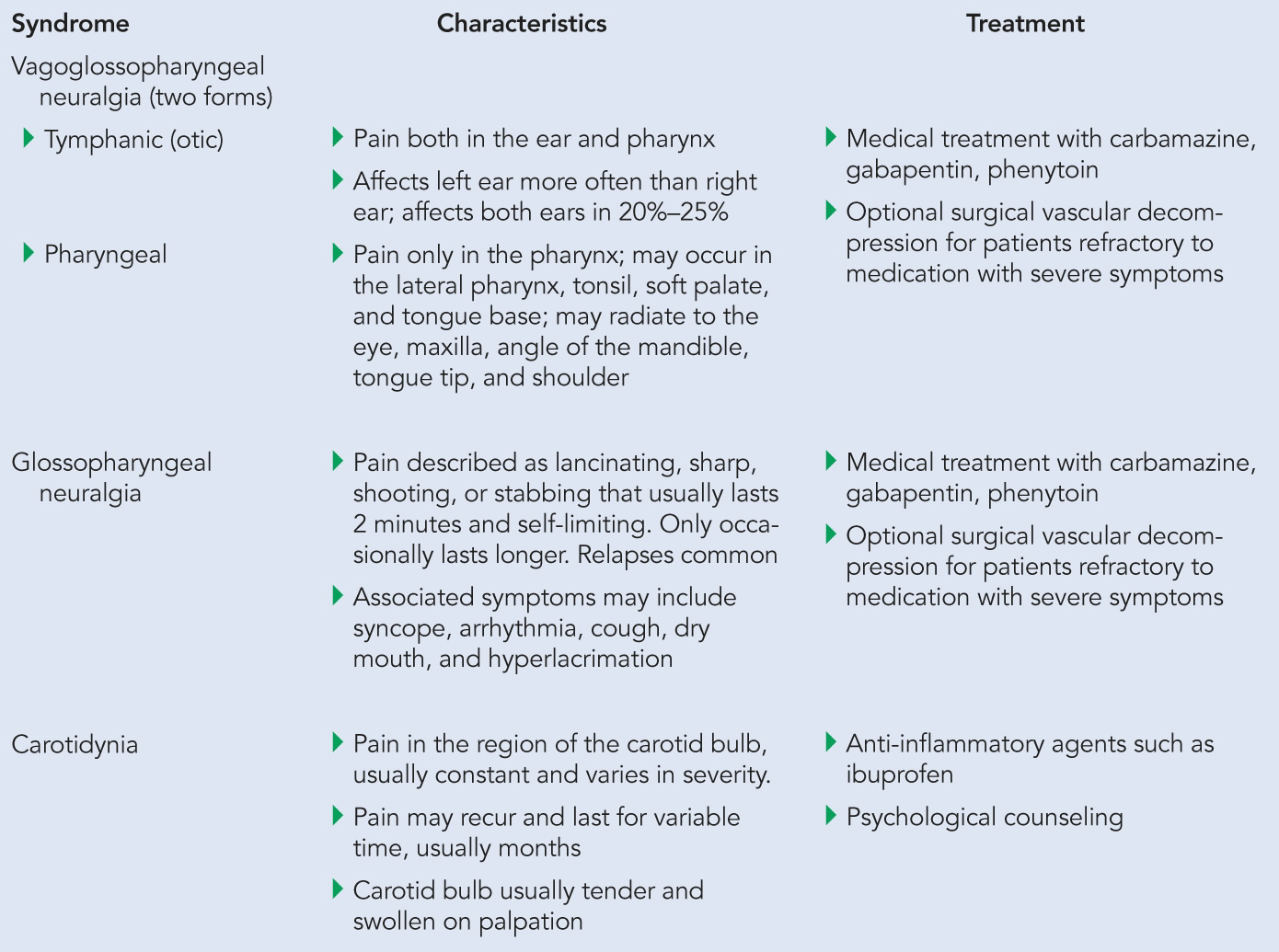
Table 2. Syndromes Causing Oropharyngeal Pain

click for large version
Table 2. Syndromes Causing Oropharyngeal Pain

Oropharyngeal pain that arises from cancer of the oropharynx will cause pain, especially when the cancer becomes ulcerated. Often the only symptom of cancer in this region will be ear pain arising from the Arnold’s and Jacobsen’s nerves.

Table 2 lists the various syndromes causing oropharyngeal pain and their distinguishing features.

One final syndrome that, according to Dr. Donald, has pretty much gone out of fashion, is Eagle’s Syndrome. A type of glossopharyngeal neuralgia, pain associated with this condition is often initiated by touching a trigger point, usually at the base of the tongue or in the lateral pharynx. Patients describe the pain as stabbing initially followed by burning sensation. Treatment can include topical application of cocaine to the pharynx or injection of xylocaine, or surgical treatment.

Dr. Donald no longer treats this syndrome surgically because of lack of long-term pain relief, and recommends psychological counseling for possible underlying anxiety or depression.

©2009 The Triological Society

Pages: 1 2 3 | Single Page

Filed Under: Head and Neck Tagged With: head and neck, otolaryngology, pain management, patient safetyIssue: December 2009

You Might Also Like:

  • Voice and Airway Presentations of Patients with Chronic Pain Syndromes Are Clinically Indistinguishable
  • Acupuncture May Improve Pain and Xerostomia After Head and Neck Cancer Surgery
  • Wrong Diagnosis of Sinus Headache Can Lead to Inappropriate Treatment
  • New Treatment for Head and Neck Cancer Means Longer-Lasting Toxicity

Leave a Reply Cancel reply

Your email address will not be published. Required fields are marked *

The Triological SocietyENTtoday is a publication of The Triological Society.

Polls

More and more medical trainees are taking dedicated, prolonged gap years. Did you?

View Results

Loading ... Loading ...
  • Polls Archive

Top Articles for Residents

  • Is the SLOR in Otolaryngology Residency Applications Contributing to Rural Disparities?
  • Applications Open for Resident Members of the ENTtoday Editorial Board
  • A Resident’s View of AI in Otolaryngology
  • Call for Resident Bowl Questions
  • Resident Pearls: Pediatric Otolaryngologists Share Tips for Safer, Smarter Tonsillectomies
  • Popular this Week
  • Most Popular
  • Most Recent
    • Gap Year for Research: Is It Worth It?
    • Office Laryngoscopy Is Not Aerosol Generating When Evaluated by Optical Particle Sizer
    • What Otolaryngologists Can Learn from Athletes
    • MRI Surveillance Should Extend to 10 Years Post- Op for Vestibular Schwannoma Patients
    • Empty Nose Syndrome: Physiological, Psychological, or Perhaps a Little of Both?
    • The Dramatic Rise in Tongue Tie and Lip Tie Treatment
    • Rating Laryngopharyngeal Reflux Severity: How Do Two Common Instruments Compare?
    • Is Middle Ear Pressure Affected by Continuous Positive Airway Pressure Use?
    • Otolaryngologists Are Still Debating the Effectiveness of Tongue Tie Treatment
    • Complications for When Physicians Change a Maiden Name
    • Short-Term Efficacy of Biologics in Recalcitrant AFRS: A Systematic Review and Meta-Analysis
    • The Devaluation of Otolaryngology: An Evaluation of CMS’s Involvement in Physician Reimbursement
    • Embolized Middle Meningeal Artery as a Surgical Landmark in Infratemporal Fossa
    • Lord of the (Magnetic) Rings: Rigid Bronchoscopy for Aspirated Magnetic Foreign Bodies in Tertiary Bronchi
    • What Otolaryngologists Can Learn from Athletes

Follow Us

  • Contact Us
  • About Us
  • Advertise
  • The Triological Society
  • The Laryngoscope
  • Laryngoscope Investigative Otolaryngology
  • Privacy Policy
  • Terms of Use
  • Cookies

Wiley

Copyright © 2026 by John Wiley & Sons, Inc. All rights reserved, including rights for text and data mining and training of artificial technologies or similar technologies. ISSN 1559-4939