Impacts on Practices and Patients
Explore This Issue
December 2025The need to obtain prior authorizations contributes to delays in treatment, staff burnout, and patient frustration, Mr. DeCabo said. On average, an otolaryngologist can devote 13 staff hours every week to processing roughly 41 prior authorization requests. In the 2022 American Medical Association survey, 90% of physicians said prior authorization requirements harm patient clinical outcomes (AMA. https://tinyurl.com/5v52dscr).
Prior authorizations are typically triggered for high-cost or device-intensive procedures. Inconsistencies among different insurance payers add another significant layer of complexity to administering prior authorizations. “What one insurer considers routine, another may flag for prior approval, forcing otolaryngology practices to navigate a maze of varying requirements, approval criteria, and documentation standards,” Mr. DeCabo said.
A lack of standardization means that physicians must maintain separate protocols for different payers, each with unique forms, timelines, and approval criteria. “What should be straightforward medical decision making is a complex administrative exercise,” Mr. DeCabo said.
Dr. Troublefield’s practice is inundated with prior authorization requests. Some require additional information about routine procedures, such as a tonsillectomy after a peritonsillar abscess. “Although the surgical indications are clear, some insurers insist that we obtain their permission before proceeding with an undeniably necessary surgery,” she said.
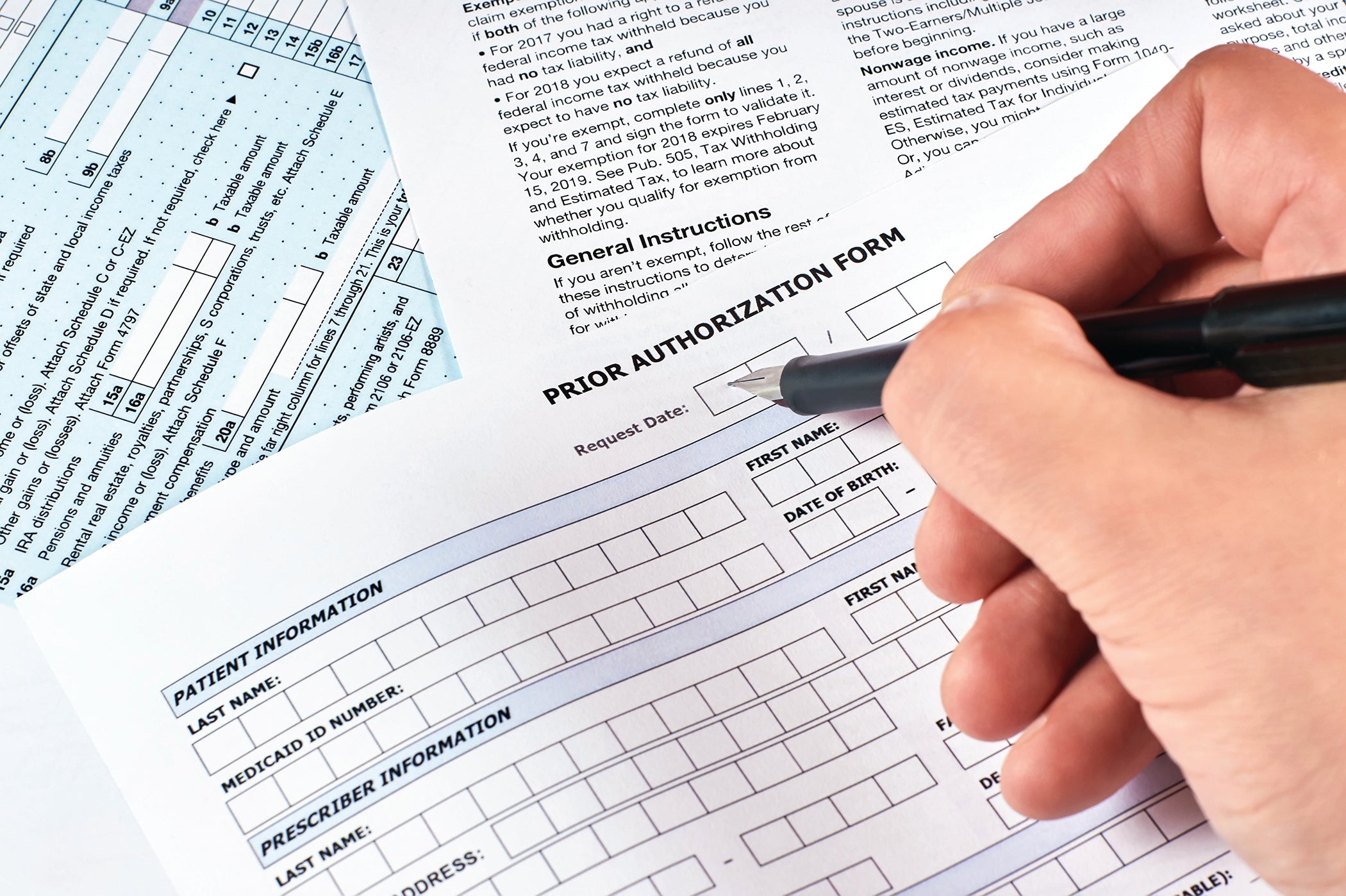
Another example is insurers’ need to authorize an image-guided CAT scan for patients who had prior endoscopic sinus surgery. “This should not require prior authorization because surgical indications are firmly established in otolaryngology literature,” Dr. Troublefield said.
Southcoast Physicians Group is unable to book surgeries in a timely manner when they require prior authorizations because it takes approximately 14 days for insurance companies to make these decisions. “When a patient requires a stat CAT scan, it can take up to five days for clearance,” she said. “Having a patient wait up to 19 days before we can obtain a biopsy to confirm our clinical suspicion can be potentially harmful to patients.”
Charleston ENT & Allergy currently submits prior authorization approval requests electronically through insurance payer portals when available, said Dr. Brown, which he believes is typical at other practices. Some practices have implemented AI bots that automatically navigate payer portals, submit prior authorization requests, and document responses in the system. When automation fails, dedicated teams handle phone-based communications with insurers.
“Current AI implementation costs are prohibitively expensive for many practices,” Dr. Brown said. “I fear that upcoming regulatory requirements will force practices to invest in costly technologies they can’t afford, creating financial strain while attempting to improve administrative efficiency.”
Leave a Reply