Part II of Preserving Hearing Health of Military Service Members
Explore This Issue
January 2026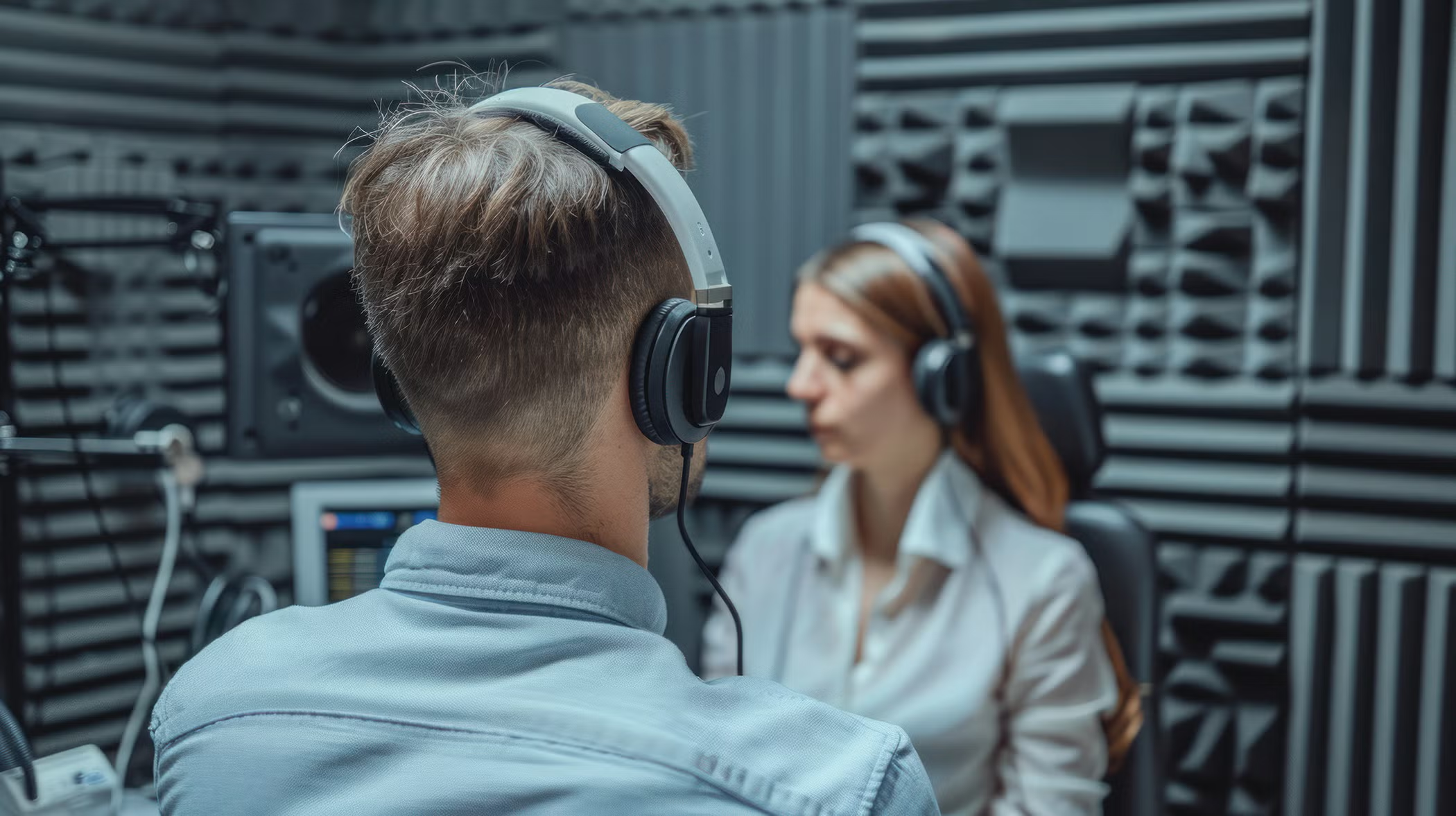 Noise-exposed service members in the U.S. military are required to complete an annual hearing test to identify any noise-related changes in the audiogram and to ensure they are able to hear well enough to perform their duties. “Service members have to complete these hearing tests to be considered fully deployable. Until recently, this meant that they had to travel once per year to the location of a hearing conservation clinic equipped with a sound-treated audio booth,” said Devon M. Kulinski, AuD, a research audiologist in the National Military Audiology and Speech Center (NMASC) at Walter Reed National Military Medical Center in Bethesda, Md.
In 2020, COVID-19 infection control measures made multi-person sound booths unusable for maintaining active-duty readiness. To address the testing backlog, researchers evaluated boothless audiometry as an alternative to traditional booth testing, Dr. Kulinski said. More than 10,000 service members underwent testing, and annual hearing shifts were compared to standard booth results. Findings showed the boothless system was as reliable as traditional microprocessor testing (Mil Med. doi:10.1093/milmed/usad224). “Boothless audiometry is now considered a viable option for annual military hearing monitoring,” he said.
Boothless audiometry has also expanded opportunities for military hearing conservation programs. Dr. Kulinski noted that these tablet-based systems can automate questionnaire data collection, potentially deliver interactive training, and conduct hearing protection fit-testing, which is a new requirement for some noise-exposed service members. “Although there remain issues with data transfer into existing hearing database systems, the feedback received from service members and audiologists has been overwhelmingly positive. Boothless audiometers are unlikely to completely replace standard audiometers in the near future, but it is likely that they will continue to play an increasingly prominent role in the military hearing conservation programs,” he said.
Interdisciplinary Collaboration
The development of the WAHTS (Wireless Automated Hearing Test System) boothless audiometer is a “great example” of interdisciplinary research that has led to breakthroughs in hearing health for military personnel, said Odile Clavier, PhD, principal engineer and partner at Creare, a small research and development firm in Hanover, N.H. WAHTS was originally funded through a Small Business Innovation Research (SBIR) grant awarded to Creare in collaboration with Deanna Meinke, PhD, CCC-A, professor emerita at the University of Northern Colorado in Greeley and co-director of the Dangerous Decibels project, and the late Sigfrid Soli, PhD, a hearing scientist at the House Ear Institute, now the House Institute Foundation, in Los Angeles. NMASC researchers started piloting the WAHTS technology, and the Department of Defense (DoD) continued to support the technology’s development and integration until Creare was able to spin off a new company that could sell the FDA-registered version to both government and commercial markets,” Dr. Clavier said.
Leave a Reply