• Home
  • Practice Focus
    • Facial Plastic/Reconstructive
    • Head and Neck
    • Laryngology
    • Otology/Neurotology
    • Pediatric
    • Rhinology
    • Sleep Medicine
    • How I Do It
    • TRIO Best Practices
  • Business of Medicine
    • Health Policy
    • Legal Matters
    • Practice Management
    • Technology
    • AI
    • History of Otolaryngology
  • Literature Reviews
    • Facial Plastic/Reconstructive
    • Head and Neck
    • Laryngology
    • Otology/Neurotology
    • Pediatric
    • Rhinology
    • Sleep Medicine
  • Career
    • Medical Education
    • Professional Development
    • Resident Focus
  • ENT Perspectives
    • ENT Expressions
    • Everyday Ethics
    • From TRIO
    • The Great Debate
    • Letter From the Editor
    • Rx: Wellness
    • The Voice
    • Viewpoint
    • SUO Corner
  • TRIO Resources
    • Triological Society
    • The Laryngoscope
    • Laryngoscope Investigative Otolaryngology
    • TRIO Combined Sections Meetings
    • COSM
    • Related Otolaryngology Events
  • Search

Are Leeches Effective in Local/Regional Skin Flap Salvage?

by Jamie L. Welshhans, MD, and David B. Hom, MD • January 20, 2017

  • Tweet
  • Email a link to a friend (Opens in new window) Email
Print-Friendly Version

TRIO Best PracticeTRIO Best Practice articles are brief, structured reviews designed to provide the busy clinician with a handy outline and reference for day-to-day clinical decision making. The ENTtoday summaries below include the Background and Best Practice sections of the original article. To view the complete Laryngoscope articles free of charge, visit Laryngoscope.com.

You Might Also Like

  • Can Hyperbaric Oxygen Salvage a Compromised Local/Regional Skin Flap?
  • What Is the Role of Flap Reconstruction in Salvage Total Laryngectomy?
  • Regional Flap vs. Free Flap Reconstruction: Point–Counterpoint
  • Should Adult Surgical Tracheostomies Include a Bjork Flap?
Explore This Issue
January 2017

Background

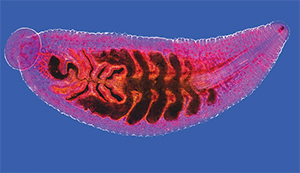
Underside of leech.

Underside of leech.
© M. I. Walker/ Science Source

Leeches have been used clinically to help salvage venous-congested skin flaps since 1960. Numerous articles have described their success in benefitting the survival of local, regional, and free flaps. However, the clinical application remains imprecise.

The theory behind leech therapy is that leech bites decrease venous congestion in compromised skin flaps. Venous congestion is detrimental to skin flap survival, because it leads to microcirculatory thrombosis and blood stasis. The active enzyme in leech saliva, hirudin, is a powerful anticoagulant. This allows blood to flow more freely at the bite site. The objective of leech therapy is to establish temporary venous outflow until further neovascularization has taken place. Typically, leeches are applied to the compromised area of the flap every several hours and are removed once they are no longer biting the tissue. Patients must have antibiotic coverage (such as fluoroquinolones, sulfamethoxazole-trimethoprim, or a second- or third-generation cephalosporin) during leech therapy to reduce the risk of infection (commonly caused by Aeromonas hydrophilia). Hemoglobin should be monitored daily, because treatment can lead to sudden anemia requiring blood transfusions. This article reviews the evidence surrounding the use of leeches to salvage failing local and regional skin flaps to the head and neck area.

Best Practice

Leech therapy is a temporary modality to decrease skin flap venous congestion until further revascularization occurs for venous outflow. Leech therapy is not effective in the setting of arterial flow compromise. Future studies with local and regional flaps are needed to fully understand when is the critical time to initiate leech therapy and to determine its optimal duration of treatment (Laryngoscope. 2016;126:1271–1272).

Filed Under: Facial Plastic/Reconstructive, TRIO Best Practices Tagged With: leech therapy, leeches, skin flap, skin flap venous congestion, treatmentIssue: January 2017

You Might Also Like:

  • Can Hyperbaric Oxygen Salvage a Compromised Local/Regional Skin Flap?
  • What Is the Role of Flap Reconstruction in Salvage Total Laryngectomy?
  • Regional Flap vs. Free Flap Reconstruction: Point–Counterpoint
  • Should Adult Surgical Tracheostomies Include a Bjork Flap?

The Triological SocietyENTtoday is a publication of The Triological Society.

Polls

How have you adopted advanced technologies in your practice?

View Results

Loading ... Loading ...
  • Polls Archive

Top Articles for Residents

  • Is the SLOR in Otolaryngology Residency Applications Contributing to Rural Disparities?
  • Applications Open for Resident Members of the ENTtoday Editorial Board: Deadline Extended
  • A Resident’s View of AI in Otolaryngology
  • Call for Resident Bowl Questions
  • Resident Pearls: Pediatric Otolaryngologists Share Tips for Safer, Smarter Tonsillectomies
  • Popular this Week
  • Most Popular
  • Most Recent
    • Some Laryngopharyngeal Reflux Resists PPI Treatment
    • History of the Cochlear Implant
    • Empty Nose Syndrome: Physiological, Psychological, or Perhaps a Little of Both?
    • The Dramatic Rise in Tongue Tie and Lip Tie Treatment
    • Novel Treatments and Advances in OSA
    • The Dramatic Rise in Tongue Tie and Lip Tie Treatment
    • Rating Laryngopharyngeal Reflux Severity: How Do Two Common Instruments Compare?
    • Is Middle Ear Pressure Affected by Continuous Positive Airway Pressure Use?
    • Otolaryngologists Are Still Debating the Effectiveness of Tongue Tie Treatment
    • Complications for When Physicians Change a Maiden Name
    • ENTtoday Wins 2026 APEX Award
    • AI-Powered Real-Time Multimodal Model for Predicting Recurrence and Survival in Head and Neck Cancer: A Multicenter, Multinational Study
    • Voices of Leadership: Challenges Faced by Female Facial Plastic Surgeons and Considerations for Future Generations
    • AI in the Diagnosis of Cholesteatoma: A Systematic Review of Current Evidence
    • Gender Identity Disparities in Early Adolescent Sleep: Findings from the Adolescent Brain Cognitive Development Study

Follow Us

  • Contact Us
  • About Us
  • Advertise
  • The Triological Society
  • The Laryngoscope
  • Laryngoscope Investigative Otolaryngology
  • Privacy Policy
  • Terms of Use
  • Cookies

Wiley

Copyright © 2026 by John Wiley & Sons, Inc. All rights reserved, including rights for text and data mining and training of artificial technologies or similar technologies. ISSN 1559-4939