
Explore This Issue
January 2026Otolaryngologists’ understanding of rhinosinusitis has evolved significantly over the past decade. The latest American Academy of Otolaryngology–Head and Neck Surgery Foundation (AAO-HNSF) clinical practice guidelines—one focused on medical management of adult sinusitis, the other on surgical management of chronic rhinosinusitis—reflect that evolution. Together, they codify the current scientific consensus on how to best diagnose and treat sinus disease in adults.
Published in the summer of 2025, the new guidelines will influence how otolaryngologists, primary care providers, and others manage adult sinusitis—and hopefully lead to improved clinical outcomes and a decreased disease burden for millions of Americans.
The 2025 Adult Sinusitis Update replaces the 2015 practice guideline; the surgical management guideline is the first surgical-specific guideline for chronic rhinosinusitis (Otol Head Neck Surg. 2025;173(S1):S1–S56; Otol Head Neck Surg. 2025;172(S2):S1–S47).
“Over the last 10 years, we’ve learned a lot about the disease process underlying chronic sinusitis. Whereas in the past, we really focused on patency of the sinuses, bacterial colonization, and infection, there is now an understanding that chronic sinusitis is an inflammatory regional disease,” said Justin Turner, MD, PhD, chair of the department of otolaryngology at the University of Alabama–Birmingham Marnix E. Heersink School of Medicine.
The 2025 guidelines reflect this refined pathophysiologic view of sinus disease and encourage a more individualized, targeted approach to management.
“We now know that the vast majority of chronic rhinosinusitis in western populations— maybe 70% to 80%—is primarily inflammatory,” said Benjamin Bleier, MD, associate professor of otolaryngology–head and neck surgery at Harvard Medical School and Claire and John Bertucci Chair in Otolaryngology–Head and Neck Surgery at Massachusetts Eye and Ear. “The general movement in otolaryngology is toward personalized medicine and away from one-size-fits-all maximal treatment.”
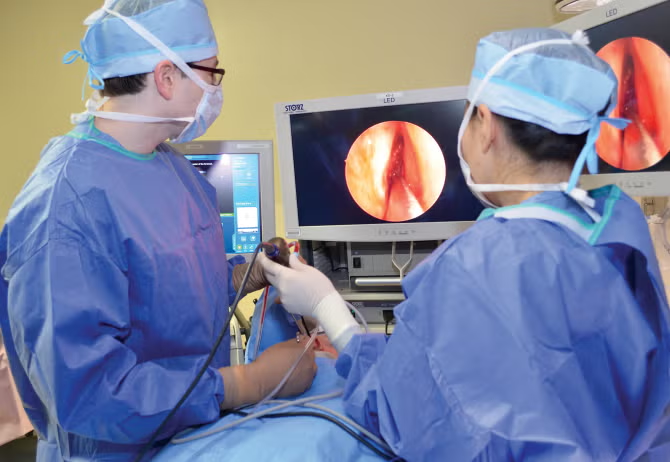
Dr. Bleier, left, says movement in otolaryngology is toward personalized medicine and away from one-size-fits-all maximal treatment.
For rhinologists and other physicians who specialize in the treatment of adult sinusitis, little in the guidelines will feel new or revolutionary. Because clinical practice guidelines are built upon scientific research and expert consensus, they reinforce best practices. Many adults with sinusitis (or sinusitis symptoms) are not initially seen by otolaryngologists, however, and approximately half of patients who are referred to an otolaryngology practice for sinusitis may not meet diagnostic criteria for sinusitis (Ann Otol Rhinol Laryngol. 2024;133:476-448). This gap underscores all otolaryngologists’ responsibility to implement and disseminate the updated guidelines across the broader clinical community.
Evidence-Based Diagnosis
Accurate diagnosis is key to the successful management of acute or chronic sinusitis. Establishing an appropriate diagnosis is the first step toward minimizing inappropriate, potentially harmful treatment and optimizing clinical outcomes.
The 2025 adult sinusitis update emphasizes the need for clinicians to distinguish acute bacterial sinusitis from acute sinusitis caused by a viral infection or acute noninfectious rhinosinusitis. Because evidence has shown that the vast majority of acute rhinosinusitis cases (approximately 90% to 98%, according to the Infectious Diseases Society of America) are viral, clinicians should only diagnose acute bacterial sinusitis if a patient has a combination of the three cardinal symptoms of acute rhinosinusitis (ARS)—purulent nasal drainage, nasal obstruction, facial pain/pressure/ fullness—for more than 10 days or if symptoms of ARS worsen within 10 days after initial improvement (Otol Head Neck Surg. 2025;173(S1):S1–S56). Practically speaking, this guidance means that ARS should not be diagnosed in anyone who has sinusitis symptoms for fewer than 10 days.
At present, however, it’s still incredibly common for patients with sinusitis symptoms who present to retail or walk-in clinics and urgent care settings to receive both a sinusitis diagnosis and prescription for antibiotics, said Spencer C. Payne, MD, professor of otolaryngology at the University of Virginia and chair of the 2025 medical guideline update group. That’s why it’s important for otolaryngologists to educate frontline physicians and healthcare providers about the latest guidelines. One way to do so, Dr. Payne said, is via one-on-one conversations with referring providers.
“On multiple occasions, I’ve reached out to primary providers and said something like, I noticed this patient was given antibiotics, but they haven’t met the criteria for a diagnosis of sinusitis. Here’s what the guidelines now say,” Dr. Payne said. “Most people have been receptive.”
Clinical diagnosis of chronic rhinosinusitis (CRS) should be confirmed with objective documentation of sinonasal inflammation via either anterior rhinoscopy, nasal endoscopy, or computed tomography. The updated guidelines acknowledge the fact that serum biomarkers (including IL-5, IL‐13, IL‐4, serum IgE, IL‐6, and IFN‐gamma) often indicate inflammation, but these biomarkers are not part of the current diagnostic criteria for CRS.
The inaugural surgical guidelines further underscore the importance of evidence-based diagnosis: The first key action statement says that surgeons should verify that established diagnostic criteria for CRS are met before recommending sinus surgery (Otol Head Neck Surg. 2025;172(S2):S1–S47).
Antibiotic Stewardship in Action
Watchful waiting is now the recommended course of action for acute sinusitis in adults.
“Previously, the guidelines stated that after you’ve made a diagnosis of sinusitis, your options are to either start antibiotics or wait,” Dr. Payne said. “The updated guidelines basically remove the antibiotic option when a patient has had symptoms for less than 14 days.”
The step away from antibiotic therapy is supported by studies showing that many cases of bacterial ARS resolve without treatment.
“Studies going back a couple of decades have found that even when patients meet all the criteria for acute bacterial sinusitis with symptoms beyond 10 days, you only see positive cultures in about 60% of those patients. So, it’s really important to recognize that even when you think it’s bacterial sinusitis, many patients are still likely to get better on their own,” Dr. Bleier said.
Healthcare providers can and should offer patients symptomatic relief with analgesics, topical steroids, and nasal irrigation during the watchful waiting period. If symptoms do not improve within three to five days of watchful waiting and supportive treatment, antibiotic treatment with either amoxicillin or amoxicillin-clavulanic acid is recommended.
Educating patients about the reasons for watchful waiting—and providing a means to access antibiotic treatment, if needed, without requiring another clinic visit—will be critical to successful implementation of this guidance. You can start by explaining the rationale behind the recommendation, as well as the potential harm that can occur with unnecessary antibiotic treatment.
“One statistic I’ve been quoting to my patients is that it takes 19 prescriptions of antibiotics to basically improve the outcomes for one patient, but only eight prescriptions to create an adverse outcome—a negative side effect like an allergic reaction, diarrhea, C. diff colitis,” Dr. Payne said. “We’re hurting more people than helping if we’re not being judicious.”
In some cases, providing a “pocket prescription”—a prescription for antibiotics that a patient can take to the pharmacy if symptoms persist past a specified number of days—may provide the security they need to give watchful waiting a chance. You could also encourage patients who use your clinic’s electronic communication system to send you an update after a few days of watchful waiting; if needed, you can then submit a prescription for antibiotics. The recommended duration of antibiotic therapy for bacterial ARS is now five to seven days, down from the seven to 10 days of antibiotics recommended in the 2015 guidelines.
The 2025 iteration also explicitly states that antibiotics should not be prescribed simply to satisfy payer requirements. Although previous guidelines recommended maximal medical therapy before obtaining a CT scan or proceeding to surgery, that approach no longer makes sense given medicine’s current understanding of chronic rhinosinusitis as an inflammatory condition.
“Subjecting patients to three or four weeks of antibiotics simply to get a scan or surgery is putting patients at risk,” Dr. Payne said. “We wanted to provide physicians with guidelines they can use to defend their decisions.”
To support otolaryngologists in implementing this guideline, the AAO– HNSF has created a template appeal letter (https://tinyurl.com/mt64b56x) that physicians can customize and submit if they receive a denial of approval for a CT scan of the paranasal sinuses for a patient who hasn’t received antibiotics for chronic sinusitis. The letter can be downloaded from the AAO– HNSF website and adapted as needed.
Dr. Payne has already submitted at least one appeal featuring a copy of the 2025 guidelines after receiving a denial for sinus surgery. At press time, he was still awaiting a response.
Biologics in Balance
Biologic medications have been a breakthrough in modern medicine, transforming the treatment of chronic, immune-mediated diseases. The 2015 adult sinusitis clinical practice guidelines did not address biologics, as the U.S. Food and Drug Administration (FDA) did not approve a biologic medication to treat adult CRS until 2019 (AJMC. https://tinyurl.com/j52uexrj).
At present, four biologics— dupilumab, omalizumab, mepolizumab, and tezepelumab—are FDA-approved to treat adult CRS with nasal polyps. The new guidelines state that, in most cases, biologics should only be used in adults with polyps; however, if a patient has multiple inflammation-mediated medical conditions, biologic therapy may be appropriate even in the absence of prior surgery for nasal polyps.
“If somebody comes in with eczema, eosinophilic esophagitis, and sinusitis, instead of treating all three of those organ systems separately, it may make more sense to treat them all with a biologic,” Dr. Payne said.
Right now, biologics are “probably being overused by non-otolaryngologists and underused by otolaryngologists,” Dr. Payne said. “Pulmonologists or allergists who are confronted with a patient with severe sinusitis and severe asthma may be more inclined to start them on a biologic, while an otolaryngologist may be more inclined to offer more surgery or more steroids (oral or topical) instead of a biologic, because that’s a higher level of complicated medical therapy that may be outside the physician’s comfort zone.”
Learning more about the appropriate use of biologic therapy to manage CRS with nasal polyps may help otolaryngologists more effectively treat this population.
But most adults who have CRS with nasal polyps do not need biologics. Most will do well with surgery and topical therapy, Dr. Bleier said. That approach “induces the most rapid improvement in symptoms and is the most cost-effective,” he said. It also precludes the possibility of systemic side effects.
Individualized Surgical Planning
The 2025 clinical practice guidelines for the surgical management of CRS underscore the fact that there is “no predefined, one-size-fits-all regimen that is a prerequisite to sinus surgery,” said Jennifer Shin, MD, SM, a surgeon at Mass General Brigham and chair of the surgical guideline development group.
According to the guidelines, otolaryngologists should identify which adult CRS patients are most likely to benefit from surgery and least likely to benefit from continued medical therapy— a group that includes patients with nasal polyps, polyps with bony erosion, eosinophilic mucin, or fungal balls. Surgeons should offer sinus surgery when the anticipated benefits exceed those of nonsurgical management alone—and the patient has a good understanding of both anticipated outcomes and the need for long-term disease management post-surgery (Otol Head Neck Surg. 2025;172(S2):S1–S47). You can find a patient information checklist detailing expectations for sinus surgery on the AAO–HNSF website; the document makes it easy to discuss and clarify likely outcomes (https://tinyurl.com/3emehnew).
The surgical guidelines further state that surgeons should not plan sinus surgery based solely on a single criterion for the degree of mucosal thickening. Instead, “it’s more helpful to really think about your patient’s disease process and how it all fits together within a more holistic picture—what treatments can be of benefit overall, what medicines may or may not have been effective, and whether a recent acute episode might alter a given scan,” Dr. Shin said.
Shared Decisions, Better Outcomes
Imagine, for a moment, how confusing the treatment landscape must be for patients who are uncomfortable and who see and hear commercials for biologic medication and balloon sinus dilation, patients who are looking for relief and keeping an eye on their deductible and out-of-pocket expenses.
“When you increase the options for managing any disease beyond two or three options, it can get really overwhelming for a patient,” Dr. Turner said. Most patients don’t understand the pathophysiology of sinusitis; few know that inflammation is likely the underlying cause of chronic rhinosinusitis. So, although it can be time-consuming, it’s essential for otolaryngologists to educate patients about their condition and treatment options.
The AAO–HNSF website contains patient-focused documents physicians can use to educate patients about the medical and surgical management of sinusitis. Conversation will be required, however, to understand individual patients’ goals, opportunities, and limitations.
When biologic medications are an option, physicians and patients must consider the potential effectiveness of biologics as well as the risk of side effects and cost–benefit ratio. “You have to view the patient as a whole to figure out which particular therapeutic or combination of therapeutics will be most effective for that individual,” Dr. Turner said. “There are some patients with nasal polyps who we recognize as likely to do very well with surgery, with a very low likelihood of needing a revision procedure or long-term medical management. It can be a real disservice to those patients, I think, to put them on a very expensive biologic, a medication for which we don’t yet have a full understanding of what the long-term effects will be, if they could have a good outcome with a well-done surgery.”
Additional research may change the equation. Now, it is generally less expensive to treat CRS with polyps with surgery, “even if you have to do multiple surgeries and combine surgical treatment with topical medical therapies,” Dr. Turner said, than to utilize biologic medication. The discovery of specific biomarkers may eventually allow physicians to diagnose and treat CRS—with or without polyps—based on endotype rather than phenotype. And if research ultimately reveals that it’s possible to de-escalate biologic treatment over time, without decreasing the efficacy of treatment, the cost (financial and otherwise) of biologic therapy may decrease to the point that it may reasonably be considered as first-line therapy in some cases.
“If you change the dosing schedule from every two or every four weeks to every eight or 12 weeks, you’ve completely changed the economic model for the decision tree,” Dr. Turner said, noting that some published studies have already suggested that extending the dosing schedule of dupilumab does not appear to negatively affect symptom control (Laryngoscope. 2025;135:2267- 2274; Allergy. 2023;78:2684-2697).
As research continues to clarify the mechanisms and markers of sinus disease, treatment decisions will keep evolving. The 2025 guidelines for the medical and surgical management of adult sinusitis provide a clear framework for evidence-based, patient-centered care. For otolaryngologists, they reinforce best practices while challenging clinicians to communicate updated treatment protocols to patients and colleagues in primary and urgent care.
Key Changes in the 2025 Sinusitis Guidelines
- Watchful waiting is now the first-line for all uncomplicated acute bacterial rhinosinusitis.
- Biologics restricted to CRS with nasal polyps; not recommended for CRS without polyps.
- No required “step therapy” before surgery; antibiotics or steroids aren’t mandatory prerequisites for endoscopic sinus surgery.
- Post-operative care standardized: follow-up at three to 12 months, with structured outcome assessment and patient counseling
Jennifer Fink is a freelance medical writer based in Wisconsin.

Leave a Reply