• Home
  • Practice Focus
    • Facial Plastic/Reconstructive
    • Head and Neck
    • Laryngology
    • Otology/Neurotology
    • Pediatric
    • Rhinology
    • Sleep Medicine
    • How I Do It
    • TRIO Best Practices
  • Business of Medicine
    • Health Policy
    • Legal Matters
    • Practice Management
    • Tech Talk
    • AI
  • Literature Reviews
    • Facial Plastic/Reconstructive
    • Head and Neck
    • Laryngology
    • Otology/Neurotology
    • Pediatric
    • Rhinology
    • Sleep Medicine
  • Career
    • Medical Education
    • Professional Development
    • Resident Focus
  • ENT Perspectives
    • ENT Expressions
    • Everyday Ethics
    • From TRIO
    • The Great Debate
    • Letter From the Editor
    • Rx: Wellness
    • The Voice
    • Viewpoint
  • TRIO Resources
    • Triological Society
    • The Laryngoscope
    • Laryngoscope Investigative Otolaryngology
    • TRIO Combined Sections Meetings
    • COSM
    • Related Otolaryngology Events
  • Search
  • Facial Plastic/Reconstructive
  • Head and Neck
  • Laryngology
  • Otology/Neurotology
  • Pediatric
  • Rhinology
  • Sleep Medicine
  • How I Do It
  • TRIO Best Practices

Practice Focus » TRIO Best Practices

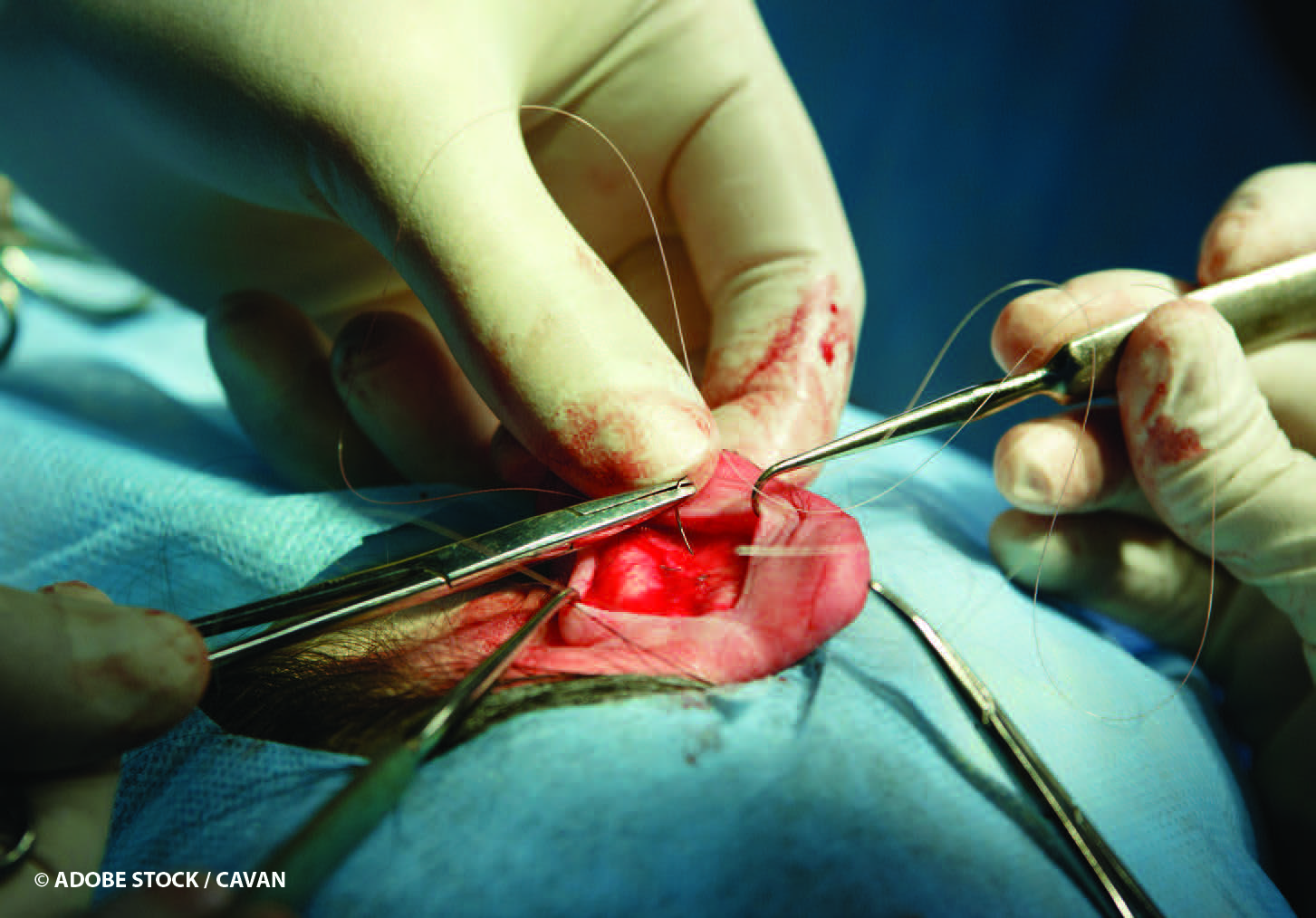
Is “See One, Do One, Teach One” the Best Way to Learn Procedures?

August 17, 2023

Surgical procedural training originated from the Halstedian apprenticeship model, which relies on sheer volume for graded responsibility to achieve “see one, do one, teach one.”
Videofluoroscopic Swallow Study and Fiberoptic Endoscopic Evaluation of Swallow—Which Is Superior?

August 17, 2023

Accurate assessment of the safety of oral feeds is essential in the pediatric population to avoid the risks of unsafe feeding or unnecessary restrictions.

Why Wait Until After Surgery? The Case for Pre-habilitation in Head and Neck Cancer Care

August 17, 2023

Multimodal pre-habilitation and rehabilitation have been an important topics in the literature, aiming to combat modifiable patient factors like sarcopenia, malnutrition, and psychological status.

When is the Optimal Time to Reduce Pediatric Nasal Bone Fractures?

August 17, 2023

Historically, nasal fractures have been reduced within seven days as pediatric patients are thought to undergo rapid osseous healing. Delayed nasal fracture reduction, however, allows soft tissue edema to abate, potentially aiding intraoperative result assessment.

Pages: 1 2 | Single Page

Prophylactic Antibiotics Should Be Used Conservatively in Setting Mandibular Fractures

July 19, 2023

The current literature, including meta-analyses and systematic reviews incorporating data from 54 separate studies, suggests that prophylactic antibiotics be used conservatively in the setting of mandibular trauma.

Genetic Testing Is Appropriate for Some Pediatric Patients with Unilateral Hearing Loss or Single-Sided Deafness

July 19, 2023

Genetic testing should be considered when the most common nongenetic causes (congenital cytomegalovirus, negative imaging for structural inner ear, or cochlear nerve abnormality) are ruled out as subtle phenotypic manifestations of syndromic hearing loss.

Pages: 1 2 | Single Page

The Role of Pulmonary Function Testing Prior to Partial Laryngeal Surgery

July 18, 2023

Laryngeal conservation surgery includes open and endoscopic approaches that address select malignant laryngeal lesions to achieve local control while preserving function.

Using Mucosal Preservation Techniques in Endonasal Dacryocystorhinostomy Improves Long-Term Success

July 18, 2023

Although the number of randomized control trials is lacking, the current literature suggests mucosal flap preservation may improve outcomes following endoscopic dacryocystorhinostomy.

Anaplastic Thyroid Cancer Treatment by Multidisciplinary Palliative, Radiation, Oncology, and Surgical Teams

July 18, 2023

Resectable stage IVA/IVB tumors should be treated with surgery followed by chemoradiation, with consideration for dabrafenib/trametinib biotherapy for BRAFV600E-mutated tumors.

What Is the Role of Laryngeal Reinnervation Surgery for Adults with Unilateral Vocal Fold Paralysis?

June 13, 2023

The primary advantage of laryngeal reinnervation is prevention of denervation atrophy, which limits the long-term voice outcomes of static procedures. Recovery or maintenance of muscle tone is expected to lead to more symmetric vibratory masses, symmetric mucosal wave propagation, and improved voice quality.

Pages: 1 2 | Single Page
  • « Previous Page
  • 1
  • 2
  • 3
  • 4
  • 5
  • 6
  • …
  • 32
  • Next Page »

The Triological SocietyENTtoday is a publication of The Triological Society.

Polls

Has your practice or department been affected by the lack of anesthesiologists?

View Results

Loading ... Loading ...
  • Polls Archive

Top Articles for Residents

  • Applications Open for Resident Members of the ENTtoday Editorial Board
  • A Resident’s View of AI in Otolaryngology
  • Call for Resident Bowl Questions
  • Resident Pearls: Pediatric Otolaryngologists Share Tips for Safer, Smarter Tonsillectomies
  • A Letter to My Younger Self: Making Deliberate Changes Can Help Improve the Sense of Belonging
  • Popular this Week
  • Most Popular
  • Most Recent
    • Bottleneck In the OR: How Anesthesiologist Shortages Threaten Surgical Care
    • Some Laryngopharyngeal Reflux Resists PPI Treatment
    • Laryngeal Mask Airway Use in Tonsillectomy
    • The Dramatic Rise in Tongue Tie and Lip Tie Treatment
    • Office Laryngoscopy Is Not Aerosol Generating When Evaluated by Optical Particle Sizer
    • The Dramatic Rise in Tongue Tie and Lip Tie Treatment
    • Rating Laryngopharyngeal Reflux Severity: How Do Two Common Instruments Compare?
    • Is Middle Ear Pressure Affected by Continuous Positive Airway Pressure Use?
    • Otolaryngologists Are Still Debating the Effectiveness of Tongue Tie Treatment
    • Keeping Watch for Skin Cancers on the Head and Neck
    • Applications Open for Resident Members of the ENTtoday Editorial Board
    • Bottleneck In the OR: How Anesthesiologist Shortages Threaten Surgical Care
    • Onboarding and Working with APPs
    • Evaluating Treatment Patterns in Bell’s Palsy Using Nationwide Employer- Sponsored Healthcare Claims
    • Randomized Trials Comparing Inferior Turbinoplasty Techniques for Nasal Obstruction

Follow Us

  • Contact Us
  • About Us
  • Advertise
  • The Triological Society
  • The Laryngoscope
  • Laryngoscope Investigative Otolaryngology
  • Privacy Policy
  • Terms of Use
  • Cookies

Wiley

Copyright © 2026 by John Wiley & Sons, Inc. All rights reserved, including rights for text and data mining and training of artificial technologies or similar technologies. ISSN 1559-4939