Clinical trials focus on OTOF-associated hearing loss, but other genes identified as appealing next targets

Clinical trials focus on OTOF-associated hearing loss, but other genes identified as appealing next targets

Now is the perfect time to acknowledge the emotions everyone has during transitions, and to focus on the common goals that bring us all together and the creation of an environment that cultivates honest, constructive conversations and highly functioning teams
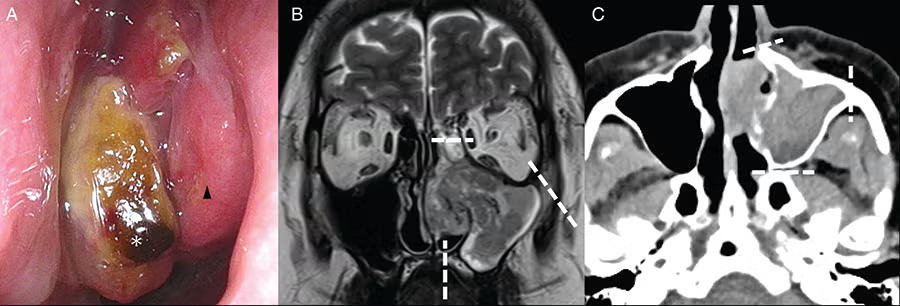
This study presents a pioneering report on an endoscopic-assisted total maxillectomy that allows for en bloc resection without a facial skin incision.
Physicians must oppose partisan or ideological interference with independent scientific inquiry and decisions on research funding, and it is their responsibility to speak out when the science is clear that a particular policy will threaten health or safety.
Observation is the most cost-effective strategy for the initial management of AECRS when there is a low likelihood of bacterial infection; otherwise, upfront rescue medications are the most cost-effective.
The super-thin ALT free flap harvest technique represents a feasible option for oral cavity and oropharyngeal reconstruction in select patients and does not require additional surgical training, invasive testing, or technology.
Switching biologics for CRSwNP is frequent in Canadian rhinology; the most common switch is from mepolizumab to dupilumab, with inadequate CRSwNP control driving the switch.
Metrics based on online attention provide an alternative way to assess the reach and influence of medical journals.
Silicone and Gore-Tex implants both provide adequate and comparable results in TT1.

Fresh frozen homologous costal cartilage in rhinoplasty represents an alternative approach that has been described mostly through single-surgeon case series in the existing literature.