At the main medical campus of Froedtert Hospital and Medical College, he said a significant patient safety concern arises from the need to hire many locum tenens anesthesia staff, as well as multiple new practitioners. These healthcare professionals are now responsible for handling high-complexity cases for which they lack prior experience, including JET anesthesia cases and complex airway procedures.
Explore This Issue
February 2026Dr. Bock emphasized that the shortage of anesthesia providers at his facility has been a longstanding issue and has often been the “rate-limiting” step for operating room flow at their major tertiary care operating room. “The department here appears to be doing some stopgap solutions, but I am concerned that these are temporary fixes and not a real answer,” he said, citing the increased hiring of locum tenens, part-time hires, temporary hires, and international hires.
“We continue to lose our best operating room anesthesia staff to private practice groups that pay significantly more and do not require call,” he said. “Unless [this institution] raises pay for its academic anesthesiology staff, I fear that we’ll be in a continued shortage cycle.”
Solutions for Overcoming the Shortage
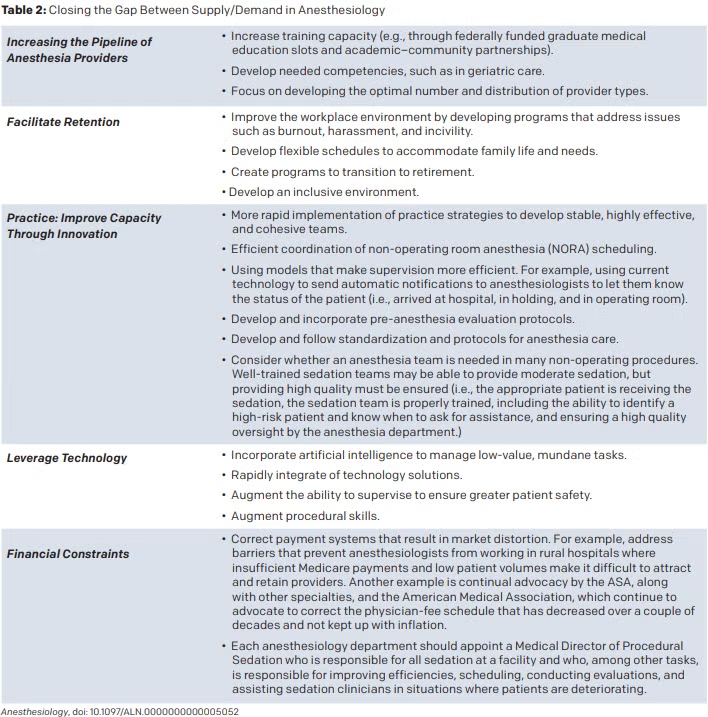 Solving the anesthesiology provider shortage will require a multiprong approach that basically addresses the problem of supply and demand. As laid out in the article by Abouleish et al, closing the gap between supply and demand requires both short- and long-term approaches, some of which can be done at the local level and some that require broader support from various stakeholders (Table 2). The ASA intends to continue focusing on this issue in its annual stakeholder summit, which will help to continue to monitor trends and progress, as well as modify strategies to ensure the anesthesiology workforce can meet the demands of surgical specialties such as otolaryngology.
Mary Beth Nierengarten is a freelance medical writer based in Minnesota.
Leave a Reply