
• Home
  • Practice Focus
    • Facial Plastic/Reconstructive
    • Head and Neck
    • Laryngology
    • Otology/Neurotology
    • Pediatric
    • Rhinology
    • Sleep Medicine
    • How I Do It
    • TRIO Best Practices
  • Business of Medicine
    • Health Policy
    • Legal Matters
    • Practice Management
    • Technology
    • AI
  • Literature Reviews
    • Facial Plastic/Reconstructive
    • Head and Neck
    • Laryngology
    • Otology/Neurotology
    • Pediatric
    • Rhinology
    • Sleep Medicine
  • Career
    • Medical Education
    • Professional Development
    • Resident Focus
  • ENT Perspectives
    • ENT Expressions
    • Everyday Ethics
    • From TRIO
    • The Great Debate
    • Letter From the Editor
    • Rx: Wellness
    • The Voice
    • Viewpoint
    • SUO Corner
  • TRIO Resources
    • Triological Society
    • The Laryngoscope
    • Laryngoscope Investigative Otolaryngology
    • TRIO Combined Sections Meetings
    • COSM
    • Related Otolaryngology Events
  • Home
  • Practice Focus
    • Facial Plastic/Reconstructive
    • Head and Neck
    • Laryngology
    • Otology/Neurotology
    • Pediatric
    • Rhinology
    • Sleep Medicine
    • How I Do It
    • TRIO Best Practices
  • Business of Medicine
    • Health Policy
    • Legal Matters
    • Practice Management
    • Technology
    • AI
  • Literature Reviews
    • Facial Plastic/Reconstructive
    • Head and Neck
    • Laryngology
    • Otology/Neurotology
    • Pediatric
    • Rhinology
    • Sleep Medicine
  • Career
    • Medical Education
    • Professional Development
    • Resident Focus
  • ENT Perspectives
    • ENT Expressions
    • Everyday Ethics
    • From TRIO
    • The Great Debate
    • Letter From the Editor
    • Rx: Wellness
    • The Voice
    • Viewpoint
    • SUO Corner
  • TRIO Resources
    • Triological Society
    • The Laryngoscope
    • Laryngoscope Investigative Otolaryngology
    • TRIO Combined Sections Meetings
    • COSM
    • Related Otolaryngology Events
  • Search

Do Steroids Improve Recovery in Vestibular Neuritis?

by Roberto N. Solis, BA, Daniel Q. Sun, MD, Eric Tatro, BS, and Marlan R. Hansen, MD • December 9, 2019

  • Tweet
  • Email a link to a friend (Opens in new window) Email
Print-Friendly Version

TRIO Best PracticeTRIO Best Practice articles are brief, structured reviews designed to provide the busy clinician with a handy outline and reference for day-to-day clinical decision making. The ENTtoday summaries below include the Background and Best Practice sections of the original article. To view the complete Laryngoscope articles free of charge, visit Laryngoscope.

You Might Also Like

  • No Evidence to Support Use of Corticosteroids in Treatment of Adults with Acute Vestibular Neuritis
  • Does Stereotactic Radiosurgery Worsen Vestibular Symptoms in Patients with Vestibular Schwannoma?
  • Is Vestibular Testing Necessary? Here’s What Experts Say
  • Do Corticosteroids Improve Outcomes in Peritonsillar Abscess?
Explore This Issue
December 2019

Background

Vestibular neuritis (VN) is one of the three most common causes of peripheral vestibulopathy, with a reported incidence of 3.5 per 100,000 population. VN is characterized by the acute onset of debilitating vertigo, nausea, vomiting, and gait instability. Despite a benign and self-limiting course, patients may suffer from residual symptoms of imbalance and dizziness for several months. The cause of VN is not fully understood, but it is thought to have a viral etiology.

Typically, acute VN has been managed with a short course of corticosteroids. Proponents of corticosteroid therapy argue that this treatment accelerates recovery for patients. However, others argue that corticosteroids do not alter long-term prognosis and may carry risks for adverse events. This article focuses on whether corticosteroids are warranted for VN.

Best Practice
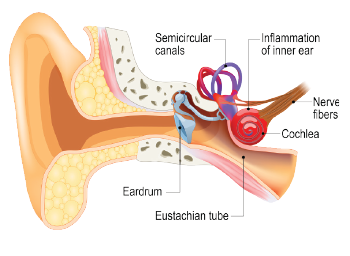
Vestibular neuritis is one of the most common causes of peripheral vestibulopathy.

Vestibular neuritis is one of the most common causes of peripheral vestibulopathy.
© Designua / shutterstock.com; Phanie / Science Source

The management of VN with corticosteroids remains controversial. Although the risks of short-term steroids have not been well studied in the trials available, adverse events have been documented. Although four out of the five studies cited demonstrated short-term benefits, long-term benefits remain to be determined. There is insufficient evidence to warrant a general recommendation, as larger well-designed randomized clinical trials, with outcome measures that focus on symptomatology and adverse events secondary to corticosteroid use are needed (Laryngoscope. 2019;129:288–290).

Filed Under: Otology/Neurotology, TRIO Best Practices Tagged With: steroids, vestibular neuritisIssue: December 2019

You Might Also Like:

  • No Evidence to Support Use of Corticosteroids in Treatment of Adults with Acute Vestibular Neuritis
  • Does Stereotactic Radiosurgery Worsen Vestibular Symptoms in Patients with Vestibular Schwannoma?
  • Is Vestibular Testing Necessary? Here’s What Experts Say
  • Do Corticosteroids Improve Outcomes in Peritonsillar Abscess?

The Triological SocietyENTtoday is a publication of The Triological Society.

Polls

Have you ever encountered a mentally or physically threatening patient or caregiver?

View Results

Loading ... Loading ...
  • Polls Archive

Top Articles for Residents

  • Is the SLOR in Otolaryngology Residency Applications Contributing to Rural Disparities?
  • Applications Open for Resident Members of the ENTtoday Editorial Board: Deadline Extended
  • A Resident’s View of AI in Otolaryngology
  • Call for Resident Bowl Questions
  • Resident Pearls: Pediatric Otolaryngologists Share Tips for Safer, Smarter Tonsillectomies
  • Popular this Week
  • Most Popular
  • Most Recent
    • Office Laryngoscopy Is Not Aerosol Generating When Evaluated by Optical Particle Sizer
    • More Than Skin Deep: Building a Workforce Patients Can Trust
    • Otolaryngologists Apply Safety Strategies When Treating Threatening Patients
    • Novel Fascia Taco Approach Shown Safe and Effective in Patients Receiving Nasal Septum Perforation Closure
    • Some Laryngopharyngeal Reflux Resists PPI Treatment
    • The Dramatic Rise in Tongue Tie and Lip Tie Treatment
    • Rating Laryngopharyngeal Reflux Severity: How Do Two Common Instruments Compare?
    • Is Middle Ear Pressure Affected by Continuous Positive Airway Pressure Use?
    • Otolaryngologists Are Still Debating the Effectiveness of Tongue Tie Treatment
    • Complications for When Physicians Change a Maiden Name
    • The Pursuit of Excellence—the Journey or the Gold
    • Is There Benefit of Music Training Following Cochlear Implantation?
    • Is Cognitive Behavioral Therapy Effective for Tinnitus?
    • Does Dupilumab Improve Sinonasal Outcomes in AERD Patients?
    • Making the Most of TRIO Meetings

Follow Us

  • Contact Us
  • About Us
  • Advertise
  • The Triological Society
  • The Laryngoscope
  • Laryngoscope Investigative Otolaryngology
  • Privacy Policy
  • Terms of Use
  • Cookies

Wiley

Copyright © 2026 by John Wiley & Sons, Inc. All rights reserved, including rights for text and data mining and training of artificial technologies or similar technologies. ISSN 1559-4939