• Home
  • Practice Focus
    • Facial Plastic/Reconstructive
    • Head and Neck
    • Laryngology
    • Otology/Neurotology
    • Pediatric
    • Rhinology
    • Sleep Medicine
    • How I Do It
    • TRIO Best Practices
  • Business of Medicine
    • Health Policy
    • Legal Matters
    • Practice Management
    • Technology
    • AI
  • Literature Reviews
    • Facial Plastic/Reconstructive
    • Head and Neck
    • Laryngology
    • Otology/Neurotology
    • Pediatric
    • Rhinology
    • Sleep Medicine
  • Career
    • Medical Education
    • Professional Development
    • Resident Focus
  • ENT Perspectives
    • ENT Expressions
    • Everyday Ethics
    • From TRIO
    • The Great Debate
    • Letter From the Editor
    • Rx: Wellness
    • The Voice
    • Viewpoint
    • SUO Corner
  • TRIO Resources
    • Triological Society
    • The Laryngoscope
    • Laryngoscope Investigative Otolaryngology
    • TRIO Combined Sections Meetings
    • COSM
    • Related Otolaryngology Events
  • Home
  • Practice Focus
    • Facial Plastic/Reconstructive
    • Head and Neck
    • Laryngology
    • Otology/Neurotology
    • Pediatric
    • Rhinology
    • Sleep Medicine
    • How I Do It
    • TRIO Best Practices
  • Business of Medicine
    • Health Policy
    • Legal Matters
    • Practice Management
    • Technology
    • AI
  • Literature Reviews
    • Facial Plastic/Reconstructive
    • Head and Neck
    • Laryngology
    • Otology/Neurotology
    • Pediatric
    • Rhinology
    • Sleep Medicine
  • Career
    • Medical Education
    • Professional Development
    • Resident Focus
  • ENT Perspectives
    • ENT Expressions
    • Everyday Ethics
    • From TRIO
    • The Great Debate
    • Letter From the Editor
    • Rx: Wellness
    • The Voice
    • Viewpoint
    • SUO Corner
  • TRIO Resources
    • Triological Society
    • The Laryngoscope
    • Laryngoscope Investigative Otolaryngology
    • TRIO Combined Sections Meetings
    • COSM
    • Related Otolaryngology Events
  • Search

Ethical Challenges in the Operating Room, Part II

by G. Richard Holt, MD, MSE, MPH, MABE, D Bioethics • January 21, 2017

  • Tweet
  • Email a link to a friend (Opens in new window) Email
Print-Friendly Version

Editor’s note: This is part 2 of a two-part series on ethics in the operating room. The first installment was published in the October 2016 issue.

You Might Also Like

  • Ethical Challenges in the Operating Room
  • Disclosure of Adverse Outcomes Brings Ethical Challenges for Otolaryngologists
  • Ethical Challenges of ‘Right to Try’ Laws for Clinicians
  • Avoiding the Operating Room: The Advantages of Office-Based Laryngology and Esophagology
Explore This Issue
January 2017

Scenario

The ethical scenario published in part 1 of “Ethics in the Operating Room” imagined that you served as chair of your medical center’s ethics committee and provided guidance and recommendations to the center’s leadership on issues of ethical concern in the operating room.

In that scenario, your comments to the leadership dealt with informing patients about the roles of the various surgical team members participating in the patient’s surgery, along with the ethics of overlapping, concomitant/concurrent, and sequenced surgical procedures. The next major topic on which the leadership would like your input involves the professional and ethical care of patients in the perioperative period, particularly the interaction of the surgeon with the patient at the bedside.

Discussion

The specialty of otolaryngology-head and neck surgery has, for various reasons, moved away from inpatient care to predominantly outpatient care, save for head and neck oncology, neurotology, trauma surgery, and specific circumstances of other subspecialties for which patients are hospitalized longer than overnight.

Generally speaking, however, hospital rounds with faculty, residents, and medical students in our specialty have largely been replaced by in vitro rounds in a conference room, involving Powerpoint presentations, imaging studies, patient photographs, and other data pertinent to a patient’s disorder. Teaching in the presence of patients can still take place during the clinic evaluation, which can be referred to as “chair-side rounds,” and in the emergency center, where the focus is generally on expediency.
© Everett Collection / SHUTTERSTOCK.COM

© Everett Collection / SHUTTERSTOCK.COM

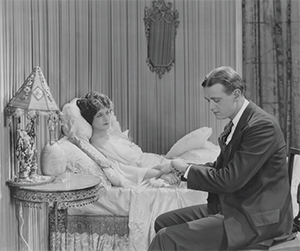
When it comes to strengthening the patient-physician relationship, however, there may be no better way to do so than with the true “bedside” encounter, when the patient is most vulnerable and the physician can be most caring and compassionate.

The unique circumstances of the perioperative period should be viewed from the patient’s perspective to get a sense of the anxieties experienced by most surgical patients as they are being prepared for surgery, entering the operating room, and then recovering from the surgery. The compassionate surgeon can help alleviate these concerns with her/his bedside manner. The ethical responsibility to address the vulnerabilities of surgical patients rests not just with the surgeon, but with the entire team caring for the patient in the perioperative period.

Because the otolaryngologist-head and neck surgeon is the de facto leader of the patient care team, it falls to her/him to set the proper expectations for an ethical and professional interaction with the patient. It is important to resist the desensitization and cynicism that can be observed in all quarters of the surgical profession, which can lead to an indifference that can be sensed by patients at the time they most require caring attention at the bedside. This responsibility is well stated in the Code of Ethics of the American Academy of Otolaryngology–Head and Neck Surgery: “The Physician-Patient Relationship—‘Each patient must be treated with respect, dignity, compassion, and honesty’” (available at entnet.org/content/ethics).

Pages: 1 2 3 4 | Single Page

Filed Under: Everyday Ethics, Features, Home Slider Tagged With: bedside medicine, Ethics, operating room, surgeriesIssue: January 2017

You Might Also Like:

  • Ethical Challenges in the Operating Room
  • Disclosure of Adverse Outcomes Brings Ethical Challenges for Otolaryngologists
  • Ethical Challenges of ‘Right to Try’ Laws for Clinicians
  • Avoiding the Operating Room: The Advantages of Office-Based Laryngology and Esophagology

The Triological SocietyENTtoday is a publication of The Triological Society.

Polls

More and more medical trainees are taking dedicated, prolonged gap years. Did you?

View Results

Loading ... Loading ...
  • Polls Archive

Top Articles for Residents

  • Is the SLOR in Otolaryngology Residency Applications Contributing to Rural Disparities?
  • Applications Open for Resident Members of the ENTtoday Editorial Board
  • A Resident’s View of AI in Otolaryngology
  • Call for Resident Bowl Questions
  • Resident Pearls: Pediatric Otolaryngologists Share Tips for Safer, Smarter Tonsillectomies
  • Popular this Week
  • Most Popular
  • Most Recent
    • Office Laryngoscopy Is Not Aerosol Generating When Evaluated by Optical Particle Sizer
    • Some Laryngopharyngeal Reflux Resists PPI Treatment
    • Cochlear Implants Improve Performance and Net Savings in Infants
    • Top 10 LARY and LIO Articles of 2024
    • Empty Nose Syndrome: Physiological, Psychological, or Perhaps a Little of Both?
    • The Dramatic Rise in Tongue Tie and Lip Tie Treatment
    • Rating Laryngopharyngeal Reflux Severity: How Do Two Common Instruments Compare?
    • Is Middle Ear Pressure Affected by Continuous Positive Airway Pressure Use?
    • Otolaryngologists Are Still Debating the Effectiveness of Tongue Tie Treatment
    • Keeping Watch for Skin Cancers on the Head and Neck
    • Short-Term Efficacy of Biologics in Recalcitrant AFRS: A Systematic Review and Meta-Analysis
    • The Devaluation of Otolaryngology: An Evaluation of CMS’s Involvement in Physician Reimbursement
    • Embolized Middle Meningeal Artery as a Surgical Landmark in Infratemporal Fossa
    • Lord of the (Magnetic) Rings: Rigid Bronchoscopy for Aspirated Magnetic Foreign Bodies in Tertiary Bronchi
    • What Otolaryngologists Can Learn from Athletes

Follow Us

  • Contact Us
  • About Us
  • Advertise
  • The Triological Society
  • The Laryngoscope
  • Laryngoscope Investigative Otolaryngology
  • Privacy Policy
  • Terms of Use
  • Cookies

Wiley

Copyright © 2026 by John Wiley & Sons, Inc. All rights reserved, including rights for text and data mining and training of artificial technologies or similar technologies. ISSN 1559-4939