• Home
  • Practice Focus
    • Facial Plastic/Reconstructive
    • Head and Neck
    • Laryngology
    • Otology/Neurotology
    • Pediatric
    • Rhinology
    • Sleep Medicine
    • How I Do It
    • TRIO Best Practices
  • Business of Medicine
    • Health Policy
    • Legal Matters
    • Practice Management
    • Technology
    • AI
    • History of Otolaryngology
  • Literature Reviews
    • Facial Plastic/Reconstructive
    • Head and Neck
    • Laryngology
    • Otology/Neurotology
    • Pediatric
    • Rhinology
    • Sleep Medicine
  • Career
    • Medical Education
    • Professional Development
    • Resident Focus
  • ENT Perspectives
    • ENT Expressions
    • Everyday Ethics
    • From TRIO
    • The Great Debate
    • Letter From the Editor
    • Rx: Wellness
    • The Voice
    • Viewpoint
    • SUO Corner
  • TRIO Resources
    • Triological Society
    • The Laryngoscope
    • Laryngoscope Investigative Otolaryngology
    • TRIO Combined Sections Meetings
    • COSM
    • Related Otolaryngology Events
  • Search

Experts Discuss Approaches to Aging Cases

by Thomas R. Collins • June 20, 2017

  • Tweet
  • Email a link to a friend (Opens in new window) Email
Print-Friendly Version

SAN DIEGO—A panel of experts on facial plastic and reconstructive surgery offered words of wisdom and cautionary tales about treating the aging face in a session at the 2017 Annual Meeting of the Triological Society, held in conjunction with the Combined Otolaryngology Spring Meetings.

You Might Also Like

  • Experts Discuss How to Approach Challenging Dysphonia Cases
  • Experts Discuss Treatment Options for Skin Cancer Cases
  • Is Autologous Fat Grafting Superior to Other Fillers for Facial Rejuvenation?
  • Skin Cancer Care: Meeting Panelists Discuss Approaches
Explore This Issue
June 2017

The panel touched on the uses of autologous fat grafting, the do’s and don’ts involved in aging face cases, the risks of overzealous and inappropriate filler use, and the challenge in surgery of overcoming a bad result from filler use that has gone awry.

Autologous Fat Transfer
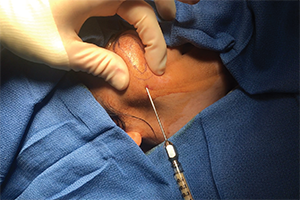
An injection of autologous fat, shown here, can bring many advantages to the aging face.

An injection of autologous fat, shown here, can bring many advantages to the aging face.
© Courtesy of Travis Tollefson, MD, MPH

Travis Tollefson, MD, MPH, associate professor and director of facial plastic and reconstructive surgery at the University of California, Davis, said that use of autologous fat transfer is expanding. This approach can be helpful in areas of the aging face that become a bit smaller due to the loss of natural fat.

“Autologous fat grafting … is something that we’ve transferred from the aging face or the cosmetic world into the reconstructive world at a high pace,” he said. “You’ll find a lot of reconstructive cases, as well as aging face cases now, where autologous fat plays a big role in the restoration of volume of soft tissue…. It’s very clear that we can fill in areas and combine autologous fat grafting or fillers with more traditional aging face surgeries.”

Compared with fillers, autologous fat can produce a permanent result. The advantage of synthetic fillers, however, is that they can be injected in the office with little down time after the injection, he added. “The other benefit of the fillers… is that you can place them in the different layers more accurately because they are smooth, and there are different visco-elastic characteristics that allow you to choose the filler that you want to use for the layer.”

Also, in the case of hyaluronic acid, the effects can be reversed if the outcome isn’t acceptable, he said. “With fat transfer, we don’t have a reversible technique, so if you have excess fat in an area,” surgery is required to fix it, he said.

While the risks associated with the use of fillers are low, they can involve a risk of blindness when used around the eye, as well as skin necrosis from vascular infarcts in certain situations, said Dr. Tollefson. “These are too high-risk for me to use in most danger areas, so I do choose autologous fat in most of those cases,” he added.

Embracing an Otolaryngology Foundation
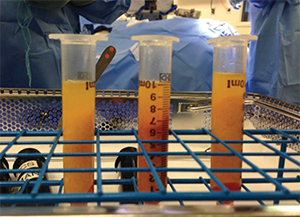
Autologous fat, shown as centrifuged fat.

Autologous fat, shown as centrifuged fat.
© Courtesy of Travis Tollefson, MD, MPH

Pages: 1 2 3 | Single Page

Filed Under: Features, Home Slider Tagged With: aging, facial plastic surgery, facial reconstruction, facial reconstructive surgery, fat grafting, fat transfer, Triological Society annual meetingIssue: June 2017

You Might Also Like:

  • Experts Discuss How to Approach Challenging Dysphonia Cases
  • Experts Discuss Treatment Options for Skin Cancer Cases
  • Is Autologous Fat Grafting Superior to Other Fillers for Facial Rejuvenation?
  • Skin Cancer Care: Meeting Panelists Discuss Approaches

The Triological SocietyENTtoday is a publication of The Triological Society.

Polls

Do you think GLP-1s are the next big disruptors in ENT practice?

View Results

Loading ...
  • Polls Archive

Top Articles for Residents

  • The Example We Set: Thoughts on the End of Residency Training
  • Is the SLOR in Otolaryngology Residency Applications Contributing to Rural Disparities?
  • Applications Open for Resident Members of the ENTtoday Editorial Board: Deadline Extended
  • A Resident’s View of AI in Otolaryngology
  • Call for Resident Bowl Questions
  • Popular this Week
  • Most Popular
  • Most Recent
    • How GLP-1s Are Changing Otolaryngology Practice
    • The Dramatic Rise in Tongue Tie and Lip Tie Treatment
    • History of the Cochlear Implant
    • Rating Laryngopharyngeal Reflux Severity: How Do Two Common Instruments Compare?
    • Empty Nose Syndrome: Physiological, Psychological, or Perhaps a Little of Both?
    • The Dramatic Rise in Tongue Tie and Lip Tie Treatment
    • Rating Laryngopharyngeal Reflux Severity: How Do Two Common Instruments Compare?
    • Is Middle Ear Pressure Affected by Continuous Positive Airway Pressure Use?
    • Otolaryngologists Are Still Debating the Effectiveness of Tongue Tie Treatment
    • Complications for When Physicians Change a Maiden Name
    • Facial Nerve Paralysis: Protecting the Eye and Restoring Function
    • Multi-Institutional Validation of the Interarytenoid Assessment Protocol for Pediatric Laryngeal Cleft
    • DB-OTO Gene Therapy for Inherited Deafness
    • Wearable AR for Nystagmus Examination in Patients with Vertigo: Randomized Crossover Usability Study
    • Increased Prevalence of Hearing Loss and Tinnitus in Patients with Retinal Vein Occlusion

Follow Us

  • Contact Us
  • About Us
  • Advertise
  • The Triological Society
  • The Laryngoscope
  • Laryngoscope Investigative Otolaryngology
  • Privacy Policy
  • Terms of Use
  • Cookies

Wiley

Copyright © 2026 by John Wiley & Sons, Inc. All rights reserved, including rights for text and data mining and training of artificial technologies or similar technologies. ISSN 1559-4939