• Home
  • Practice Focus
    • Facial Plastic/Reconstructive
    • Head and Neck
    • Laryngology
    • Otology/Neurotology
    • Pediatric
    • Rhinology
    • Sleep Medicine
    • How I Do It
    • TRIO Best Practices
  • Business of Medicine
    • Health Policy
    • Legal Matters
    • Practice Management
    • Tech Talk
    • AI
  • Literature Reviews
    • Facial Plastic/Reconstructive
    • Head and Neck
    • Laryngology
    • Otology/Neurotology
    • Pediatric
    • Rhinology
    • Sleep Medicine
  • Career
    • Medical Education
    • Professional Development
    • Resident Focus
  • ENT Perspectives
    • ENT Expressions
    • Everyday Ethics
    • From TRIO
    • The Great Debate
    • Letter From the Editor
    • Rx: Wellness
    • The Voice
    • Viewpoint
  • TRIO Resources
    • Triological Society
    • The Laryngoscope
    • Laryngoscope Investigative Otolaryngology
    • TRIO Combined Sections Meetings
    • COSM
    • Related Otolaryngology Events
  • Search

Preserving the Hearing Health of Military Service Members

by David Bronstein • November 4, 2025

  • Tweet
  • Click to email a link to a friend (Opens in new window) Email
Print-Friendly Version

You Might Also Like

  • What Otolaryngologists Need to Know About Working with Patients as Over-the-Counter Hearing Aids Become Available
  • Otolaryngologists Work to Heal Hearing Loss in U.S. Military Troops
  • The Mechanisms of Tinnitus: Research Progress and Treatment Implications
  • Challenges of Getting Otology Care in Socioeconomically Impacted Areas
Explore This Issue
November 2025

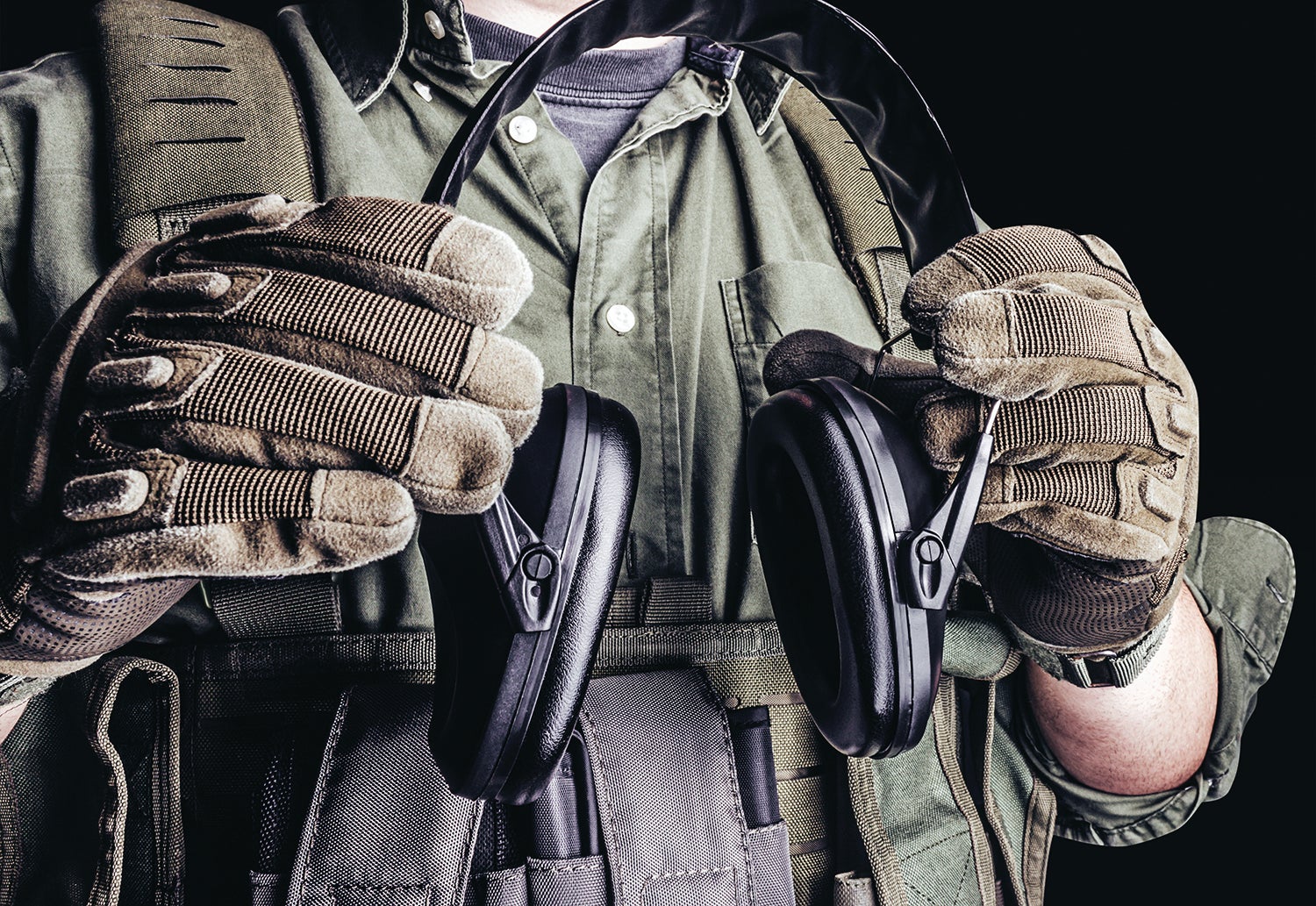
Military audiology has achieved cutting-edge research advances, including boothless audiometry for detecting hearing loss in soldiers who are still on the battlefield, new protective devices that prevent noise-related hearing loss while preserving soldiers’ situational awareness and safety, and animal models that are uncovering the mechanisms behind blast injuries.

These impressive research efforts are often done in conjunction with daily, more prosaic but no less important tasks, such as helping fit service members with hearing aids and treating them for the debilitating effects of tinnitus.

Isaac D. Erbele, MD, a lieutenant colonel in the U.S. Army and a neurotologist at Brooke Army Medical Center (BAMC) in San Antonio, Texas, embodies this bench-to-bedside approach. “I have a busy case load both at BAMC and at the South Texas VA,” Dr. Erbele said. “I go back and forth between active duty and veteran populations,” focusing on conditions typical of military personnel, including noise-induced hearing loss and tinnitus. But research is also a keen interest for him.

“I am doing everything from bench studies all the way up to clinical trials, because I pride myself in being a truly translational researcher,” Dr. Erbele said. Many of those research projects are done, he added, via his connections with the Department of Defense (DOD) Hearing Center of Excellence, in San Antonio, and the Uniformed Services University of the Health Sciences, in Bethesda, Md.

One area Dr. Erbele is most excited about involves the use of otic organoids, which are laboratory-grown, three-dimensional structures derived from stem cells that model the inner ear. “Basically, we’re trying to take human pluripotent cells to approximate cochlear hair cells and determine what kind of mechanisms occur with blast trauma to see if there are opportunities for therapeutic interventions,” he explained. “That’s been a little slow-going, but I’m hopeful that we get some publications out soon.” (For more details on otic organoid research, see a recent review coauthored by Dr. Erbele: Bioengineering (Basel). doi: 10.3390/bioengineering11050425).

“We are also doing several blast studies in rats and sheep where we introduce at least temporary, if not permanent, hearing loss threshold shifts and then test several therapeutics to improve the animal’s hearing after their noise trauma,” he said. “So far, we’ve looked at anti-inflammatory agents and have seen some very encouraging results.”

Dr. Erbele is also working on a nerve regeneration therapeutic model in larger animals, “which is great because it affords a closer approximation of the human cochlea and hearing. So, there’s an opportunity for more translational work as well, which we are very excited about.”

Pages: 1 2 3 4 5 6 7 | Single Page

Filed Under: Business of Medicine, Home Slider, Otology/Neurotology, Practice Focus, Practice Management Tagged With: Military hearing healthIssue: November 2025

You Might Also Like:

  • What Otolaryngologists Need to Know About Working with Patients as Over-the-Counter Hearing Aids Become Available
  • Otolaryngologists Work to Heal Hearing Loss in U.S. Military Troops
  • The Mechanisms of Tinnitus: Research Progress and Treatment Implications
  • Challenges of Getting Otology Care in Socioeconomically Impacted Areas

Leave a Reply Cancel reply

Your email address will not be published. Required fields are marked *

The Triological SocietyENTtoday is a publication of The Triological Society.

Polls

Has your practice or department been affected by the lack of anesthesiologists?

View Results

Loading ... Loading ...
  • Polls Archive

Top Articles for Residents

  • Applications Open for Resident Members of the ENTtoday Editorial Board
  • A Resident’s View of AI in Otolaryngology
  • Call for Resident Bowl Questions
  • Resident Pearls: Pediatric Otolaryngologists Share Tips for Safer, Smarter Tonsillectomies
  • A Letter to My Younger Self: Making Deliberate Changes Can Help Improve the Sense of Belonging
  • Popular this Week
  • Most Popular
  • Most Recent
    • Rewriting the Rules of Rhinosinusitis

    • Office Laryngoscopy Is Not Aerosol Generating When Evaluated by Optical Particle Sizer

    • Some Laryngopharyngeal Reflux Resists PPI Treatment

    • Otolaryngologists Are Still Debating the Effectiveness of Tongue Tie Treatment

    • Top 10 LARY and LIO Articles of 2024

    • The Dramatic Rise in Tongue Tie and Lip Tie Treatment

    • Rating Laryngopharyngeal Reflux Severity: How Do Two Common Instruments Compare?

    • Is Middle Ear Pressure Affected by Continuous Positive Airway Pressure Use?

    • Otolaryngologists Are Still Debating the Effectiveness of Tongue Tie Treatment

    • Keeping Watch for Skin Cancers on the Head and Neck

    • Applications Open for Resident Members of the ENTtoday Editorial Board
    • Bottleneck In the OR: How Anesthesiologist Shortages Threaten Surgical Care
    • Onboarding and Working with APPs
    • Evaluating Treatment Patterns in Bell’s Palsy Using Nationwide Employer- Sponsored Healthcare Claims
    • Randomized Trials Comparing Inferior Turbinoplasty Techniques for Nasal Obstruction

Follow Us

  • Contact Us
  • About Us
  • Advertise
  • The Triological Society
  • The Laryngoscope
  • Laryngoscope Investigative Otolaryngology
  • Privacy Policy
  • Terms of Use
  • Cookies

Wiley

Copyright © 2026 by John Wiley & Sons, Inc. All rights reserved, including rights for text and data mining and training of artificial technologies or similar technologies. ISSN 1559-4939