• Home
  • Practice Focus
    • Facial Plastic/Reconstructive
    • Head and Neck
    • Laryngology
    • Otology/Neurotology
    • Pediatric
    • Rhinology
    • Sleep Medicine
    • How I Do It
    • TRIO Best Practices
  • Business of Medicine
    • Health Policy
    • Legal Matters
    • Practice Management
    • Tech Talk
    • AI
  • Literature Reviews
    • Facial Plastic/Reconstructive
    • Head and Neck
    • Laryngology
    • Otology/Neurotology
    • Pediatric
    • Rhinology
    • Sleep Medicine
  • Career
    • Medical Education
    • Professional Development
    • Resident Focus
  • ENT Perspectives
    • ENT Expressions
    • Everyday Ethics
    • From TRIO
    • The Great Debate
    • Letter From the Editor
    • Rx: Wellness
    • The Voice
    • Viewpoint
  • TRIO Resources
    • Triological Society
    • The Laryngoscope
    • Laryngoscope Investigative Otolaryngology
    • TRIO Combined Sections Meetings
    • COSM
    • Related Otolaryngology Events
  • Search

Novel Technologies That Expand How Otolaryngologists Treat Patients

by Mary Beth Nierengarten • September 17, 2018

  • Tweet
  • Email a link to a friend (Opens in new window) Email
Print-Friendly Version
© Entellus

© Entellus

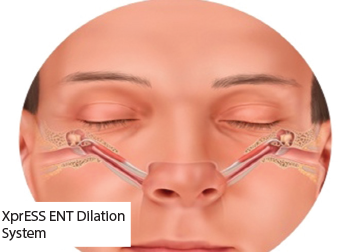
Recent studies by investigators using each of these systems demonstrated the superiority of this technology over medical therapy alone for patients with ETD (Laryngoscope 2018;128:1200–1206; Otol Neurotol. 2018;39:894–902). In May 2018, Poe and colleagues reported results of a multicenter, prospective, randomized, controlled trial that showed that patients treated with balloon dilation plus medical management had significantly greater tympanogram normalization at six weeks compared to those who received medical management alone (51.8% vs. 13.9%) (Laryngoscope. 2018;128:1200–1206). At 24 weeks, 62.2% of patients treated with balloon dilation plus medical management had tympanogram normalization. In addition, patients treated with balloon dilation and medical management reported significant improvement in symptoms based on Eustachian Tube Dysfunction Questionnaire-7 Symptom (ETDQ-7) scores at six-week follow-up compared to those treated with medical management alone (56.2% vs. 8.5%).

You Might Also Like

  • First Clinical Consensus Statement on Balloon Dilation Aims to Ensure Patient Safety
  • COSM13: Technological Advances Expand Range of Office-Based Otolaryngology Procedures
  • Depression Primary Driver of Lost Productivity in Patients with CRS
  • Virtual Surgical Planning and Custom Implants Can Help Treat Complex Facial Trauma
Explore This Issue
September 2018

In June, Meyer and colleagues reported similar results, albeit based on the primary endpoint of ETDQ-7. In this study, patients treated with balloon dilation and medical management had a significantly mean change in overall ETDQ-7 score at six weeks of -2.9, compared with -0.6 for those treated with medical management alone. These improvements were maintained through 12 months for the patients treated with balloon dilation. The study also found that 66.7% of patients treated with balloon dilation and medical management had a significant improvement in tympanogram normalization at six weeks from baseline compared with 0% of patients treated with medical management alone.

Importantly, this last study also shows that this procedure can be done in the office setting. Unlike the study conducted by Poe and colleagues, in which all the procedures were conducted in the operating room, 72% of the procedures in the Meyer study were conducted in an office setting under local anesthesia.

According to lead author of the study, Ted A. Meyer, MD, PhD, director of the Cochlear Implant Center and associate professor in the department of otolaryngology–head and neck surgery at the Medical University of South Carolina in Charleston, patients generally tolerated the procedure as well in the office setting as in the operating room. As with any in office procedure, he said, pain management is a primary challenge.

An ongoing challenge with using this technology is reimbursement, he said. To date, there are no appropriate CPT codes for the procedure, so billing and insurance issues remain challenging. “There are lots of financial issues that still are needing to be worked out,” he said.

Pages: 1 2 3 4 5 | Single Page

Filed Under: Features, Home Slider Tagged With: in-office medical procedures, medical technologyIssue: September 2018

You Might Also Like:

  • First Clinical Consensus Statement on Balloon Dilation Aims to Ensure Patient Safety
  • COSM13: Technological Advances Expand Range of Office-Based Otolaryngology Procedures
  • Depression Primary Driver of Lost Productivity in Patients with CRS
  • Virtual Surgical Planning and Custom Implants Can Help Treat Complex Facial Trauma

The Triological SocietyENTtoday is a publication of The Triological Society.

Polls

Has your practice or department been affected by the lack of anesthesiologists?

View Results

Loading ... Loading ...
  • Polls Archive

Top Articles for Residents

  • Applications Open for Resident Members of the ENTtoday Editorial Board
  • A Resident’s View of AI in Otolaryngology
  • Call for Resident Bowl Questions
  • Resident Pearls: Pediatric Otolaryngologists Share Tips for Safer, Smarter Tonsillectomies
  • A Letter to My Younger Self: Making Deliberate Changes Can Help Improve the Sense of Belonging
  • Popular this Week
  • Most Popular
  • Most Recent
    • The Dramatic Rise in Tongue Tie and Lip Tie Treatment
    • Office Laryngoscopy Is Not Aerosol Generating When Evaluated by Optical Particle Sizer
    • Some Laryngopharyngeal Reflux Resists PPI Treatment
    • Empty Nose Syndrome: Physiological, Psychological, or Perhaps a Little of Both?
    • Rating Laryngopharyngeal Reflux Severity: How Do Two Common Instruments Compare?
    • The Dramatic Rise in Tongue Tie and Lip Tie Treatment
    • Rating Laryngopharyngeal Reflux Severity: How Do Two Common Instruments Compare?
    • Is Middle Ear Pressure Affected by Continuous Positive Airway Pressure Use?
    • Otolaryngologists Are Still Debating the Effectiveness of Tongue Tie Treatment
    • Keeping Watch for Skin Cancers on the Head and Neck
    • Applications Open for Resident Members of the ENTtoday Editorial Board
    • Bottleneck In the OR: How Anesthesiologist Shortages Threaten Surgical Care
    • Onboarding and Working with APPs
    • Evaluating Treatment Patterns in Bell’s Palsy Using Nationwide Employer- Sponsored Healthcare Claims
    • Randomized Trials Comparing Inferior Turbinoplasty Techniques for Nasal Obstruction

Follow Us

  • Contact Us
  • About Us
  • Advertise
  • The Triological Society
  • The Laryngoscope
  • Laryngoscope Investigative Otolaryngology
  • Privacy Policy
  • Terms of Use
  • Cookies

Wiley

Copyright © 2026 by John Wiley & Sons, Inc. All rights reserved, including rights for text and data mining and training of artificial technologies or similar technologies. ISSN 1559-4939