ENTtoday added two resident positions to its editorial board in 2025. The editorial board serves as a think tank for the publication, providing content ideas, editorial direction, and insight into […]

ENTtoday added two resident positions to its editorial board in 2025. The editorial board serves as a think tank for the publication, providing content ideas, editorial direction, and insight into […]

The shortage of anesthesiologists in the U.S. impacts surgical care. Learn about the causes, current trends, expert insights, and potential solutions to address the growing gap between supply and demand in anesthesiology.

How closely do real-world prescribing patterns for Bell’s palsy align with the AAO-HNS guideline-recommended steroid and steroid–antiviral therapy?
Which inferior turbinoplasty techniques provide the most durable improvement in nasal obstruction symptoms over long-term follow-up?

Successful investment in GenAI for healthcare depends on focused, collaborative efforts that integrate AI deeply into workflows and address real user needs.
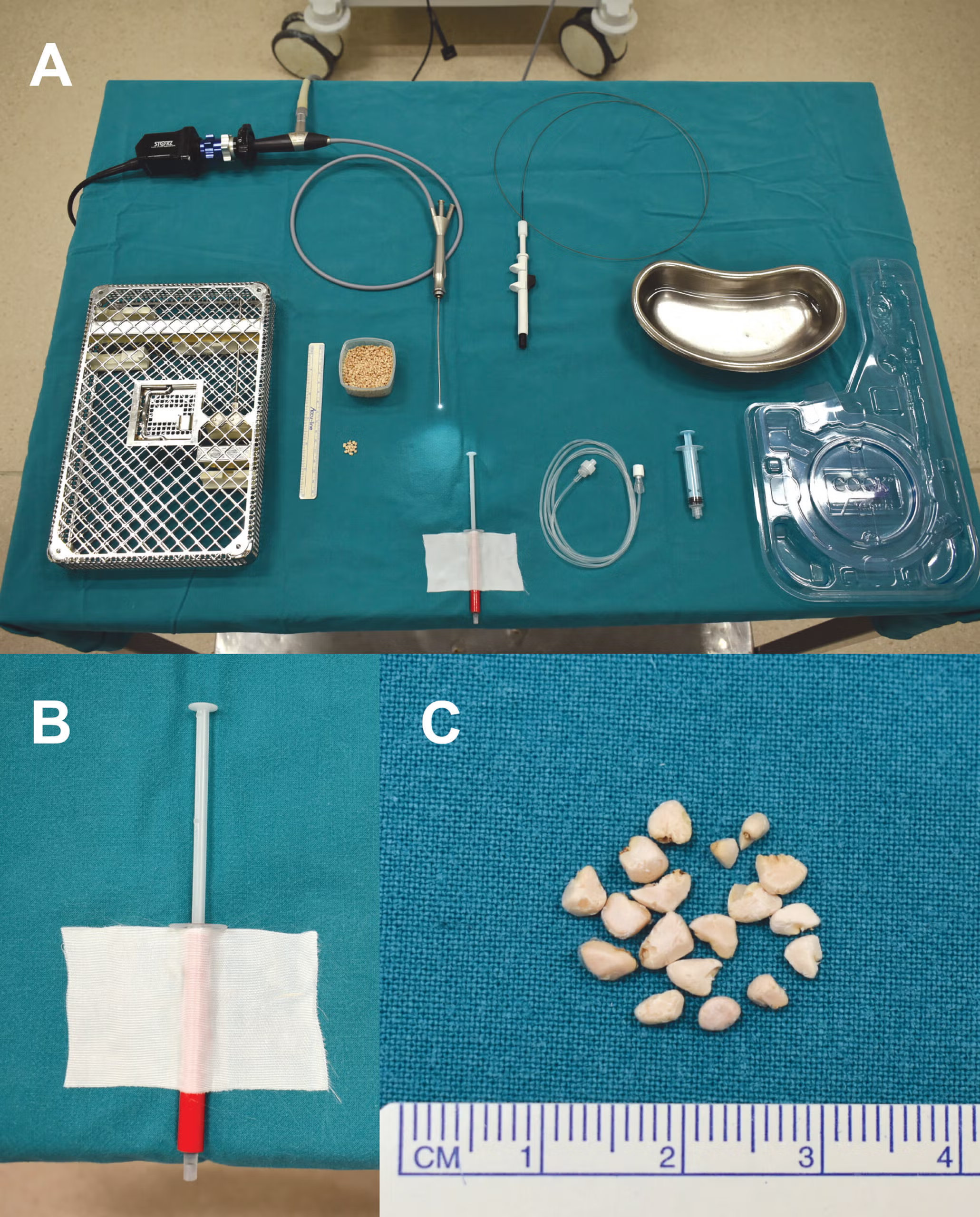
The authors present a simple and innovative BSR simulator model. The BSR simulator is evaluated by sialendoscopy trainees to ensure its realism and efficiency.
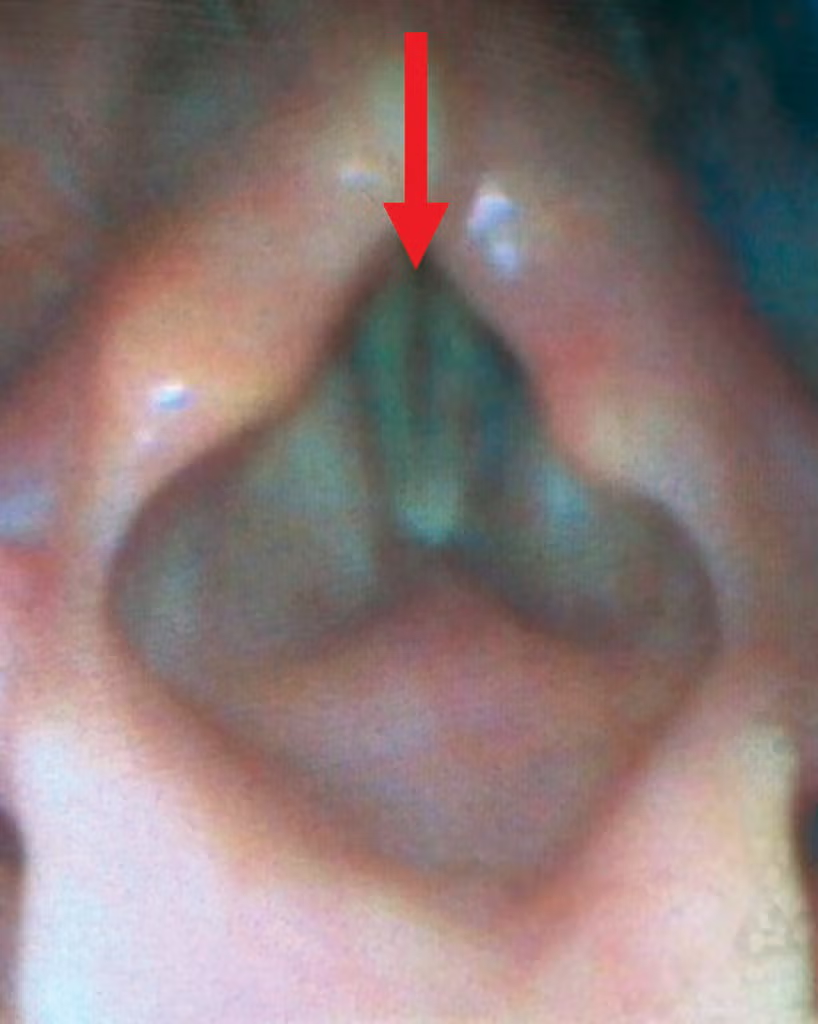
Authors describe a case in which a high-riding innominate artery was identified within the surgical trajectory moments before incision, which ultimately necessitated airway securement using an alternative laryngological procedure.

Authors recommend delaying elective surgery for six to 14 months depending on patient risk factors, surgical complexity, and urgency.

What are the ethical challenges and humanistic responsibilities of otolaryngologists in integrating AI into patient care?