ENTtoday debuts a new column, History of Otolaryngology, aimed at recounting clinically relevant pieces of the specialty’s past.

ENTtoday debuts a new column, History of Otolaryngology, aimed at recounting clinically relevant pieces of the specialty’s past.


Trust and racial disparities significantly impact patient care in otolaryngology, as illustrated by a Black patient’s reluctance to undergo a life-saving tracheostomy due to past medical complications and systemic distrust. This case highlights the need for diversity and education in the medical workforce to improve patient trust and outcomes.

Otolaryngologists face increasing threats and violence from patients or their families, prompting the adoption of system-level safety protocols to protect staff while ensuring patient care. These protocols emphasize team-based responses, clear behavior expectations, and institutional support to manage disruptive behaviors effectively.
Do biologic therapies improve symptoms, endoscopic findings, and inflammatory markers in patients with recalcitrant allergic fungal rhinosinusitis?
How often does the Centers for Medicare and Medicaid Services change Relative Value Scale Update Committee–recommended RVU values for otolaryngology procedures, and has this pattern changed over time?
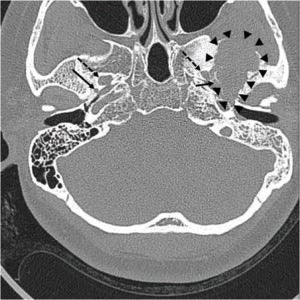
The authors successfully removed a giant cell tumor in the infratemporal fossa using an infratemporal fossa approach after selectively embolizing the MMA during transfemoral carotid angiography. The embolized MMA served as a surgical landmark, helping to confirm the tumor’s posterior boundary and minimizing bleeding during surgery.
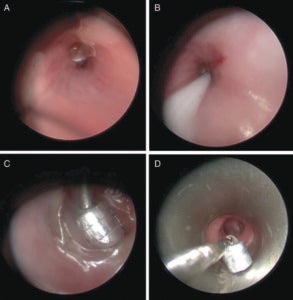
This study aimed to describe operative techniques using rigid bronchoscopy and ferromagnetic bronchoscopic equipment to retrieve magnetic foreign bodies in distal tertiary bronchi beyond the reach of traditional optical instrumentation.


Many medical students interested in competitive specialties like otolaryngology consider taking a gap year to conduct research, aiming to enhance their residency applications and future careers. While this trend is increasing, its benefits and consequences are debated among program directors, otolaryngologists, and trainees.