Chronic laryngitis is a multifactorial disease with a large differential diagnosis for the patient who presents with hoarseness. Fortunately, the diagnosis of inflamed larynx has improved in recent years.
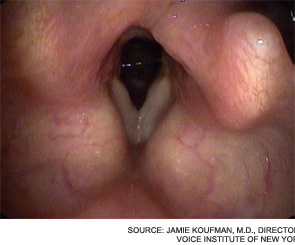
Chronic laryngitis is a multifactorial disease with a large differential diagnosis for the patient who presents with hoarseness. Fortunately, the diagnosis of inflamed larynx has improved in recent years.

When describing to the curious the benefits of opting out of both Medicare and private insurance, Gerard J. Gianoli, MD, president of The Ear and Balance Institute in Baton Rouge, La., often recalls one particular example: During one 90-day global period about five years ago, after an eight-hour resection of a skull-based glomus tumor, post-operative ICU care and several days of inpatient care and the usual post-operative office visits, he received a total reimbursement of $500.
What are the costs and diagnostic yield of screening patients presenting with asymmetrical sensorineural hearing loss (ASNHL)? Background: The magnitude of workup on a patient with ASNHL of an uncertain onset […]
If the recurrence of thyroglossal duct cysts (TGDC) occurs as a consequence of incomplete resection, will the application of the posterior hyoid space (PHS) to the Sistrunk procedure minimize the […]
Does robotic surgery provide better access to the infratemporal fossa (ITF), and is suprahyoid port placement an option? Background: Recent experimentation with robotic-assisted surgery has shown applications in head and neck […]
Does fractal quantitative endoscopic evaluation of the upper airway in patients with obstructive sleep apnea syndrome (OSAS) provide objectivity in the interpretation of these studies? Study Design: Diagnostic test assessment Setting: Tertiary […]
What is the evidence for the role of human papillomavirus (HPV) in the etiology of oropharyngeal cancers, methods of viral detection and the resulting clinical implications? Background: The incidence of head […]
Do children with obstructive sleep apnea syndrome (OSAS) have diminished upper airway sensation compared with controls? Background: Studies have shown that attenuation of the upper airway mucosal sensation by topical anesthesia […]

In the wake of this year’s landmark health care reform legislation, one of the most hotly debated topics comes courtesy of the Dartmouth Atlas of Health Care, as politicians, analysts, researchers and physicians grapple over how to resolve the contentious issue of geographical disparities in health care spending.

A physician who was recently offered a lucrative position with an otolaryngology practice in his community asked me to review his current employment agreement to determine if it contained any prohibitions against accepting the job. His previous employment contract contained a noncompetition clause that, justifiably, caused him and his prospective employer some concern. As it turned out, in his case, and in many others, the noncompetition clause was not as restrictive as it appeared at first glance. The provision was penetrable and my client joined the new practice with a clear conscience that he was not in violation of his previous contract.