• Home
  • Practice Focus
    • Facial Plastic/Reconstructive
    • Head and Neck
    • Laryngology
    • Otology/Neurotology
    • Pediatric
    • Rhinology
    • Sleep Medicine
    • How I Do It
    • TRIO Best Practices
  • Business of Medicine
    • Health Policy
    • Legal Matters
    • Practice Management
    • Technology
    • AI
    • History of Otolaryngology
  • Literature Reviews
    • Facial Plastic/Reconstructive
    • Head and Neck
    • Laryngology
    • Otology/Neurotology
    • Pediatric
    • Rhinology
    • Sleep Medicine
  • Career
    • Medical Education
    • Professional Development
    • Resident Focus
  • ENT Perspectives
    • ENT Expressions
    • Everyday Ethics
    • From TRIO
    • The Great Debate
    • Letter From the Editor
    • Rx: Wellness
    • The Voice
    • Viewpoint
    • SUO Corner
  • TRIO Resources
    • Triological Society
    • The Laryngoscope
    • Laryngoscope Investigative Otolaryngology
    • TRIO Combined Sections Meetings
    • COSM
    • Related Otolaryngology Events
  • Search

Stephanie Chen, MD, Makes Move from Professional Pianist to Surgeon

by Stephanie Chen, MD • June 11, 2018

  • Tweet
  • Email a link to a friend (Opens in new window) Email
Print-Friendly Version
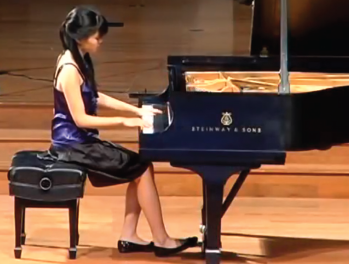
Dr. Chen at her piano.

Dr. Chen at her piano.
© Photo courtesy Dr. Chen

I’m originally from Austin, Texas. For college, I attended The Juilliard School and received a Bachelor of Music in classical piano performance, while taking science classes at Columbia University. During my senior year at Juilliard, I made the decision to pursue medicine, so, after graduating from Juilliard, I attended Johns Hopkins Post-Baccalaureate Premedical Program to complete the required prerequisites for medical school. I ended up doing a year of IL-15/cancer research at the NIH after my post-bac and completing medical school at Columbia University.

You Might Also Like

  • Otolaryngologist and Professional Musician Says Medicine and Music Work in Sync
  • How an Otolaryngologist’s Love of Music Helps Him Practice Medicine
  • Former Surgeon Uses Fine Motor Skills to Create Art after Retirement
  • This Doctor’s Appreciation for Medicine Grew After a Move to a Small Town. Here’s How.
Explore This Issue
June 2018

Early Love of Music

I started playing piano at age 6. Growing up, we had a piano at my house. My mom recalls me climbing onto our piano bench as a toddler and picking out, with one finger, a favorite tune that my grandpa often sang. Apparently, I begged her to let me start piano lessons, and she thought it was an appropriate time. Thankfully, both my parents have always been so supportive. I definitely still play, although typically it is just once or twice a week for an hour, compared with my peak of between four and six hours daily while at Juilliard.

I also learned the violin, which I started in fifth grade, and I continued playing through my senior year of high school. I rarely practiced violin but loved the community aspect of orchestra and playing in ensembles. It was also a convenient instrument, given that both my sisters played piano and violin! While orchestra was a great experience, I loved playing piano much more because it just felt more natural and was an easy way for me to communicate my stories to audiences.

People often ask what my favorite piece or composer is to perform, but I always find it difficult to answer because there is so much incredible music; it often depends on what I’m playing at the moment. Most consistently, Beethoven and Ravel are at the top of the list, as is Liszt’s Mephisto Waltz. It’s such a fun piece to play featuring an engaging narrative, and showcases the huge breadth of sounds that can be produced by a piano.

I still remember the first time I scrubbed into a total thyroidectomy. That first operating room experience reminded me of the rush I always felt performing on stage as a concert pianist and chamber musician. —Stephanie Chen, MD

The Move to Medicine

I was first introduced to medicine at age 9, when a close family friend got into a terrible accident and suffered a traumatic head injury. At the time, I felt helpless and deeply admired the neurosurgeon who was equipped with the skill set and potential to dramatically change the situation. Unfortunately, my friend didn’t survive, but that moment stuck with me.

Pages: 1 2 | Single Page

Filed Under: Departments Tagged With: medical resident, otolaryngology, stress relief, work life balanceIssue: June 2018

You Might Also Like:

  • Otolaryngologist and Professional Musician Says Medicine and Music Work in Sync
  • How an Otolaryngologist’s Love of Music Helps Him Practice Medicine
  • Former Surgeon Uses Fine Motor Skills to Create Art after Retirement
  • This Doctor’s Appreciation for Medicine Grew After a Move to a Small Town. Here’s How.

The Triological SocietyENTtoday is a publication of The Triological Society.

Polls

How have you adopted advanced technologies in your practice?

View Results

Loading ... Loading ...
  • Polls Archive

Top Articles for Residents

  • Is the SLOR in Otolaryngology Residency Applications Contributing to Rural Disparities?
  • Applications Open for Resident Members of the ENTtoday Editorial Board: Deadline Extended
  • A Resident’s View of AI in Otolaryngology
  • Call for Resident Bowl Questions
  • Resident Pearls: Pediatric Otolaryngologists Share Tips for Safer, Smarter Tonsillectomies
  • Popular this Week
  • Most Popular
  • Most Recent
    • Novel Treatments and Advances in OSA
    • Onboarding and Working with APPs
    • The Reasons We Keep Going
    • The Dramatic Rise in Tongue Tie and Lip Tie Treatment
    • Some Laryngopharyngeal Reflux Resists PPI Treatment
    • The Dramatic Rise in Tongue Tie and Lip Tie Treatment
    • Rating Laryngopharyngeal Reflux Severity: How Do Two Common Instruments Compare?
    • Is Middle Ear Pressure Affected by Continuous Positive Airway Pressure Use?
    • Otolaryngologists Are Still Debating the Effectiveness of Tongue Tie Treatment
    • Complications for When Physicians Change a Maiden Name
    • ENTtoday Wins 2026 APEX Award
    • AI-Powered Real-Time Multimodal Model for Predicting Recurrence and Survival in Head and Neck Cancer: A Multicenter, Multinational Study
    • Voices of Leadership: Challenges Faced by Female Facial Plastic Surgeons and Considerations for Future Generations
    • AI in the Diagnosis of Cholesteatoma: A Systematic Review of Current Evidence
    • Gender Identity Disparities in Early Adolescent Sleep: Findings from the Adolescent Brain Cognitive Development Study

Follow Us

  • Contact Us
  • About Us
  • Advertise
  • The Triological Society
  • The Laryngoscope
  • Laryngoscope Investigative Otolaryngology
  • Privacy Policy
  • Terms of Use
  • Cookies

Wiley

Copyright © 2026 by John Wiley & Sons, Inc. All rights reserved, including rights for text and data mining and training of artificial technologies or similar technologies. ISSN 1559-4939