Otolaryngologists with a desire to broaden their careers beyond traditional medical practice have several options. Programs exist that can open doors into medical leadership, health policy work, clinical and outcomes research and public office. Opportunities are available at all stages of a physician’s career. Here’s a look at a handful of programs that aim to provide physicians with the tools they need to take their careers in a new direction.

Resident Tips: Private and academic practitioners offer career advice
For residents embarking on their professional careers or physicians changing a career, navigating the many issues involved in making a decision that will significantly affect both their professional and personal lives can be daunting and challenging. To provide some guidance, practicing physicians with many years of experience in their respective careers discussed these issues during a session held here Sept. 13 at the 2011 American Academy of Otolaryngology–Head and Neck Surgery (AAO-HNS) Annual Meeting.

A New Way to Learn: Residency programs use medical simulation to fill training gaps
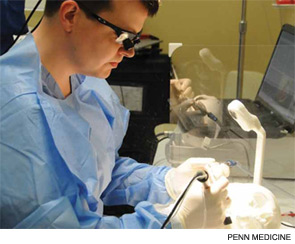
In May, Marcelo Antunes, MD, chief resident of otorhinolaryngology-head and neck surgery at the University of Pennsylvania, was able to practice bilobed flaps on pig’s feet at an ORL Rising Chief Boot Camp held at Penn Medicine Clinical Simulation Center in Philadelphia. While he had previously experienced medical simulation during his otolaryngology residency, the boot camp put the methodology in proper context for Dr. Antunes, who is particularly interested in facial plastics.

A Prevalent Problem: Studies report sleep deprivation in colleagues, patients
Among the issues highlighted here last month at SLEEP 2011, the 25th Annual Meeting of the Associated Professional Sleep Societies, was the effect of inadequate sleep on both the health of the individual and on society at large. Two studies presented at the meeting, for example, looked at the effects of inadequate sleep on health care providers and the risks posed to their health and the health of their patients. Another study put into context just how underreported inadequate sleep and sleep disorders are and elaborated on the challenge this poses to otolaryngologists and others who are on the frontlines managing these disorders.
British Surgeon Describes Lessons Learned from Trainee Duty Hour Limits
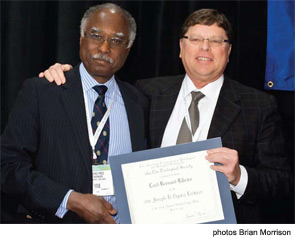
Lord Ribeiro gave his presentation at COSM 2011.
TRIO Guest of Honor Shares Career Advice
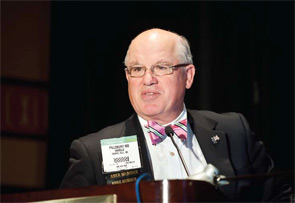
Dr. Harold Pillsbury gave his presentation at COSM 2011.

Training Trends: British surgeon offers cautionary tale about limit on trainee duty hours
New limits on doctors in training in the United Kingdom (U.K.) have drastically reduced the amount of training they receive and may put patients in peril, a renowned retired British surgeon told listeners here on April 29 at the Annual Meeting of the Triological Society, held as part of the Combined Otolaryngology Spring Meetings.

Words of Wisdom: Guest of Honor shares thoughts, lessons
Harold Pillsbury, MD, chair of otolaryngology-head and neck surgery at the University of North Carolina School of Medicine in Chapel Hill, is known as one of the more colorful figures in his field, with a bright smile—usually accompanied by a bow tie—and a forthright demeanor.
Response from the editor
Dr. Sims has eloquently identified the value of diversity not only in otolaryngology, but also its contribution to the strength of the U.S. as a nation. Drs. Kuppersmith and Thomas have responded to his editorial indicating steps that the AAO-HNS has taken and is currently taking to increase diversity.
Resident Restructure: Attendings adjust to new work-hour rules
The new duty hour regulation from the Accreditation Council for Graduate Medical Education (ACGME) that limits first-year residents to 16-hour shifts has drawn a conflicted chorus of reactions from attendings, who have only seven months before the stipulation goes into effect.
- « Previous Page
- 1
- …
- 3
- 4
- 5
- 6
- 7
- Next Page »