Michael S. Morris, MD, believes that the everyday illnesses seen by community otolaryngologists should be better analyzed. Is it an allergy or an infection? Is it a bug? We should find out, he said.

Michael S. Morris, MD, believes that the everyday illnesses seen by community otolaryngologists should be better analyzed. Is it an allergy or an infection? Is it a bug? We should find out, he said.

“Despite increasing awareness among intensivists and respiratory therapists and more widespread use of low-pressure, high-volume cuffs, the incidence of tracheal tube cuff overinflation remains high in the contemporary American intensive care unit [ICU],” said Luc Morris, MD, from the Head and Neck Service in the Department of Otolaryngology at New York University School of Medicine during his scientific session presentation at the April 2007 meeting of the American Broncho-Esophagological Association at the Combined Otolaryngology Spring Meeting.

Executives, royalty, and even the indigent seeking the world’s best, most advanced medical care find it in the United States.

An important success story has been quietly taking place at the National Institutes of Health over the last decade, which bodes well for patient care, for science, and for the specialty.

Sublingual immunotherapy (SLIT) is effective in controlling allergic symptoms in a preliminary patient cohort, according to a study presented April 27 at the Combined Otolaryngology Spring Meeting.


Cochlear implantation has become a safe procedure-and, as result of refinements in devices and surgical techniques, complications are atypical.

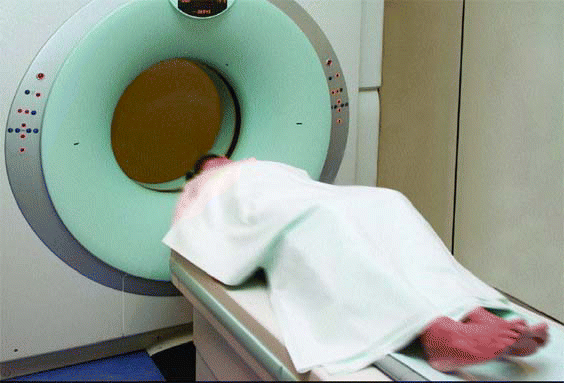
With improved technology, as well as increased availability and access, diagnostic imaging has become the fastest growing segment of health care spending, with estimates of 15% to 35% increases annually.