A look at why some patients with olfactory disorder (OD) report smell and flavor loss while others report smell loss only.
No Association Between Circulating Tumor Cells and Locally Advanced and Metastatic SCC of the Head and Neck Prognosis
Circulating tumor cells are not associated with prognosis in patients with locally advanced and metastatic squamous cell carcinoma of the head and neck (SCCHN), but circulating tumor cells (CTCs) are present.
Future Study of Malpractice Lawsuits Against Otolaryngologists by Subspecialty May Be Warranted
In a sample of medical malpractice cases involving otolaryngologists, trends in error type may warrant further investigation to identify specific areas of practice involvement and education.
Temporal Bone Metastasis Should Be Considered in Certain Symptomatic Patients
Temporal bone metastasis (TBM) is uncommon but should be considered in patients with subacute otologic symptoms or facial palsy and history of distant malignancy.
Day One Postoperative Use of CPAP Well Tolerated in Sinonasal Surgery Patients
A look at sinonasal surgery patients’ tolerability level when restarting continuous positive airway pressure (CPAP) immediately postoperatively.
Patient Trust Is Predictive of Comfort Level with Overlapping Surgery and Trainee Independence
Efforts to increase patient comfort with overlapping surgery and surgical training should include strategies to address past negative experiences and foster trust in trainees and the delegation process.
Caliper Measurement a Reliable Assessment Tool Following Pediatric Cranial Reconstruction
Caliper measurements are a simple and reliable way to assess cranial vault proportionality with growth after cranial vault reconstruction
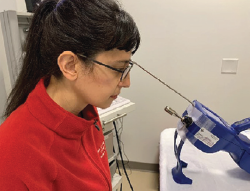
Office Laryngoscopy Is Not Aerosol Generating When Evaluated by Optical Particle Sizer
Is office laryngoscopy an aerosol-generating procedure (AGP), and how can aerosolizing potentials in invasive otolaryngological interventions be critically assessed?
Pediatric Otolaryngologic Clinical Trial Patterns Underscore Increased Representation Opportunities
Continued focus on pediatric otolaryngologic clinical trials enables improved representation of the specialty’s spectrum of disease and therapy, while increased results publication and federal funding may advance patient care.
Transoral Laser Microsurgery Favored Over Radiotherapy in T1 Glottic Carcinoma Survival
Transoral laser microsurgery is associated with better outcomes than radiotherapy in overall survival, confidence interval, disease-specific survival, and laryngeal preservation in patients with T1 glottic carcinoma.
- « Previous Page
- 1
- …
- 33
- 34
- 35
- 36
- 37
- …
- 99
- Next Page »