• Home
  • Practice Focus
    • Facial Plastic/Reconstructive
    • Head and Neck
    • Laryngology
    • Otology/Neurotology
    • Pediatric
    • Rhinology
    • Sleep Medicine
    • How I Do It
    • TRIO Best Practices
  • Business of Medicine
    • Health Policy
    • Legal Matters
    • Practice Management
    • Tech Talk
    • AI
  • Literature Reviews
    • Facial Plastic/Reconstructive
    • Head and Neck
    • Laryngology
    • Otology/Neurotology
    • Pediatric
    • Rhinology
    • Sleep Medicine
  • Career
    • Medical Education
    • Professional Development
    • Resident Focus
  • ENT Perspectives
    • ENT Expressions
    • Everyday Ethics
    • From TRIO
    • The Great Debate
    • Letter From the Editor
    • Rx: Wellness
    • The Voice
    • Viewpoint
  • TRIO Resources
    • Triological Society
    • The Laryngoscope
    • Laryngoscope Investigative Otolaryngology
    • TRIO Combined Sections Meetings
    • COSM
    • Related Otolaryngology Events
  • Search

Cosmetic Techniques and Reconstruction Becoming Integral to Head and Neck Surgery

by Heather Lindsey • October 1, 2007

  • Tweet
  • Click to email a link to a friend (Opens in new window) Email
Print-Friendly Version

A small scar, even with minimally invasive surgery, can look worse than a large scar due to poor surgical technique or poor healing capability, Dr. Pellitteri added. No matter how skilled the surgeon, individuals with poor circulation, diabetes, or immunological disease, or those on steroid therapy, may form unsightly scars because of compromised wound healing, he said.

You Might Also Like

  • Endoscopic Technology Brings Major Changes to Head and Neck Surgery
  • Robotics for Head and Neck Surgery: The Wave of the Future?
  • Biomaterial Appears Useful in Certain Head and Neck Surgery Wound Repairs
  • Facial Plastic and Reconstructive Surgery: New Patients, New Reasons, New Techniques
Explore This Issue
October 2007

Other Surgical Techniques

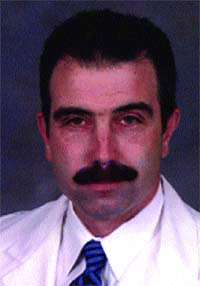
Phillip Pellitteri, DO

Phillip Pellitteri, DO

In addition to freshening skin edges, not raising the subplatysmal flaps to gain access to the thyroid compartment reduces dissection and scar tissue and minimizes healing time, said Dr. Terris. Subplatysmal flaps were not raised in the open or minimally invasive surgeries in his study.

Avoiding drains is another way to minimize scarring because surgeons don’t have to create a second stab wound, said Dr. Terris. Compared with minimally invasive surgery, the chance of fluid collection is greater in open surgery due to increased tissue removal. Drains are supposed to prevent subsequent seroma or expanding hematoma, although data suggest they aren’t needed, he said.

Endoscopic techniques combined with the harmonic scalpel help to avoid the need for drains because the ultrasonic device’s hemostatic properties probably lower the risk of postoperative bleeding, added Dr. Terris.

Another strategy to reduce scarring is using medical glue to eliminate cross-hatching that may occur with traditional stitches, he said.

A sutureless closure that doesn’t pull or create traction lines in the upper layers of the skin can certainly help to avoid scars, agreed Dr. Pellitteri. The use of Dermabond is appropriate for small incisions.

Sutured skin for larger incisions does not have to result in an unsatisfactory scar either, he said. Location of the incision, avoidance of crossing the skin crease when suturing the wound, and burying the suture rather than placing it at the skin surface can minimize skin tension and scarring, explained Dr. Pellitteri.

Post-Surgery Management

Patients also play an important role obtaining good cosmetic results. For example, they can help reduce scarring by not pulling on the incision post-surgery, avoiding significant exercise that may aggravate the wound, and staying out of the sun and using sunscreen, said Dr. Terris. Sun exposure may cause a color mismatch between the scar and adjacent skin.

Massage may also be helpful for reducing scar tissue, although this technique should not be used until six weeks after surgery, he added.

Patients also need to keep the wound clean and dry, Dr. Stack noted. He also suggested using wound healing or antiscarring treatments, such as vitamin E capsules or an over-the-counter silicone gel a week or two post-surgery.

Pages: 1 2 3 4 5 6 | Single Page

Filed Under: Everyday Ethics, Facial Plastic/Reconstructive, Head and Neck, Tech Talk Issue: October 2007

You Might Also Like:

  • Endoscopic Technology Brings Major Changes to Head and Neck Surgery
  • Robotics for Head and Neck Surgery: The Wave of the Future?
  • Biomaterial Appears Useful in Certain Head and Neck Surgery Wound Repairs
  • Facial Plastic and Reconstructive Surgery: New Patients, New Reasons, New Techniques

Leave a Reply Cancel reply

Your email address will not be published. Required fields are marked *

The Triological SocietyENTtoday is a publication of The Triological Society.

Polls

Do you use TXA to reduce intraoperative and post-op bleeding?

View Results

Loading ... Loading ...
  • Polls Archive

Top Articles for Residents

  • A Resident’s View of AI in Otolaryngology
  • Call for Resident Bowl Questions
  • Resident Pearls: Pediatric Otolaryngologists Share Tips for Safer, Smarter Tonsillectomies
  • A Letter to My Younger Self: Making Deliberate Changes Can Help Improve the Sense of Belonging
  • ENTtoday Welcomes Resident Editorial Board Members
  • Popular this Week
  • Most Popular
  • Most Recent
    • Office Laryngoscopy Is Not Aerosol Generating When Evaluated by Optical Particle Sizer

    • Call for Resident Bowl Questions

    • The Dramatic Rise in Tongue Tie and Lip Tie Treatment

    • Ethical Obligations and Duty to Advocate for Patients in Prior Authorization for Surgery

    • Some Laryngopharyngeal Reflux Resists PPI Treatment

    • The Dramatic Rise in Tongue Tie and Lip Tie Treatment

    • Rating Laryngopharyngeal Reflux Severity: How Do Two Common Instruments Compare?

    • Is Middle Ear Pressure Affected by Continuous Positive Airway Pressure Use?

    • Otolaryngologists Are Still Debating the Effectiveness of Tongue Tie Treatment

    • Keeping Watch for Skin Cancers on the Head and Neck

    • Growing Use of Tranexamic Acid in Otolaryngology
    • Reconnect, Recharge, Relax, and Choose Joy This Season
    • A Resident’s View of AI in Otolaryngology
    • Faculty Mentorship of Academic Surgeons
    • CMS’ New Rule Aims to Streamline the Prior Authorization Process

Follow Us

  • Contact Us
  • About Us
  • Advertise
  • The Triological Society
  • The Laryngoscope
  • Laryngoscope Investigative Otolaryngology
  • Privacy Policy
  • Terms of Use
  • Cookies

Wiley

Copyright © 2025 by John Wiley & Sons, Inc. All rights reserved, including rights for text and data mining and training of artificial technologies or similar technologies. ISSN 1559-4939