• Home
  • Practice Focus
    • Facial Plastic/Reconstructive
    • Head and Neck
    • Laryngology
    • Otology/Neurotology
    • Pediatric
    • Rhinology
    • Sleep Medicine
    • How I Do It
    • TRIO Best Practices
  • Business of Medicine
    • Health Policy
    • Legal Matters
    • Practice Management
    • Technology
    • AI
    • History of Otolaryngology
  • Literature Reviews
    • Facial Plastic/Reconstructive
    • Head and Neck
    • Laryngology
    • Otology/Neurotology
    • Pediatric
    • Rhinology
    • Sleep Medicine
  • Career
    • Medical Education
    • Professional Development
    • Resident Focus
  • ENT Perspectives
    • ENT Expressions
    • Everyday Ethics
    • From TRIO
    • The Great Debate
    • Letter From the Editor
    • Rx: Wellness
    • The Voice
    • Viewpoint
    • SUO Corner
  • TRIO Resources
    • Triological Society
    • The Laryngoscope
    • Laryngoscope Investigative Otolaryngology
    • TRIO Combined Sections Meetings
    • COSM
    • Related Otolaryngology Events
  • Search

Facial Prosthetics: An Evolving Field

by Alice Goodman • February 1, 2009

  • Tweet
  • Email a link to a friend (Opens in new window) Email
Print-Friendly Version

State of the Art

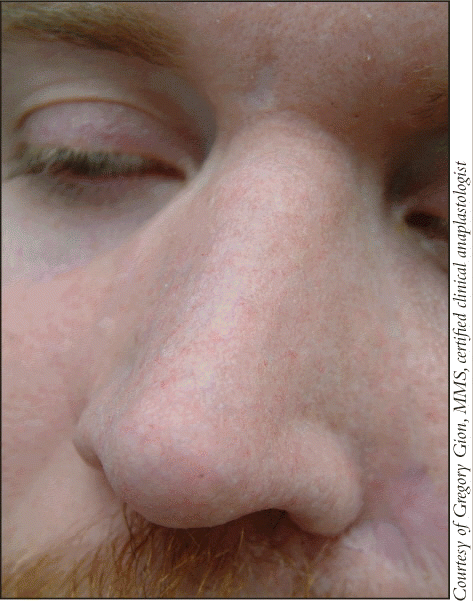
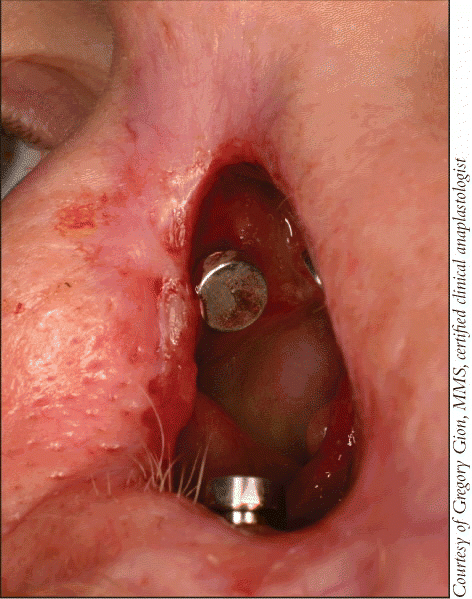
Figure. BEFORE: Nasal defect prepared with osteointegrated implants to accept prosthesis.

You Might Also Like

  • The Revolution and Evolution of Free Flaps in Facial Reconstructive Surgery
  • Optimal Management of Vascular Pedicle Is an Important Concern in Facial Free Flap Reconstruction
  • Facial Nerve Centers and New Treatment Options Can Make a Difference for Patients with Facial Paralysis
  • Airbags, Seat Belts Help Prevent Facial Fractures
Explore This Issue
February 2009
click for large version
Figure. BEFORE: Nasal defect prepared with osteointegrated implants to accept prosthesis.
Figure. AFTER: Implant retaining nasal prosthesis in place.

click for large version
Figure. AFTER: Implant retaining nasal prosthesis in place.
Roman Skoracki, MDIf the patient is able to discuss the procedure beforehand, it is important to explain what the amputation of an eye, nose, or ear will mean. Help the patient understand how a prosthesis will aid in their recovery, but tell them that the prosthesis will never be the same as normal tissue.

-Roman Skoracki, MD
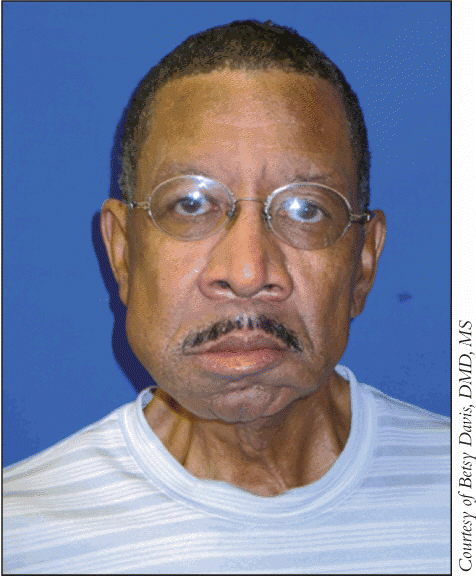
Figure. BEFORE: Cancer patient with lower jaw defect.

click for large version
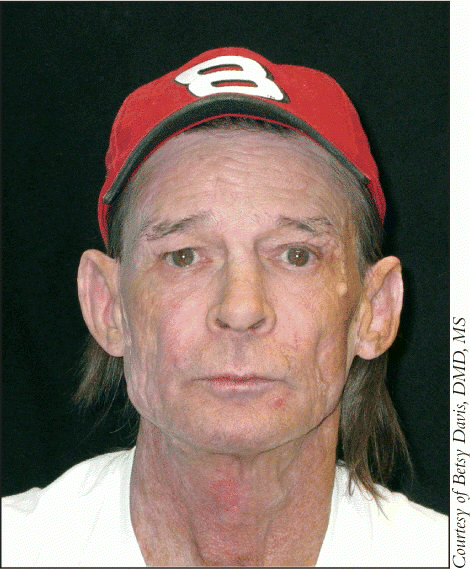
Figure. BEFORE: Cancer patient with lower jaw defect.
Figure. AFTER: Cancer patient with fibular reconstruction of the lower jaw with resection prosthesis in place.

click for large version
Figure. AFTER: Cancer patient with fibular reconstruction of the lower jaw with resection prosthesis in place.
Figure. BEFORE: Cancer patient with ear defect.

click for large version
Figure. BEFORE: Cancer patient with ear defect.
Figure. AFTER: Cancer patient with ear prosthesis.

click for large version
Figure. AFTER: Cancer patient with ear prosthesis.
Joseph Huryn, DDSThese are not live tissues, and they are not capable of functioning as such. A new eye won’t blink. No matter what the extraoral prosthesis looks like, it will not be functional.

-Joseph Huryn, DDS
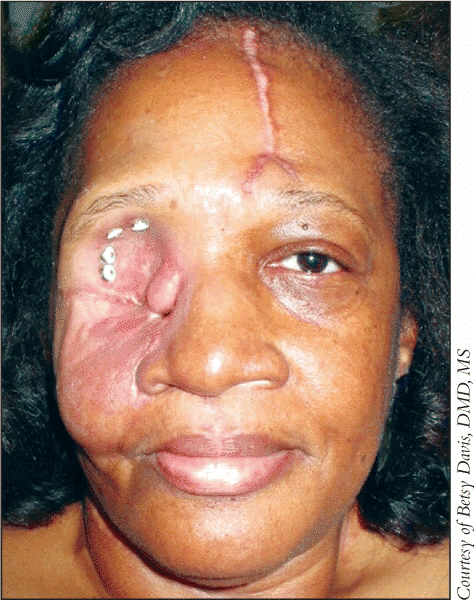
Figure. BEFORE: Orbital defect due to cancer of the eye.

click for large version
Figure. BEFORE: Orbital defect due to cancer of the eye.
Figure. AFTER: Patient with orbital prosthesis.

click for large version
Figure. AFTER: Patient with orbital prosthesis.

Traditionally, facial prostheses were hand-sculpted. CAD/CAM (computer-assisted design/computer-assisted manufacture) techniques have revolutionized the field. A CT scan images the anatomical defect and computer-assisted rapid prototyping stores the measurements layer by layer in an electronic file; these are used to create an intermediate wax pattern for a machine-made model. Once a wax model is made, a medical artist-usually an anaplastologist-sculpts the model to match the facial contours and the skin tone of the recipient using computer-aided measurements to create a lifelike prosthetic device as perfectly matched as possible.

Technology is transforming the field of facial prosthetics. Software programs [e.g., Mimics and SurgiCase, Materialise, Ann Arbor, MI] allow the clinician the ability to design the contour of the prosthesis virtually. Color measurement programs of the skin aid in matching all the prosthesis to the skin. Virtual surgical planning software enhances the surgical outcome, said Betsy Davis, DMD, MS, Associate Professor of Otolaryngology-Head and Neck Surgery and Associate Professor of Oral and Maxillofacial Surgery at the Medical University of South Carolina in Charleston.

Most facial prostheses are made of silicones. Over the years, silicones have become more flexible and lifelike, Dr. Huryn said. However, silicone devices have a limited lifespan, usually around two years. It is possible to make several prostheses from the same mold if the patient’s lifestyle suggests that a replacement will be needed sooner rather than later.

Pages: 1 2 3 4 5 6 | Single Page

Filed Under: Facial Plastic/Reconstructive Issue: February 2009

You Might Also Like:

  • The Revolution and Evolution of Free Flaps in Facial Reconstructive Surgery
  • Optimal Management of Vascular Pedicle Is an Important Concern in Facial Free Flap Reconstruction
  • Facial Nerve Centers and New Treatment Options Can Make a Difference for Patients with Facial Paralysis
  • Airbags, Seat Belts Help Prevent Facial Fractures

Leave a Reply Cancel reply

Your email address will not be published. Required fields are marked *

The Triological SocietyENTtoday is a publication of The Triological Society.

Polls

How have you adopted advanced technologies in your practice?

View Results

Loading ... Loading ...
  • Polls Archive

Top Articles for Residents

  • Is the SLOR in Otolaryngology Residency Applications Contributing to Rural Disparities?
  • Applications Open for Resident Members of the ENTtoday Editorial Board: Deadline Extended
  • A Resident’s View of AI in Otolaryngology
  • Call for Resident Bowl Questions
  • Resident Pearls: Pediatric Otolaryngologists Share Tips for Safer, Smarter Tonsillectomies
  • Popular this Week
  • Most Popular
  • Most Recent
    • Onboarding and Working with APPs
    • Dr. Rebecca Howell’s Circuitous, Yet Serendipitous, Path to Laryngology
    • Some Laryngopharyngeal Reflux Resists PPI Treatment
    • The Dramatic Rise in Tongue Tie and Lip Tie Treatment
    • Empty Nose Syndrome: Physiological, Psychological, or Perhaps a Little of Both?
    • The Dramatic Rise in Tongue Tie and Lip Tie Treatment
    • Rating Laryngopharyngeal Reflux Severity: How Do Two Common Instruments Compare?
    • Is Middle Ear Pressure Affected by Continuous Positive Airway Pressure Use?
    • Otolaryngologists Are Still Debating the Effectiveness of Tongue Tie Treatment
    • Complications for When Physicians Change a Maiden Name
    • ENTtoday Wins 2026 APEX Award
    • AI-Powered Real-Time Multimodal Model for Predicting Recurrence and Survival in Head and Neck Cancer: A Multicenter, Multinational Study
    • Voices of Leadership: Challenges Faced by Female Facial Plastic Surgeons and Considerations for Future Generations
    • AI in the Diagnosis of Cholesteatoma: A Systematic Review of Current Evidence
    • Gender Identity Disparities in Early Adolescent Sleep: Findings from the Adolescent Brain Cognitive Development Study

Follow Us

  • Contact Us
  • About Us
  • Advertise
  • The Triological Society
  • The Laryngoscope
  • Laryngoscope Investigative Otolaryngology
  • Privacy Policy
  • Terms of Use
  • Cookies

Wiley

Copyright © 2026 by John Wiley & Sons, Inc. All rights reserved, including rights for text and data mining and training of artificial technologies or similar technologies. ISSN 1559-4939