• Home
  • Practice Focus
    • Facial Plastic/Reconstructive
    • Head and Neck
    • Laryngology
    • Otology/Neurotology
    • Pediatric
    • Rhinology
    • Sleep Medicine
    • How I Do It
    • TRIO Best Practices
  • Business of Medicine
    • Health Policy
    • Legal Matters
    • Practice Management
    • Tech Talk
    • AI
  • Literature Reviews
    • Facial Plastic/Reconstructive
    • Head and Neck
    • Laryngology
    • Otology/Neurotology
    • Pediatric
    • Rhinology
    • Sleep Medicine
  • Career
    • Medical Education
    • Professional Development
    • Resident Focus
  • ENT Perspectives
    • ENT Expressions
    • Everyday Ethics
    • From TRIO
    • The Great Debate
    • Letter From the Editor
    • Rx: Wellness
    • The Voice
    • Viewpoint
  • TRIO Resources
    • Triological Society
    • The Laryngoscope
    • Laryngoscope Investigative Otolaryngology
    • TRIO Combined Sections Meetings
    • COSM
    • Related Otolaryngology Events
  • Search

How To: Multilayered Closure of Oronasal and Oroantral Fistula Using Intranasal and Intraoral Flaps

by Isaac P. Obermeyer, MD, Naya Sterritt, Yarah M. Haidar, MD, Tjoson Tjoa, MD, and Edward C. Kuan, MD, MBA • January 18, 2023

  • Tweet
  • Click to email a link to a friend (Opens in new window) Email
Print-Friendly Version

RESULTS

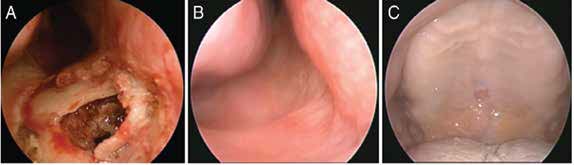
Multilayered repair of OAF–ONF using a pedicled intranasal flap combined with an intraoral local flap facilitated excellent closure in both patients. All procedures were completed on an outpatient basis without complications. Postoperative crusting was debrided in the clinic, which resolved any symptoms related to nasal obstruction. At last follow-up for each patient, the fistulae remained closed with well-integrated, healthy tissue (Figure 1, below). In addition, nasal regurgitation was resolved in both patients.

You Might Also Like

  • How To: Oroantral Fistula Closure Using Double-Layered Flap
  • How to: Oroantral Fistula Closure Using Double-Layered Flap: Greater Palatine Artery Flap and Buccal Fat Pad
  • How to: Nasoseptal Flap to Repair Large Maxillary Sinus Floor Defects
  • How to: Improving the Outcomes of Anterior Septal Perforations Repair with Combined Flaps
Explore This Issue
January 2023

Figure 1. Endoscopic views of right-sided oronasal fistula site for patient 1. Prerepair intranasal (A), postoperative intranasal (B), and intraoral (C) at 15 weeks following surgery.

Pages: 1 2 3 | Single Page

Filed Under: How I Do It, Practice Focus, Rhinology Tagged With: surgical managementIssue: January 2023

You Might Also Like:

  • How To: Oroantral Fistula Closure Using Double-Layered Flap
  • How to: Oroantral Fistula Closure Using Double-Layered Flap: Greater Palatine Artery Flap and Buccal Fat Pad
  • How to: Nasoseptal Flap to Repair Large Maxillary Sinus Floor Defects
  • How to: Improving the Outcomes of Anterior Septal Perforations Repair with Combined Flaps

The Triological SocietyENTtoday is a publication of The Triological Society.

Polls

Do you use TXA to reduce intraoperative and post-op bleeding?

View Results

Loading ... Loading ...
  • Polls Archive

Top Articles for Residents

  • A Resident’s View of AI in Otolaryngology
  • Call for Resident Bowl Questions
  • Resident Pearls: Pediatric Otolaryngologists Share Tips for Safer, Smarter Tonsillectomies
  • A Letter to My Younger Self: Making Deliberate Changes Can Help Improve the Sense of Belonging
  • ENTtoday Welcomes Resident Editorial Board Members
  • Popular this Week
  • Most Popular
  • Most Recent
    • Office Laryngoscopy Is Not Aerosol Generating When Evaluated by Optical Particle Sizer

    • Call for Resident Bowl Questions

    • The Dramatic Rise in Tongue Tie and Lip Tie Treatment

    • Empty Nose Syndrome: Physiological, Psychological, or Perhaps a Little of Both?

    • Ethical Obligations and Duty to Advocate for Patients in Prior Authorization for Surgery

    • The Dramatic Rise in Tongue Tie and Lip Tie Treatment

    • Rating Laryngopharyngeal Reflux Severity: How Do Two Common Instruments Compare?

    • Is Middle Ear Pressure Affected by Continuous Positive Airway Pressure Use?

    • Otolaryngologists Are Still Debating the Effectiveness of Tongue Tie Treatment

    • Keeping Watch for Skin Cancers on the Head and Neck

    • Growing Use of Tranexamic Acid in Otolaryngology
    • Reconnect, Recharge, Relax, and Choose Joy This Season
    • A Resident’s View of AI in Otolaryngology
    • Faculty Mentorship of Academic Surgeons
    • CMS’ New Rule Aims to Streamline the Prior Authorization Process

Follow Us

  • Contact Us
  • About Us
  • Advertise
  • The Triological Society
  • The Laryngoscope
  • Laryngoscope Investigative Otolaryngology
  • Privacy Policy
  • Terms of Use
  • Cookies

Wiley

Copyright © 2025 by John Wiley & Sons, Inc. All rights reserved, including rights for text and data mining and training of artificial technologies or similar technologies. ISSN 1559-4939