• Home
  • Practice Focus
    • Facial Plastic/Reconstructive
    • Head and Neck
    • Laryngology
    • Otology/Neurotology
    • Pediatric
    • Rhinology
    • Sleep Medicine
    • How I Do It
    • TRIO Best Practices
  • Business of Medicine
    • Health Policy
    • Legal Matters
    • Practice Management
    • Technology
    • AI
  • Literature Reviews
    • Facial Plastic/Reconstructive
    • Head and Neck
    • Laryngology
    • Otology/Neurotology
    • Pediatric
    • Rhinology
    • Sleep Medicine
  • Career
    • Medical Education
    • Professional Development
    • Resident Focus
  • ENT Perspectives
    • ENT Expressions
    • Everyday Ethics
    • From TRIO
    • The Great Debate
    • Letter From the Editor
    • Rx: Wellness
    • The Voice
    • Viewpoint
    • SUO Corner
  • TRIO Resources
    • Triological Society
    • The Laryngoscope
    • Laryngoscope Investigative Otolaryngology
    • TRIO Combined Sections Meetings
    • COSM
    • Related Otolaryngology Events
  • Search

Increased Medicare Funding Not Necessary for Graduate Medical Education

by Stephanie Mackiewicz • April 5, 2015

  • Tweet
  • Email a link to a friend (Opens in new window) Email
Print-Friendly Version

Increased Medicare Funding Not Necessary for Graduate Medical Education

You Might Also Like

  • How Underfunded Graduate Medical Education Programs May Affect Otolaryngology
  • Medical Education Needs of the Millennial Generation
  • Medical Simulation Growing Part of Medical Residents’ Education, Training
  • ABOto Education Council Focuses on Requirements, Standards for Resident Training
Explore This Issue
April 2015

Dr. Tsue said innovations in medical education, such as the use of surgical simulators and information technology, have driven up the costs of residency training exponentially. “It’s a lot different than when we didn’t have technology way back in the dark ages when I trained,” he said. “All that costs more money. To train a resident now is so much more expensive, and every year it gets much worse.”

New Funding Sources?

Dr. Tsue said that since funding hasn’t kept pace with the need for more residency slots, programs have had to be creative in finding alternative sources, including private funding and clinical revenues. But most programs, he said, fund approximately half of their slots using federal dollars, and no other mechanism exists that will fill the gap if federal funding is discontinued.

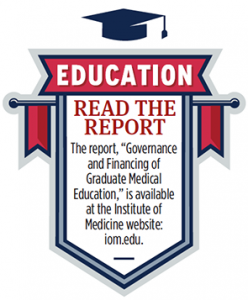
As the IOM report noted, in 2012 alone, public tax dollars contributed more than $15 billion to support residency training, with more than 90% coming from Medicare and Medicaid.

“The absolute biggest issue is that I don’t know where the funding will come from,” said Stacey Gray, MD, director of the Harvard Medical School Otolaryngology Residency Program in Boston. “Most of the people going into medicine are already fairly in debt when they start their residency training, and they continue to stay in debt during that time because the salary is significantly different than it is for full-time physicians. You’re going to stop attracting the very brightest people into the field of medicine if you’re having a funding problem.”

Dr. Tsue agreed. “There’s really no other mechanism that will be able to fill the gap in terms of training these residents.” Eventually, medical schools will find themselves with fewer students, he said. “The government is pushing for the training of more medical students but not producing more jobs for training them. No one will go to medical school if they can’t get a job afterward,” he said.

Funding Surgical Specialties Versus Primary Care

Otolaryngology may not be affected as strongly as other specialties by a reduction in Medicare GME funding, however. Without federal funding, hospitals that fund GME out of their operating revenues are more likely to continue to do so in the more profitable surgical specialties such as otolaryngology, rather than in primary care, said family medicine physician John Zubialde, MD, associate dean for graduate medical education at the University of Oklahoma School of Medicine in Oklahoma City.

Pages: 1 2 3 | Single Page

Filed Under: Features, Home Slider, Medical Education Tagged With: education, funding, Medicare, policy, resident, trainingIssue: April 2015

You Might Also Like:

  • How Underfunded Graduate Medical Education Programs May Affect Otolaryngology
  • Medical Education Needs of the Millennial Generation
  • Medical Simulation Growing Part of Medical Residents’ Education, Training
  • ABOto Education Council Focuses on Requirements, Standards for Resident Training

The Triological SocietyENTtoday is a publication of The Triological Society.

Polls

Have you ever participated in a professional group's advocacy or Hill Day event?

View Results

Loading ... Loading ...
  • Polls Archive

Top Articles for Residents

  • Is the SLOR in Otolaryngology Residency Applications Contributing to Rural Disparities?
  • Applications Open for Resident Members of the ENTtoday Editorial Board: Deadline Extended
  • A Resident’s View of AI in Otolaryngology
  • Call for Resident Bowl Questions
  • Resident Pearls: Pediatric Otolaryngologists Share Tips for Safer, Smarter Tonsillectomies
  • Popular this Week
  • Most Popular
  • Most Recent
    • The Dramatic Rise in Tongue Tie and Lip Tie Treatment
    • Some Laryngopharyngeal Reflux Resists PPI Treatment
    • Empty Nose Syndrome: Physiological, Psychological, or Perhaps a Little of Both?
    • Taking Otolaryngology Call in the ED and Hospital: Duty or Burden?
    • History of the Cochlear Implant
    • The Dramatic Rise in Tongue Tie and Lip Tie Treatment
    • Rating Laryngopharyngeal Reflux Severity: How Do Two Common Instruments Compare?
    • Is Middle Ear Pressure Affected by Continuous Positive Airway Pressure Use?
    • Otolaryngologists Are Still Debating the Effectiveness of Tongue Tie Treatment
    • Complications for When Physicians Change a Maiden Name
    • Society Debuts TRIO Leadership Academy
    • Innovations in Otolaryngology: Two Paths to Progress
    • How to Have Effective Presurgical Discussions
    • Advocacy: Finding Our Voice
    • A Royal Family Heritage: The Habsburg Jaw

Follow Us

  • Contact Us
  • About Us
  • Advertise
  • The Triological Society
  • The Laryngoscope
  • Laryngoscope Investigative Otolaryngology
  • Privacy Policy
  • Terms of Use
  • Cookies

Wiley

Copyright © 2026 by John Wiley & Sons, Inc. All rights reserved, including rights for text and data mining and training of artificial technologies or similar technologies. ISSN 1559-4939