Otolaryngologists discuss significant changes in their practices, highlighting advancements in technology, challenges with insurance, and evolving patient communication methods.

Otolaryngologists discuss significant changes in their practices, highlighting advancements in technology, challenges with insurance, and evolving patient communication methods.

Sleep breathing disorders like OSA are common and require specialized care. Otolaryngologists with sleep medicine training are uniquely qualified to manage these conditions through multidisciplinary approaches, including surgical options. Sleep fellowships offer advanced expertise and certification opportunities in this evolving field.

Patient advocacy organizations like the Chordoma Foundation and SMARCB1 Hope play a crucial role in supporting patients with rare sinonasal and skull base tumors by providing resources, fostering research, and building community connections. Their efforts highlight the importance of collaboration between patients, clinicians, and researchers to improve outcomes and care.
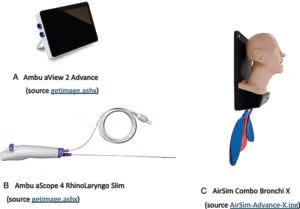

Although evidence-based medicine (EBM) is now formally referred to as the standard of medical care delivery, there are substantial concerns over its weaknesses and lack of utility on several levels. […]

Ankyloglossia, or tongue tie, remains a controversial condition regarding its diagnosis and treatment, particularly frenotomy, with ongoing debates about its impact on breastfeeding, speech, and sleep apnea. Recent research and clinical guidelines emphasize the need for careful assessment and multidisciplinary approaches to care.

Many otolaryngologists find that engaging in personal passions outside of medicine helps them maintain balance, recharge, and improve their professional performance. This article shares the stories of four physicians who have integrated hobbies such as comedy, writing, philosophy, and prioritizing wellbeing into their lives to combat burnout and enrich their medical practice.

Artificial intelligence (AI) is poised to significantly enhance healthcare by improving patient care and transforming the work experience for providers, particularly in otolaryngology. AI can reduce administrative burdens, allowing clinicians to focus more on patient interaction and thoughtful care.
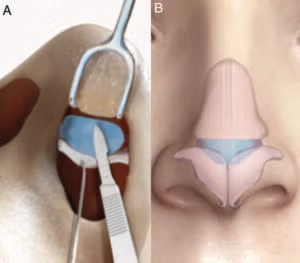
The butterfly graft (BFG) is a surgical technique used to treat nasal airway obstruction by reconstructing the internal nasal valve, but it can lead to external nasal contour irregularities. This study evaluates a secondary contouring procedure designed to address these irregularities while preserving nasal function and improving patient satisfaction.

The Triological Society has been actively engaging students and members through various initiatives, events, and publications following the Combined Otolaryngology Spring Meeting (COSM). Efforts include mentorship programs, upcoming conferences, webinars, and recognition of contributions to the field.