• Home
  • Practice Focus
    • Facial Plastic/Reconstructive
    • Head and Neck
    • Laryngology
    • Otology/Neurotology
    • Pediatric
    • Rhinology
    • Sleep Medicine
    • How I Do It
    • TRIO Best Practices
  • Business of Medicine
    • Health Policy
    • Legal Matters
    • Practice Management
    • Technology
    • AI
  • Literature Reviews
    • Facial Plastic/Reconstructive
    • Head and Neck
    • Laryngology
    • Otology/Neurotology
    • Pediatric
    • Rhinology
    • Sleep Medicine
  • Career
    • Medical Education
    • Professional Development
    • Resident Focus
  • ENT Perspectives
    • ENT Expressions
    • Everyday Ethics
    • From TRIO
    • The Great Debate
    • Letter From the Editor
    • Rx: Wellness
    • The Voice
    • Viewpoint
    • SUO Corner
  • TRIO Resources
    • Triological Society
    • The Laryngoscope
    • Laryngoscope Investigative Otolaryngology
    • TRIO Combined Sections Meetings
    • COSM
    • Related Otolaryngology Events
  • Home
  • Practice Focus
    • Facial Plastic/Reconstructive
    • Head and Neck
    • Laryngology
    • Otology/Neurotology
    • Pediatric
    • Rhinology
    • Sleep Medicine
    • How I Do It
    • TRIO Best Practices
  • Business of Medicine
    • Health Policy
    • Legal Matters
    • Practice Management
    • Technology
    • AI
  • Literature Reviews
    • Facial Plastic/Reconstructive
    • Head and Neck
    • Laryngology
    • Otology/Neurotology
    • Pediatric
    • Rhinology
    • Sleep Medicine
  • Career
    • Medical Education
    • Professional Development
    • Resident Focus
  • ENT Perspectives
    • ENT Expressions
    • Everyday Ethics
    • From TRIO
    • The Great Debate
    • Letter From the Editor
    • Rx: Wellness
    • The Voice
    • Viewpoint
    • SUO Corner
  • TRIO Resources
    • Triological Society
    • The Laryngoscope
    • Laryngoscope Investigative Otolaryngology
    • TRIO Combined Sections Meetings
    • COSM
    • Related Otolaryngology Events
  • Search

These Two Otolaryngologists Find Peace, Strength in Long-Distance Running

by Cheryl Alkon • May 19, 2021

  • Tweet
  • Email a link to a friend (Opens in new window) Email
Print-Friendly Version

Athletic Training and Medical Professionalism

Dr. Daniero had been a casual runner and was never a high school varsity athlete. Nonetheless, in his late 30s, he chose to transition from competing in sprint triathlons (with a half-mile swim, a 12-mile bike ride, and a 3.1-mile run) and half marathons (about 13 miles) to focus on longer races. The scientific possibility of what the body could do appealed to him.

You Might Also Like

  • Second Opinions: Facial Nerve Paralysis
  • Facial Nerve Centers and New Treatment Options Can Make a Difference for Patients with Facial Paralysis
  • Preparing for Adverse Events When Performing Office-based Procedures
  • New Options for Management of Facial Palsy Can Help Patients Regain Smiles, Movement
Explore This Issue
May 2021
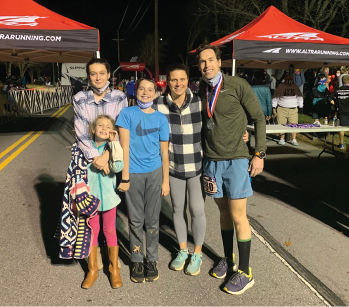
Jim Daniero, MD, celebrates with his family after completing the 2020 JFK 50 Mile race in 10 hours.

Jim Daniero, MD, celebrates with his family after completing the 2020 JFK 50 Mile race in 10 hours.
© Courtesy Jim Daniero, MD

“It’s more of a mind game: the discipline of training, and knowing the nutritional science and the scientific approach of trying to push the limits of human endurance, that really resonated with me,” he said. “It requires certain commitments and understanding of how to run that far and how to recover from it. Some of the training seems counterintuitive, such as not necessarily going all out when leading up to a long race to avoid injury on race day, making sure not to overtrain, and knowing how to go back to a healthy base from where you can extend into another race or training session during the year,” he said. “That really captured me.”

Dr. Daniero, who is chair-elect of the American Academy of Otolaryngology–Head and Neck Surgery’s Voice Committee and chair of the American Laryngological Association Post-Graduate Member Steering Committee, will think through work issues while out on his long runs, which he frequently does on familiar trails with a GPS watch and a headlamp to see at night or in the pre-dawn morning. He has especially appreciated being able to run solo outside in the woods without a mask during the COVID-19 pandemic. “I’ve found that a lot of my ‘aha!’ moments, both in research and on the clinical side, come when I’m doing long runs—just me in my own head for two hours,” he said.

Dr. Miller believes that engaging in team sports—he played baseball, swam in high school, and was a swim team captain for two years—helped make him into a better doctor. “When you function as a team, you need to learn how to work with others—when to take control and when to step back,” he said. “In medicine today, the same principles apply: You’re always functioning as part of a group, each person with his or her own expertise. When managing a complex head and neck patient requiring facial nerve reconstruction, you need to work alongside the cancer surgeon, oncologist, radiation oncologist, and so many others to provide the patient with the best possible outcome. At the end of the day, that’s what matters.”

Pages: 1 2 3 4 5 | Single Page

Filed Under: Departments, ENT Expressions Tagged With: personal storiesIssue: May 2021

You Might Also Like:

  • Second Opinions: Facial Nerve Paralysis
  • Facial Nerve Centers and New Treatment Options Can Make a Difference for Patients with Facial Paralysis
  • Preparing for Adverse Events When Performing Office-based Procedures
  • New Options for Management of Facial Palsy Can Help Patients Regain Smiles, Movement

The Triological SocietyENTtoday is a publication of The Triological Society.

Polls

Have you ever encountered a mentally or physically threatening patient or caregiver?

View Results

Loading ... Loading ...
  • Polls Archive

Top Articles for Residents

  • Is the SLOR in Otolaryngology Residency Applications Contributing to Rural Disparities?
  • Applications Open for Resident Members of the ENTtoday Editorial Board
  • A Resident’s View of AI in Otolaryngology
  • Call for Resident Bowl Questions
  • Resident Pearls: Pediatric Otolaryngologists Share Tips for Safer, Smarter Tonsillectomies
  • Popular this Week
  • Most Popular
  • Most Recent
    • Office Laryngoscopy Is Not Aerosol Generating When Evaluated by Optical Particle Sizer
    • More Than Skin Deep: Building a Workforce Patients Can Trust
    • Is Cognitive Behavioral Therapy Effective for Tinnitus?
    • Some Laryngopharyngeal Reflux Resists PPI Treatment
    • Top 10 LARY and LIO Articles of 2024
    • The Dramatic Rise in Tongue Tie and Lip Tie Treatment
    • Rating Laryngopharyngeal Reflux Severity: How Do Two Common Instruments Compare?
    • Is Middle Ear Pressure Affected by Continuous Positive Airway Pressure Use?
    • Otolaryngologists Are Still Debating the Effectiveness of Tongue Tie Treatment
    • Complications for When Physicians Change a Maiden Name
    • The Pursuit of Excellence—the Journey or the Gold
    • Is There Benefit of Music Training Following Cochlear Implantation?
    • Is Cognitive Behavioral Therapy Effective for Tinnitus?
    • Does Dupilumab Improve Sinonasal Outcomes in AERD Patients?
    • Making the Most of TRIO Meetings

Follow Us

  • Contact Us
  • About Us
  • Advertise
  • The Triological Society
  • The Laryngoscope
  • Laryngoscope Investigative Otolaryngology
  • Privacy Policy
  • Terms of Use
  • Cookies

Wiley

Copyright © 2026 by John Wiley & Sons, Inc. All rights reserved, including rights for text and data mining and training of artificial technologies or similar technologies. ISSN 1559-4939