Sinonasal cancer shows an 11.7% recurrence rate after a five-year disease- free period, but varies by tumor pathology.
BSS Should Be Considered in Differential Diagnosis
A look at the imaging characteristics and clinical outcomes of biphenotypic sinonasal sarcoma (BSS)?
Primary Endoscopic Surgery Led to Faster Resolution of Sinusitis Symptoms than Dental Treatments
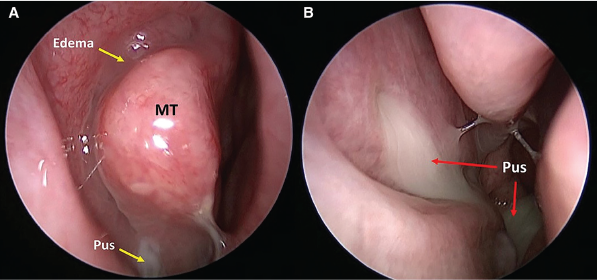
Comparing the time to odontogenic sinusitis resolution after primary dental treatment versus endoscopic sinus surgery.
Factors Associated with Increased Opioid Use in Endoscopic Sinus Surgery
Concurrent septoplasty and younger age were associated with increased opioid usage, although the majority of FESS patients did not take more than five opioid tablets after surgery.
Reboot Approach Significantly Reduces Post-Op Nasal Polyp Recurrence
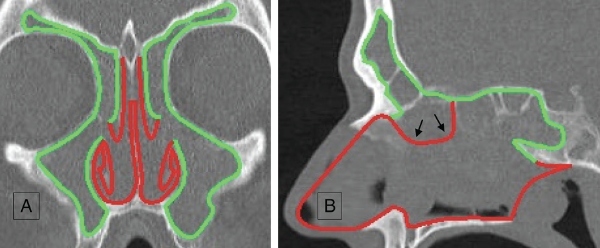
The reboot approach significantly reduced nasal polyp recurrence for 30 months postoperatively compared to the current mucosa-sparing approach.
Hierarchical Task Analysis Can Help Reduce Error in FESS
HTA and the Systematic Human Error Reduction and Prediction Approach (SHERPA) are valuable tools to highlight potential errors in functional endoscopic sinus surgery (FESS).
Sinus Surgery Improves Olfaction for About Half of Patients with CRS
Olfaction can be improved by sinus surgery in about every second chronic rhinosinusitis (CRS) patient.
Tranexamic Acid Could Decrease Operative Time, Intraoperative Blood Loss in ESS
A look at how effective systemic tranexamic acid is compared to a control in blood loss, operative time, and surgical field and incidence of postoperative emesis and thromboembolism in endoscopic sinus surgery (ESS).
Tissue Eosinophil Aggregates May Drive Increased Post-Sinus Surgery Prednisone Requirements
Tissue eosinophil aggregates appear to be the largest driving factor for increased prednisone requirements after sinus surgery to control mucosal disease than the mere presence of eosinophils.
Septal Deformity Grading Helps Nasal Airway Obstruction Diagnosis
The septal deformity grading (SDG) system may be valuable when used in conjunction with subjective data gathered from the Nasal Obstruction Symptom Evaluation (NOSE) questionnaire.
- « Previous Page
- 1
- …
- 6
- 7
- 8
- 9
- 10
- …
- 17
- Next Page »