Ways to manage the inferior turbinate, perform septoplasty while preserving the septum, and correct the collapsed nasal dorsum were discussed by panelists at the Triological Society’s Combined Sections Meeting in Miami Beach, Fla. in January

Ways to manage the inferior turbinate, perform septoplasty while preserving the septum, and correct the collapsed nasal dorsum were discussed by panelists at the Triological Society’s Combined Sections Meeting in Miami Beach, Fla. in January

Experts discussed best practices with timing of reconstructive surgery, follow-up care for patients with basal cell and squamous cell carcinoma at the Triological Society’s Combined Sections Meeting in Miami Beach, Fla. in January
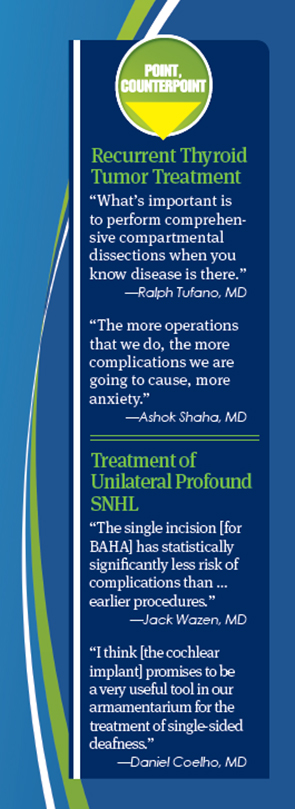
Experts weigh the pros and cons of surgery for recurrent thyroid tumors, and safety of bone-anchored hearing aids versus unilateral cochlear implants in a panel discussion at the Triological Society’s Combined Sections Meeting in Miami Beach, Fla. in January
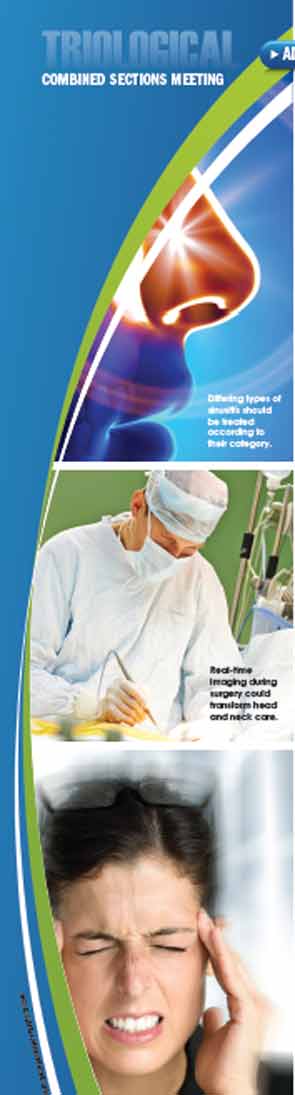
Guided therapeutics in head and neck surgery, upper airway stimulation for sleep apnea, and personalized therapy for sinusitis highlighted at the Triological Society’s Combined Sections Meeting in Miami Beach, Fla. in January
How effective are swallowing exercises during radiation and chemoradiation in preventing post-treatment dysphagia?

New research links inflammation and neuralgia as suspected causes, but making a definitive diagnosis remains difficult

Panel discussions and keynote speeches stress importance of education, mentorship for medical trainees, and physician role in healthcare costs at the Triological Society’s Combined Sections Meeting in Miami Beach, Fla. in January
Risk of transmission of HPV to surgeons appears to be low, and evacuation of plume from surgical field is an effective strategy to prevent viral contamination
Without a gold standard test to diagnose nasal valve compromise, history and physical exam are key measures for distinguishing among septal, turbinate, and sidewall causes.
How cost effective is the use of magnetic resonance imaging (MRI) for evaluating patients with idiopathic olfactory loss?