In examples of academic submissions with “fake” references, journal staff and reviewers must be able to detect inappropriate use of artificial intelligence (AI) tools such as ChatGPT.

Everything AI: What Artificial Intelligence Is and What Effect It Has on Otolaryngology
This article is the first in a series of five that looks at the broad dimensions of AI within the context of healthcare in general and otolaryngology where apt. This first article describes basic principles of AI and how these technologies are currently used in healthcare.
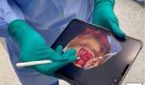
Novel Documentation of Supplemental Margins Using iPad Annotation of 3D Surgical Models with Procreate
The Procreate application was utilized on iPad Pro to intraoperatively annotate 3D renderings of head and neck surgical defects and resection specimens. By using Procreate on an iPad, the surgeon could annotate intraoperatively without breaking scrub to indicate the breadth of supplemental margins harvested in real time.

Otolaryngology Practices Use Digital Tools to Pre-authorize—With Mixed Results
When it comes to digital platforms meant to ease the prior approval burden, many procedures can receive almost instantaneous approval after a few keyboard clicks, but when a case isn’t cookie-cutter, these tools often aren’t very helpful—and might even make the process more of a headache than it would have been back in the old days.

Here Are Some New Advances in Sinus Navigation Systems

Letter from the Editor: COVID-19 Kick Starts the Age of Healthcare’s Digital Transformation
Digital health consists of the technologies that can help patients make an appointment with their provider with the use of an app on their smartphone.

These New Imaging Advances May Help to Protect Parathyroids
Recent advances in intraoperative, near-infrared imaging technology may offer effective tools for surgeons to help avoid negative outcomes.

How 3D Printing Is Transforming the Pediatric Otolaryngology Field
Although the science of 3D printing is more than 30 years old, its appication in treating infants and children with airway conditions is much newer.

Letter from the Editor: Balancing Humanity with Our Fast-Paced Technological Life
With the onslaught of all of this new technology, how do we make sure we balance humanity with our increasing reliance on machines?

Telemedicine: Practicing Medicine across State Lines
Emphasis on cost-effective quality healthcare coupled with technological advancements has caused a resurgence of telemedicine
- 1
- 2
- 3
- …
- 11
- Next Page »