• Home
  • Practice Focus
    • Facial Plastic/Reconstructive
    • Head and Neck
    • Laryngology
    • Otology/Neurotology
    • Pediatric
    • Rhinology
    • Sleep Medicine
    • How I Do It
    • TRIO Best Practices
  • Business of Medicine
    • Health Policy
    • Legal Matters
    • Practice Management
    • Technology
    • AI
  • Literature Reviews
    • Facial Plastic/Reconstructive
    • Head and Neck
    • Laryngology
    • Otology/Neurotology
    • Pediatric
    • Rhinology
    • Sleep Medicine
  • Career
    • Medical Education
    • Professional Development
    • Resident Focus
  • ENT Perspectives
    • ENT Expressions
    • Everyday Ethics
    • From TRIO
    • The Great Debate
    • Letter From the Editor
    • Rx: Wellness
    • The Voice
    • Viewpoint
    • SUO Corner
  • TRIO Resources
    • Triological Society
    • The Laryngoscope
    • Laryngoscope Investigative Otolaryngology
    • TRIO Combined Sections Meetings
    • COSM
    • Related Otolaryngology Events
  • Home
  • Practice Focus
    • Facial Plastic/Reconstructive
    • Head and Neck
    • Laryngology
    • Otology/Neurotology
    • Pediatric
    • Rhinology
    • Sleep Medicine
    • How I Do It
    • TRIO Best Practices
  • Business of Medicine
    • Health Policy
    • Legal Matters
    • Practice Management
    • Technology
    • AI
  • Literature Reviews
    • Facial Plastic/Reconstructive
    • Head and Neck
    • Laryngology
    • Otology/Neurotology
    • Pediatric
    • Rhinology
    • Sleep Medicine
  • Career
    • Medical Education
    • Professional Development
    • Resident Focus
  • ENT Perspectives
    • ENT Expressions
    • Everyday Ethics
    • From TRIO
    • The Great Debate
    • Letter From the Editor
    • Rx: Wellness
    • The Voice
    • Viewpoint
    • SUO Corner
  • TRIO Resources
    • Triological Society
    • The Laryngoscope
    • Laryngoscope Investigative Otolaryngology
    • TRIO Combined Sections Meetings
    • COSM
    • Related Otolaryngology Events
  • Search

Unintended Consequences: Combat-related injuries lead to advances in facial plastic and reconstructive surgery

by Jennifer Decker Arevalo, MA • February 1, 2010

  • Tweet
  • Email a link to a friend (Opens in new window) Email
Print-Friendly Version

Ever since the first fully equipped otolaryngology team was sent to the Air Force Theater Hospital (AFTH) in Balad, Iraq in 2004, an otolaryngologist-head and neck surgeon has become a permanent member of any deployed multispecialty head and neck team, working alongside a neurosurgeon, ophthalmologist and oral and maxillofacial surgeon.

You Might Also Like

  • Facial Plastic and Reconstructive Surgery: New Patients, New Reasons, New Techniques
  • Wound Management Following Facial Plastic Surgery
  • Trends in Facial Plastic Surgery: New Patient Groups Bring New Challenges
  • The Revolution and Evolution of Free Flaps in Facial Reconstructive Surgery
Explore This Issue
February 2010

“Otolaryngologists are invaluable because of their specific skills which include acute airway management, upper airway endoscopy, neck trauma and exploration and soft tissue and bony facial trauma,” said Maj. Manuel Lopez, MD, chief of facial plastic and reconstructive surgery at Wilford Hall Medical Center in San Antonio.

As with previous military conflicts, Operation Iraqi Freedom (OIF) and Operation Enduring Freedom (OEF) in Afghanistan will probably bring about significant advances in trauma management and reconstruction of combat-related head, face and neck injuries (HFNIs). Some changes in the management of wound closures and infections, as well as the use of neck exploration, have already occurred.
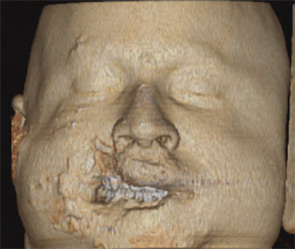
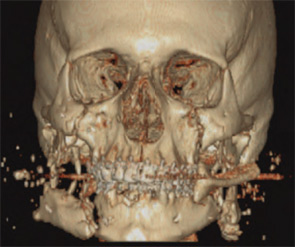
Figure 1 Figure 2

Images showing the extensive injuries experienced by Sgt. Jerald Jensen in Iraq. Figure 1 shows peri-oral soft tissue avulsion and figure 2 shows maxillary fractures, comminuted mandibular ramus/body fractures and bilateral condyle fractures. Drs. Lopez and Hale did nine major surgeries to reconstruct Sgt. Jensen. Despite residual functional problems that are virtually uncorrectable, this soldier went back to Iraq for another tour.

“Certainly the evidence base from caring for these military wounds will enhance civilian care of traumatized patients, including those with head and neck and maxillofacial trauma,” said Richard Holt, MD, professor emeritus in the department of Otolaryngology-Head and Neck Surgery at the University of Texas Health Science Center in San Antonio. “For example, new biomaterials are already being investigated on the battlefield for control of hemorrhage and to enhance healing.”

In a war zone, clinical research is effectively driven by the great number of patients needing assistance. Since these studies are larger than most civilian studies, they provide more data and information for practicing U.S. otolaryngologists-head and neck surgeons. There are developing data from OIF or OEF regarding facial injury treatment and how that knowledge can be used to treat otolaryngology patients in the civilian world, according to Dr. Holt.

Wound Management

“During the Vietnam War, many traumatic wounds were contaminated and left open with a delayed closure planned for a medical facility outside of the country,” Dr. Holt said. “During OIF, in spite of the unusual microbes present, it was possible to deal with wounds more aggressively and perform primary closure, albeit with the utilization of key antibiotics, in theater, as Dr. Lopez reported in his study.”

Pages: 1 2 3 4 5 | Single Page

Filed Under: Departments, Facial Plastic/Reconstructive, Head and Neck, Medical Education, Practice Focus Tagged With: antibiotics, facial, head and neck, infection, reconstructive, research, surgery, warIssue: February 2010

You Might Also Like:

  • Facial Plastic and Reconstructive Surgery: New Patients, New Reasons, New Techniques
  • Wound Management Following Facial Plastic Surgery
  • Trends in Facial Plastic Surgery: New Patient Groups Bring New Challenges
  • The Revolution and Evolution of Free Flaps in Facial Reconstructive Surgery

Leave a Reply Cancel reply

Your email address will not be published. Required fields are marked *

The Triological SocietyENTtoday is a publication of The Triological Society.

Polls

More and more medical trainees are taking dedicated, prolonged gap years. Did you?

View Results

Loading ... Loading ...
  • Polls Archive

Top Articles for Residents

  • Is the SLOR in Otolaryngology Residency Applications Contributing to Rural Disparities?
  • Applications Open for Resident Members of the ENTtoday Editorial Board
  • A Resident’s View of AI in Otolaryngology
  • Call for Resident Bowl Questions
  • Resident Pearls: Pediatric Otolaryngologists Share Tips for Safer, Smarter Tonsillectomies
  • Popular this Week
  • Most Popular
  • Most Recent
    • Gap Year for Research: Is It Worth It?
    • Office Laryngoscopy Is Not Aerosol Generating When Evaluated by Optical Particle Sizer
    • What Otolaryngologists Can Learn from Athletes
    • MRI Surveillance Should Extend to 10 Years Post- Op for Vestibular Schwannoma Patients
    • Empty Nose Syndrome: Physiological, Psychological, or Perhaps a Little of Both?
    • The Dramatic Rise in Tongue Tie and Lip Tie Treatment
    • Rating Laryngopharyngeal Reflux Severity: How Do Two Common Instruments Compare?
    • Is Middle Ear Pressure Affected by Continuous Positive Airway Pressure Use?
    • Otolaryngologists Are Still Debating the Effectiveness of Tongue Tie Treatment
    • Complications for When Physicians Change a Maiden Name
    • Short-Term Efficacy of Biologics in Recalcitrant AFRS: A Systematic Review and Meta-Analysis
    • The Devaluation of Otolaryngology: An Evaluation of CMS’s Involvement in Physician Reimbursement
    • Embolized Middle Meningeal Artery as a Surgical Landmark in Infratemporal Fossa
    • Lord of the (Magnetic) Rings: Rigid Bronchoscopy for Aspirated Magnetic Foreign Bodies in Tertiary Bronchi
    • What Otolaryngologists Can Learn from Athletes

Follow Us

  • Contact Us
  • About Us
  • Advertise
  • The Triological Society
  • The Laryngoscope
  • Laryngoscope Investigative Otolaryngology
  • Privacy Policy
  • Terms of Use
  • Cookies

Wiley

Copyright © 2026 by John Wiley & Sons, Inc. All rights reserved, including rights for text and data mining and training of artificial technologies or similar technologies. ISSN 1559-4939