Effective presurgical discussions are essential for helping patients make informed decisions and feel comfortable with their treatment options.

Effective presurgical discussions are essential for helping patients make informed decisions and feel comfortable with their treatment options.

U.S. immigration policies have significantly affected immigrant families’ access to pediatric otolaryngological care, leading to fear, reduced healthcare visits, and delayed treatments. These changes have created challenges for healthcare providers and jeopardized children’s health and well-being.


TXA is increasingly used in otolaryngology to reduce intra-operative and post-operative bleeding, supported by evidence from emergency medicine and orthopedic surgery. Its safety profile is strong, and it is administered intravenously or orally, with emerging use in pediatric and adult otolaryngologic procedures.


Otolaryngologists discuss significant changes in their practices, highlighting advancements in technology, challenges with insurance, and evolving patient communication methods.
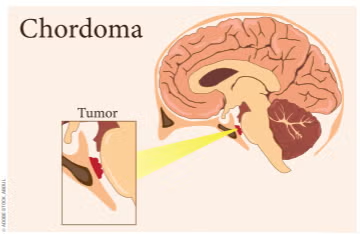
Patient advocacy organizations like the Chordoma Foundation and SMARCB1 Hope play a crucial role in supporting patients with rare sinonasal and skull base tumors by providing resources, fostering research, and building community connections. Their efforts highlight the importance of collaboration between patients, clinicians, and researchers to improve outcomes and care.

Chronic cough affects about 10% of people globally and can persist for many years, often requiring a multidisciplinary approach for diagnosis and treatment. Recent research suggests that chronic cough should be considered a distinct disease, with neurogenic mechanisms playing a significant role in some cases.

Correctly identifying the origin or cause of VPI is critical to successful treatment. Surgeons share their thoughts on treating velopharyngeal insufficiency with injectables.

CMA members’ concerns about a recent reimbursement policy change Blue Shield had announced regarding evaluation and management (E/M) services billed with the Current Procedural Terminology (CPT) modifier 25. The new policy would reduce by 50% reimbursement for any non-preventive E/M service appended with modifier 25 and billed with a minor procedure code.