
• Home
  • Practice Focus
    • Facial Plastic/Reconstructive
    • Head and Neck
    • Laryngology
    • Otology/Neurotology
    • Pediatric
    • Rhinology
    • Sleep Medicine
    • How I Do It
    • TRIO Best Practices
  • Business of Medicine
    • Health Policy
    • Legal Matters
    • Practice Management
    • Technology
    • AI
  • Literature Reviews
    • Facial Plastic/Reconstructive
    • Head and Neck
    • Laryngology
    • Otology/Neurotology
    • Pediatric
    • Rhinology
    • Sleep Medicine
  • Career
    • Medical Education
    • Professional Development
    • Resident Focus
  • ENT Perspectives
    • ENT Expressions
    • Everyday Ethics
    • From TRIO
    • The Great Debate
    • Letter From the Editor
    • Rx: Wellness
    • The Voice
    • Viewpoint
    • SUO Corner
  • TRIO Resources
    • Triological Society
    • The Laryngoscope
    • Laryngoscope Investigative Otolaryngology
    • TRIO Combined Sections Meetings
    • COSM
    • Related Otolaryngology Events
  • Search

When Should Pediatric Septoplasty Be Performed for Nasal Airway Obstruction?

by Natalie Justicz, MD, Sukgi Choi, MD, MBA • August 12, 2019

  • Tweet
  • Email a link to a friend (Opens in new window) Email
Print-Friendly Version

TRIO Best PracticeTRIO Best Practice articles are brief, structured reviews designed to provide the busy clinician with a handy outline and reference for day-to-day clinical decision making. The ENTtoday summaries below include the Background and Best Practice sections of the original article. To view the complete Laryngoscope articles free of charge, visit Laryngoscope.

You Might Also Like

  • Septal Deformity Grading Helps Nasal Airway Obstruction Diagnosis
  • What Are the Indications for the Use of CT before Septoplasty?
  • Is Adenoidectomy Alone Sufficient for Treating Pediatric Airway Obstruction?
  • Sponsored Supplement: New Paradigms in the Treatment of Nasal Airway Obstruction
Explore This Issue
August 2019

Background

Historically, otolaryngologists have been concerned about the potential detrimental effects of pediatric nasal surgery on the nasoseptal growth process. Septal cartilage is important for the development of the midface, and pediatric septoplasty was reserved for patients with functional problems secondary to congenital anomaly, tumor, or septal hematoma/abscess. More recently, there has been mounting evidence that the septum can be repaired without compromising facial development. In fact, a deviated septum causing nasal airway obstruction (NAO) represents an increasingly compelling indication to perform septoplasty. Otolaryngologists report functional improvement and patients report quality-of-life (QOL) improvement following septoplasty. However, high-quality guidelines for when to perform pediatric septoplasty are lacking. This review seeks to evaluate the current evidence for pediatric septoplasty, focusing on the indications to perform septoplasty and the most appropriate timeline for surgical intervention.

Best Practice

Pediatric septoplasty may be safely performed without significantly affecting future nasal and facial growth. Septoplasty should be performed in patients with functional problems related to congenital anomalies or trauma, whereas a deviated septum causing NAO symptomatology also represents a reasonable and supported cause for early septoplasty in children as young as six years of age. Endoscopic septoplasty has not been shown to cause a change in postoperative nasolabial angle. Anthropometric studies suggest nasal growth is completed around 14 years of age in females and 15 years of age in males. However, in appropriate situations, pediatric septoplasty should not be deferred until adolescence. Some believe that conservative management of septal deviations may lead to increased facial asymmetry. More clinical studies are required to determine evidence for best timeline for correction in younger children. Septoplasty has been shown to improve QOL measures on VAS. Further research will likely focus on characterizing patient-reported outcome measures of septoplasty
(Laryngoscope. 2019;129:1489–1490). 
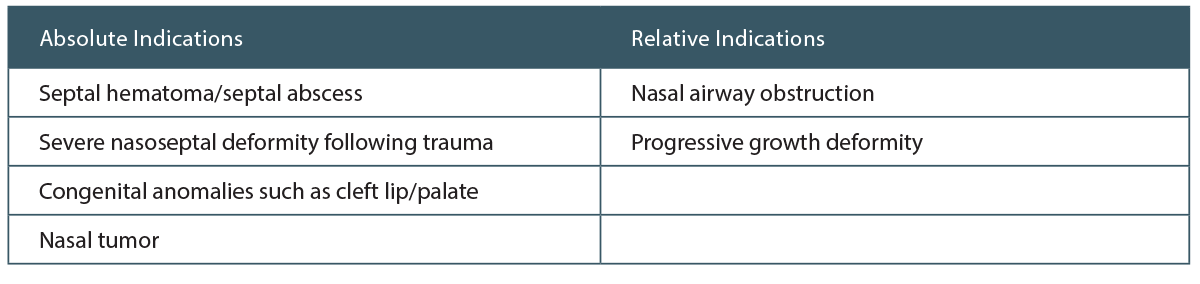
Table 1. Absolute and Relative Indications to Perform Pediatric Septoplasty

(click for larger image) Table 1. Absolute and Relative Indications to Perform Pediatric Septoplasty

Filed Under: Pediatric, TRIO Best Practices Tagged With: nasal airway obstruction, pediatrics, septoplastyIssue: August 2019

You Might Also Like:

  • Septal Deformity Grading Helps Nasal Airway Obstruction Diagnosis
  • What Are the Indications for the Use of CT before Septoplasty?
  • Is Adenoidectomy Alone Sufficient for Treating Pediatric Airway Obstruction?
  • Sponsored Supplement: New Paradigms in the Treatment of Nasal Airway Obstruction

The Triological SocietyENTtoday is a publication of The Triological Society.

Polls

Have you ever participated in a professional group's advocacy or Hill Day event?

View Results

Loading ... Loading ...
  • Polls Archive

Top Articles for Residents

  • Is the SLOR in Otolaryngology Residency Applications Contributing to Rural Disparities?
  • Applications Open for Resident Members of the ENTtoday Editorial Board: Deadline Extended
  • A Resident’s View of AI in Otolaryngology
  • Call for Resident Bowl Questions
  • Resident Pearls: Pediatric Otolaryngologists Share Tips for Safer, Smarter Tonsillectomies
  • Popular this Week
  • Most Popular
  • Most Recent
    • Some Laryngopharyngeal Reflux Resists PPI Treatment
    • The Dramatic Rise in Tongue Tie and Lip Tie Treatment
    • Rating Laryngopharyngeal Reflux Severity: How Do Two Common Instruments Compare?
    • History of the Cochlear Implant
    • Innovations in Otolaryngology: Two Paths to Progress
    • The Dramatic Rise in Tongue Tie and Lip Tie Treatment
    • Rating Laryngopharyngeal Reflux Severity: How Do Two Common Instruments Compare?
    • Is Middle Ear Pressure Affected by Continuous Positive Airway Pressure Use?
    • Otolaryngologists Are Still Debating the Effectiveness of Tongue Tie Treatment
    • Complications for When Physicians Change a Maiden Name
    • Society Debuts TRIO Leadership Academy
    • Innovations in Otolaryngology: Two Paths to Progress
    • How to Have Effective Presurgical Discussions
    • Advocacy: Finding Our Voice
    • A Royal Family Heritage: The Habsburg Jaw

Follow Us

  • Contact Us
  • About Us
  • Advertise
  • The Triological Society
  • The Laryngoscope
  • Laryngoscope Investigative Otolaryngology
  • Privacy Policy
  • Terms of Use
  • Cookies

Wiley

Copyright © 2026 by John Wiley & Sons, Inc. All rights reserved, including rights for text and data mining and training of artificial technologies or similar technologies. ISSN 1559-4939