• Home
  • Practice Focus
    • Facial Plastic/Reconstructive
    • Head and Neck
    • Laryngology
    • Otology/Neurotology
    • Pediatric
    • Rhinology
    • Sleep Medicine
    • How I Do It
    • TRIO Best Practices
  • Business of Medicine
    • Health Policy
    • Legal Matters
    • Practice Management
    • Technology
    • AI
  • Literature Reviews
    • Facial Plastic/Reconstructive
    • Head and Neck
    • Laryngology
    • Otology/Neurotology
    • Pediatric
    • Rhinology
    • Sleep Medicine
  • Career
    • Medical Education
    • Professional Development
    • Resident Focus
  • ENT Perspectives
    • ENT Expressions
    • Everyday Ethics
    • From TRIO
    • The Great Debate
    • Letter From the Editor
    • Rx: Wellness
    • The Voice
    • Viewpoint
    • SUO Corner
  • TRIO Resources
    • Triological Society
    • The Laryngoscope
    • Laryngoscope Investigative Otolaryngology
    • TRIO Combined Sections Meetings
    • COSM
    • Related Otolaryngology Events
  • Home
  • Practice Focus
    • Facial Plastic/Reconstructive
    • Head and Neck
    • Laryngology
    • Otology/Neurotology
    • Pediatric
    • Rhinology
    • Sleep Medicine
    • How I Do It
    • TRIO Best Practices
  • Business of Medicine
    • Health Policy
    • Legal Matters
    • Practice Management
    • Technology
    • AI
  • Literature Reviews
    • Facial Plastic/Reconstructive
    • Head and Neck
    • Laryngology
    • Otology/Neurotology
    • Pediatric
    • Rhinology
    • Sleep Medicine
  • Career
    • Medical Education
    • Professional Development
    • Resident Focus
  • ENT Perspectives
    • ENT Expressions
    • Everyday Ethics
    • From TRIO
    • The Great Debate
    • Letter From the Editor
    • Rx: Wellness
    • The Voice
    • Viewpoint
    • SUO Corner
  • TRIO Resources
    • Triological Society
    • The Laryngoscope
    • Laryngoscope Investigative Otolaryngology
    • TRIO Combined Sections Meetings
    • COSM
    • Related Otolaryngology Events
  • Search

A Tailored Approach to Dizziness: Take extra caution and care in the elderly, panelists say

by Thomas R. Collins • October 8, 2010

  • Tweet
  • Email a link to a friend (Opens in new window) Email
Print-Friendly Version

BOSTON—Dizziness is a particular danger among the elderly, but extra care taken by physicians can help ease their problems and help keep older patients functioning, panelists said at the 2010 Annual Meeting of the American Academy of Otolaryngology-Head and Neck Surgery, held here Sept. 26-29.

You Might Also Like

  • Vertigo in the Elderly: What Does It Mean?
  • Tailored Treatments: The right approach to vocal fold paralysis depends on the patient, panelists say
  • Advanced Diagnostic Tests Help Clinicians Assess Dizziness, Vestibular System
  • Involvement with Long-Term Disability Insurance, Legal Claims May Hinder Recovery from Chronic Dizziness
Explore This Issue
October 2010

Treatment tactics used for younger patients might not always be suitable for elderly patients, they said, but new therapy tools can help the elderly feel less helpless against the sensation of being off balance.

Concerns about dizziness in elderly patients come as the Baby Boomer generation ages, bringing a huge number of new, older patients, said David Eibling, MD, chair of the AAO-HNS’ Geriatric Otolaryngology Committee. “A tsunami of Baby Boomers is just now hitting the Medicare and Medicaid ages,” he said.
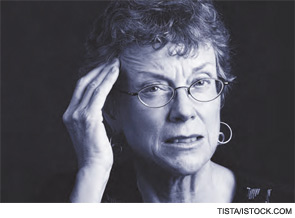
Concern about dizzines come as the Baby Boomer generation ages

Concerns about dizziness come as the Baby Boomer generation ages

And they will demand a lot from their health care providers, he said. “The elderly folks are not only living longer but they are maintaining a higher level of function,” Dr. Eibling said. “So that, for them, quality of life achieves an even greater significance than it has in prior years.”

Treatment Options

The term “dizziness” suffers somewhat from an identity crisis that might make it difficult for physicians to address in elderly patients, said Michael E. Hoffer, MD, director of the Spatial Orientation Center at the Naval Medical Center San Diego. While dizziness is thought of as a vestibular disorder, it is often influenced by factors that are not vestibular, such as eye disorders, peripheral vascular disease and arthritis of the cervical spine, Dr. Hoffer said.

“It’s unclear whether what we call presbystasis is truly a vestibular disorder or simply the impact of the other diseases associated with aging,” he said. Dysequilibrium Associated with Aging (DAA) might be a more appropriate term, he said.

A common approach to dizziness, just trying to prevent falling, doesn’t serve patients well enough, Dr. Hoffer said. “The fear of going outside because of the risk of falling or the embarrassment is tremendously isolating,” Dr. Hoffer said. “A lot of our hospitals, because of recent rules and laws, have falls prevention programs. That’s not enough…. We need function programs in target areas so that people no longer feel isolated.”

A common malady causing dizziness among the elderly is benign paroxysmal positional vertigo (BPPV), sudden, brief periods of mild to intense dizziness brought on by a change in someone’s head position or by lying down, turning over, or sitting up in bed. It’s usually not life threatening, except when it increases the chance of falling.

Pages: 1 2 3 | Single Page

Filed Under: Departments, Medical Education, Otology/Neurotology, Practice Focus Tagged With: dizziness, falls, geriatric otolaryngology, geriatrics, meeting coverage, prevention, vertigoIssue: October 2010

You Might Also Like:

  • Vertigo in the Elderly: What Does It Mean?
  • Tailored Treatments: The right approach to vocal fold paralysis depends on the patient, panelists say
  • Advanced Diagnostic Tests Help Clinicians Assess Dizziness, Vestibular System
  • Involvement with Long-Term Disability Insurance, Legal Claims May Hinder Recovery from Chronic Dizziness

Leave a Reply Cancel reply

Your email address will not be published. Required fields are marked *

The Triological SocietyENTtoday is a publication of The Triological Society.

Polls

More and more medical trainees are taking dedicated, prolonged gap years. Did you?

View Results

Loading ... Loading ...
  • Polls Archive

Top Articles for Residents

  • Is the SLOR in Otolaryngology Residency Applications Contributing to Rural Disparities?
  • Applications Open for Resident Members of the ENTtoday Editorial Board
  • A Resident’s View of AI in Otolaryngology
  • Call for Resident Bowl Questions
  • Resident Pearls: Pediatric Otolaryngologists Share Tips for Safer, Smarter Tonsillectomies
  • Popular this Week
  • Most Popular
  • Most Recent
    • Gap Year for Research: Is It Worth It?
    • What Otolaryngologists Can Learn from Athletes
    • Office Laryngoscopy Is Not Aerosol Generating When Evaluated by Optical Particle Sizer
    • Some Laryngopharyngeal Reflux Resists PPI Treatment
    • The Dramatic Rise in Tongue Tie and Lip Tie Treatment
    • The Dramatic Rise in Tongue Tie and Lip Tie Treatment
    • Rating Laryngopharyngeal Reflux Severity: How Do Two Common Instruments Compare?
    • Is Middle Ear Pressure Affected by Continuous Positive Airway Pressure Use?
    • Otolaryngologists Are Still Debating the Effectiveness of Tongue Tie Treatment
    • Complications for When Physicians Change a Maiden Name
    • Short-Term Efficacy of Biologics in Recalcitrant AFRS: A Systematic Review and Meta-Analysis
    • The Devaluation of Otolaryngology: An Evaluation of CMS’s Involvement in Physician Reimbursement
    • Embolized Middle Meningeal Artery as a Surgical Landmark in Infratemporal Fossa
    • Lord of the (Magnetic) Rings: Rigid Bronchoscopy for Aspirated Magnetic Foreign Bodies in Tertiary Bronchi
    • What Otolaryngologists Can Learn from Athletes

Follow Us

  • Contact Us
  • About Us
  • Advertise
  • The Triological Society
  • The Laryngoscope
  • Laryngoscope Investigative Otolaryngology
  • Privacy Policy
  • Terms of Use
  • Cookies

Wiley

Copyright © 2026 by John Wiley & Sons, Inc. All rights reserved, including rights for text and data mining and training of artificial technologies or similar technologies. ISSN 1559-4939