Beyond the handful of long-established and well-integrated sites being labeled as de facto accountable care organizations (ACOs), advocates are seizing the moment and pushing for a bold vision of what role ACOs will play in the movement to reform the health care payment system across the country.

HIPAA Expansion: Ensure your practice meets the law’s new provisions
On Feb. 17, 2009, President Obama signed into law the American Recovery and Reinvestment Act of 2009 (commonly referred to as ARRA or the Stimulus Bill) which includes the Health Information Technology for Economic and Clinical Health (HITECH) Act. The HITECH Act includes significant changes to the Health Insurance Portability and Accountability Act of 1996 (HIPAA) that affect otolaryngologists and other health care providers, as well as those who process or work with health care information. Below is a summary of how these new provisions, many of which go into effect this Feb. 17, will affect your practice.
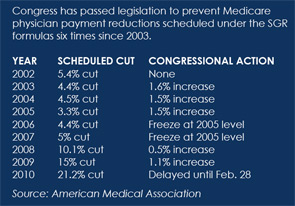
Medicare Meltdown: Congress Seeks Payment Formula Fix
Presdient Obama signed legislationlast month to temporarily prevent a 12.2 percent Medicare payment cut scheduled to take effect Jan. 1. The freeze lasts until Feb. 28, during which Congress is expected to come up with a permanent solution to what some consider a flawed payment system.
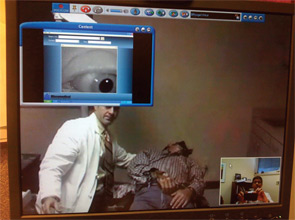
Fill the Gap: Strategies for addressing the otolaryngology workforce shortage
How do you plan to deal with workforce shortages? If you are like 55 percent of the audience at an interactive mini-seminar held during the October American Academy of Otolaryngology–Head and Neck Surgery (AAO-HNS) Foundation annual meeting, you intend to hire additional otolaryngologists to help with practice overload.
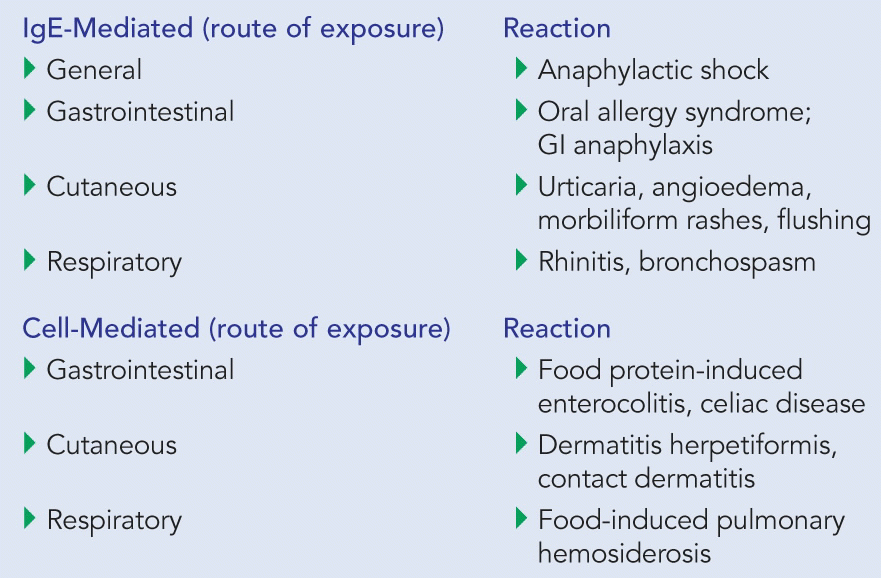
Update on Diagnosis and Management of Food Allergies
With the rising prevalence of food allergies and their associated potentially fatal consequences, understanding the pathophysiology of food allergies along with their diagnosis and treatment remains a critical part of otolaryngologic practice.

Trauma Care and the Otolaryngologist: Roles, Expectations, and Challenges
SAN DIEGO-Trauma care in the United States is on or heading toward life support. Although this may sound hyperbolic, it points to a need, seen by many otolaryngologists and other surgeons, to raise awareness of the growing gap between the numbers of people in need of trauma services and the accessibility of getting those services.

Product Watch
Each month, Product Watch offers readers the latest information on new and innovative products for otolaryngologists-head and neck surgeons.
Hearing Aid Update
Hearing aids-external electronic devices used to help individuals with hearing loss-traditionally consist of a microphone, an analog-to-digital converter, a digital signal processor, a digital-to-analog converter, and a receiver that delivers an acoustic signal into the external auditory canal. In 2008, 97% of all hearing aids sold used digital processing. Catherine V. Palmer, PhD, provides a review of current digital hearing aids.

Experts Debate Pediatric Airway Issues
In a recent debate-style panel, five otolaryngologists addressed topical clinical issues relating to the pediatric airway ranging from adenotonsillectomy in children with obstructive sleep symptoms, to whether cidofovir should be used as a standard treatment in children with recurrent respiratory papillomas.

Managed Correctly, Hearing Aid Dispensing Augments the Bottom Line
SAN DIEGO-Hearing aids can become a reliable source of ancillary income for otolaryngologists, according to four speakers in the miniseminar, Hearing Aids: The Dollars and Cents of Dispensing, presented at the annual meeting of the American Academy of Otolaryngology-Head and Neck Surgery (AAO-HNS).
- « Previous Page
- 1
- …
- 29
- 30
- 31
- 32
- 33
- …
- 50
- Next Page »