In one of the first sessions at the American Academy of Otolaryngology–Head and Neck Surgery annual meeting, otolaryngologists made it overwhelmingly clear that they believe they should be paid for being on call for emergencies and consultations.
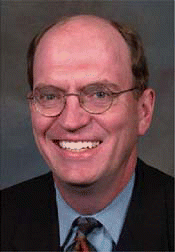
In one of the first sessions at the American Academy of Otolaryngology–Head and Neck Surgery annual meeting, otolaryngologists made it overwhelmingly clear that they believe they should be paid for being on call for emergencies and consultations.
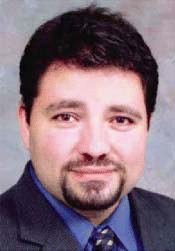
Dysphagia is the dominant cause of morbidity and mortality in patients treated by otolaryngologists, and in fact, more people die from aspiration pneumonia following stroke than from all head and neck cancers combined.
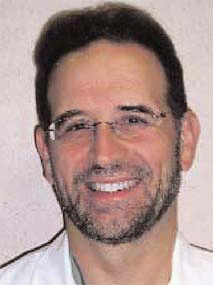
When a pediatric patient presents with a diagnosis of chronic sinusitis and rhinitis, my modus operandi is to assess the patient, review the history, and provide medical treatment as indicated.
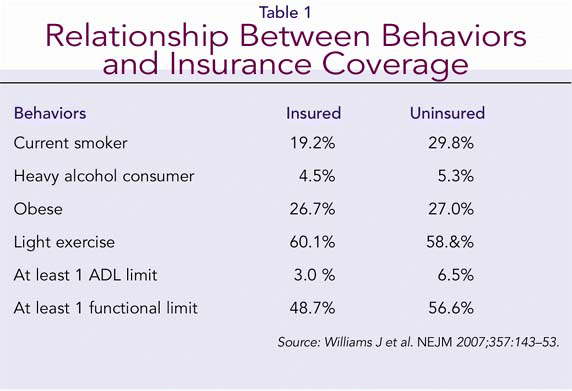
Like other physicians, Gady Har-El, MD, Chairman of the Department of Otolaryngology-Head and Neck Surgery at Lenox Hill Hospital in New York and president of the American Broncho-Esophagological Association, takes on uninsured patients who have waited too long to see a doctor.
Academic medical centers within the United States bear the primary responsibility for promulgating and performing life sciences research.
Generosity was the main topic of the American Academy of Otolaryngology-Head and Neck Surgery’s 2007 John Conley Lecture on Medical Ethics by Rev. William G. Enright, PhD, Executive Director of the Lake Family Institute on Faith and Giving at the Center on Philanthropy, Indiana University, at the opening ceremony of this year’s annual meeting.
How will 21st-century otolaryngologists meet these challenges?

Neonates with younger gestational age and lower birth weight are more likely to fail extubation and to require earlier surgical airway intervention, according to an April 28 presentation by University of Texas Medical School, Houston, researchers at the American Society of Pediatric Otolaryngology program at the Combined Otolaryngology Spring Meeting.
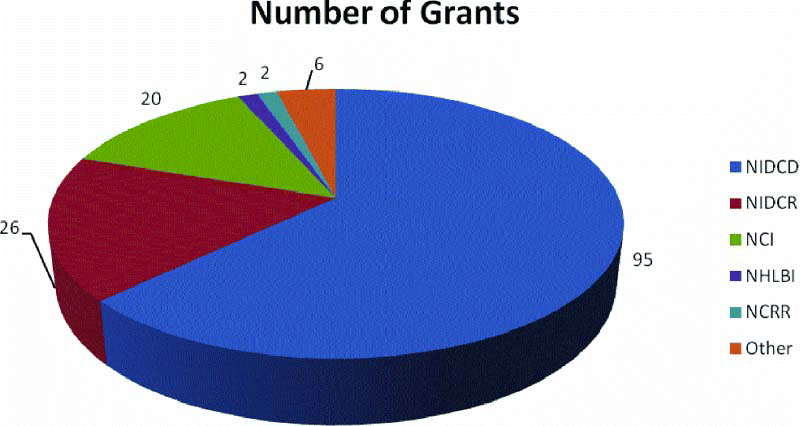
In the past, almost all support for otolaryngology research was provided through the National Institute on Deafness and other Communication Disorders (NIDCD) or its parent institute, the National Institute on Neurological Diseases and Stroke (NINDS).
The publication of two Institute of Medicine (IOM) reports-To Err is Human: Building A Safer Health System in 1999 and Crossing the Quality Chasm: A New Health System for the 21st Century in 2001-served as a catalyst to increase awareness among health care professionals that the American health care system is beset by serious problems related to patient safety and medical errors.