Recent deaths from sinus irrigation with contaminated tap water sparked a warning from the Centers for Disease Control and Prevention, and Food and Drug Adminstration, to use distilled, filtered or boiled water in preparing solutions

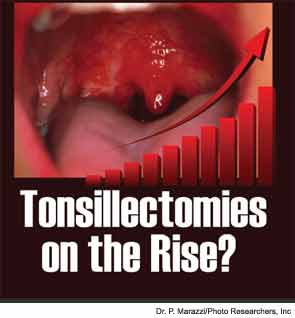
Pediatric Tonsillectomies on the Rise

Incisionless Procedure Offers Less Invasive Treatment for Reflux
Transoral incisionless fundoplication (TIF) shows promise for patients with gastroesophageal reflux disease
Tips for Treating Chronic Rhinosinusitis with Nasal Irrigation
Nasal irrigation can be an effective therapy for chronic rhinosinusitis, provided patients—especially children—are shown safe and proper irrigation techniques
CAM Therapy Effective in Treating Chronic Sinusitis
Activated hexose correlated compound (AHCC) and ginseng are some doctor-recommended, go-to complementary and alternative medicine treatments for patients with chronic sinusitis
Tests Emerging as Standards for Diagnosing HPV-Positive Oropharyngeal Cancer
Immunohistochemical analysis of p16 expression levels in tumor tissues, and it situ hybridization to detect many types of onocogenic HPV, are often used either alone, or in combination
Testing Recommendation for Children with Sleep-Disordered Breathing
Before determining the need for tonsillectomy, it is highly beneficial to refer children with sleep-disordered breathing for polysomnography (PSG)

Is Polysomnagraphy Required Prior to T+A for Diagnosis of OSA versus Mild Sleep Disordered Breathing in Children?
Polysomnography (PSG) has been recommended by the American Academy of Pediatrics as the gold standard for the diagnosis of obstructive sleep apnea (OSA) versus mild sleep disordered breathing (SDB) prior to tonsillectomy and adenoidectomy (T+A) in children. Mild SDB includes primary snoring and upper airway resistance syndrome. Controversy exists regarding the accuracy of history and physical exam (H+P) alone in children for the diagnosis of OSA versus mild SDB prior to T+A. Thus, PSG has been recommended to confirm the diagnosis

Are Routine Dissolvable Nasal Dressings Necessary Following ESS?
Nasal dressings have frequently been advocated to improve wound healing and prevent ongoing bleeding after endoscopic sinus surgery (ESS). Initial experience focused on removable nasal packing materials; however, their adverse effect profile, such as pain/discomfort and mucosal trauma, has driven the development of absorbable biomaterials. Despite these developments, there is still little agreement on the optimal choice of nasal dressing or whether nasal dressings are required at all

What Is the Role of Long-Term Macrolide Therapy in the Treatment of Recalcitrant Chronic Rhinosinusitis?
Long-duration therapy with macrolide antibiotics has been advocated for the treatment of recalcitrant chronic rhinosinusitis (CRS). However, uncertainty exists as to which patients will respond to such treatment, the degree of benefit likely to be obtained, and the relevant risks to the patient and community at large
- « Previous Page
- 1
- …
- 125
- 126
- 127
- 128
- 129
- …
- 168
- Next Page »