In this study, the authors propose a critical view of safety to promote standard visual identification and preservation of the recurrent laryngeal nerve during transoral endoscopic thyroidectomy by vestibular approach.

In this study, the authors propose a critical view of safety to promote standard visual identification and preservation of the recurrent laryngeal nerve during transoral endoscopic thyroidectomy by vestibular approach.
Do biologic therapies improve symptoms, endoscopic findings, and inflammatory markers in patients with recalcitrant allergic fungal rhinosinusitis?
How often does the Centers for Medicare and Medicaid Services change Relative Value Scale Update Committee–recommended RVU values for otolaryngology procedures, and has this pattern changed over time?
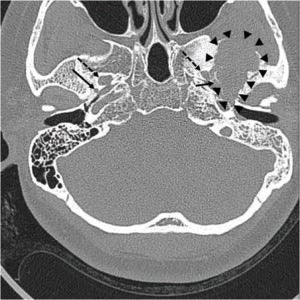
The authors successfully removed a giant cell tumor in the infratemporal fossa using an infratemporal fossa approach after selectively embolizing the MMA during transfemoral carotid angiography. The embolized MMA served as a surgical landmark, helping to confirm the tumor’s posterior boundary and minimizing bleeding during surgery.
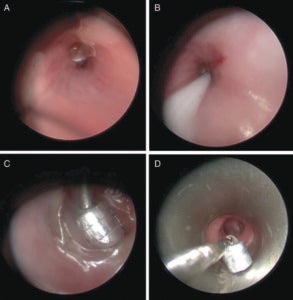
This study aimed to describe operative techniques using rigid bronchoscopy and ferromagnetic bronchoscopic equipment to retrieve magnetic foreign bodies in distal tertiary bronchi beyond the reach of traditional optical instrumentation.

Authors recommend delaying elective surgery for six to 14 months depending on patient risk factors, surgical complexity, and urgency.


Military audiologists and researchers are advancing hearing health practices to better monitor and protect service members from noise-related hearing loss and auditory difficulties. Innovations include boothless audiometry and interdisciplinary collaborations to address unique military hearing challenges.

The 2025 American Academy of Otolaryngology–Head and Neck Surgery Foundation (AAO-HNSF) guidelines update the medical and surgical management of adult rhinosinusitis, emphasizing an inflammatory understanding of chronic sinusitis and advocating for evidence-based, individualized treatment approaches.

TXA is increasingly used in otolaryngology to reduce intra-operative and post-operative bleeding, supported by evidence from emergency medicine and orthopedic surgery. Its safety profile is strong, and it is administered intravenously or orally, with emerging use in pediatric and adult otolaryngologic procedures.