• Home
  • Practice Focus
    • Facial Plastic/Reconstructive
    • Head and Neck
    • Laryngology
    • Otology/Neurotology
    • Pediatric
    • Rhinology
    • Sleep Medicine
    • How I Do It
    • TRIO Best Practices
  • Business of Medicine
    • Health Policy
    • Legal Matters
    • Practice Management
    • Technology
    • AI
  • Literature Reviews
    • Facial Plastic/Reconstructive
    • Head and Neck
    • Laryngology
    • Otology/Neurotology
    • Pediatric
    • Rhinology
    • Sleep Medicine
  • Career
    • Medical Education
    • Professional Development
    • Resident Focus
  • ENT Perspectives
    • ENT Expressions
    • Everyday Ethics
    • From TRIO
    • The Great Debate
    • Letter From the Editor
    • Rx: Wellness
    • The Voice
    • Viewpoint
    • SUO Corner
  • TRIO Resources
    • Triological Society
    • The Laryngoscope
    • Laryngoscope Investigative Otolaryngology
    • TRIO Combined Sections Meetings
    • COSM
    • Related Otolaryngology Events
  • Home
  • Practice Focus
    • Facial Plastic/Reconstructive
    • Head and Neck
    • Laryngology
    • Otology/Neurotology
    • Pediatric
    • Rhinology
    • Sleep Medicine
    • How I Do It
    • TRIO Best Practices
  • Business of Medicine
    • Health Policy
    • Legal Matters
    • Practice Management
    • Technology
    • AI
  • Literature Reviews
    • Facial Plastic/Reconstructive
    • Head and Neck
    • Laryngology
    • Otology/Neurotology
    • Pediatric
    • Rhinology
    • Sleep Medicine
  • Career
    • Medical Education
    • Professional Development
    • Resident Focus
  • ENT Perspectives
    • ENT Expressions
    • Everyday Ethics
    • From TRIO
    • The Great Debate
    • Letter From the Editor
    • Rx: Wellness
    • The Voice
    • Viewpoint
    • SUO Corner
  • TRIO Resources
    • Triological Society
    • The Laryngoscope
    • Laryngoscope Investigative Otolaryngology
    • TRIO Combined Sections Meetings
    • COSM
    • Related Otolaryngology Events
  • Search

Otolaryngologists Find Creative Ways To Offer Cancer Screening to High-Risk Populations

by Heather Lindsey • August 1, 2009

  • Tweet
  • Email a link to a friend (Opens in new window) Email
Print-Friendly Version

Consequently, in 2004, Dr. Moore began to provide oral, head and neck cancer screenings in areas of the community where these patients lived to help detect the disease early.

You Might Also Like

  • Oral Cancer Screening: A Necessary Part of Any Exam
  • HPV-Oropharyngeal Cancer Link May Affect Cancer Screening and Prognosis: The link offers potential for improved detection and prevention, but more research is needed
  • Exploring Links Between Smoking, Diet, and Oral Cancer Risk: What Should Be Message to Patients?
  • Smokeless Tobacco and Health Effects: Cancer Specialists Weigh In
Explore This Issue
August 2009

Initially, I would load up the car with just a few tools for screening, said Dr. Moore, adding that, with the help of otolaryngology and medicine residents, he provides a general oral cavity, anterior rhinoscopy, and neck exam. He eventually received a grant to fund a mobile unit, which has extended his reach to underserved areas.
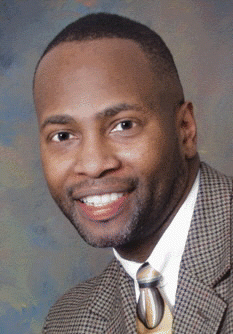
Charles Moore, MDWe were initially surprised that follow-up was that high [in underserved populations screened], but most of the patients who had come in said that no one had shown that much interest in them before, and that was the main reason they sought further care.

-Charles Moore, MD

The majority of screenings occur in homeless shelters in Atlanta. Alcohol use in homeless shelters is not allowed, noted Dr. Moore. So you can’t say whether they were using alcohol or whether it may have been underreported, he said. Tobacco use tends to be variable, as with other populations.

Dr. Moore also reaches the urban community with screenings at local health fairs, churches, and civic events.

Since the program’s inception, approximately 600 people have been screened. About 10% of these individuals had suspicious lesions, and about 75% were followed up with additional testing, said Dr. Moore.

We were initially surprised that follow-up was that high, but most of the patients who had come in said that no one had shown that much interest in them before, and that was the main reason they sought further care, he explained.

Dr. Moore is now working with several organizations to create a free medical facility where physicians will offer screening, diagnosis, and treatment for head and neck cancer.

For more information about OHANCAW, see the Head and Neck Cancer Alliance’s Web site at www.headandneck.org .

Considering HPV

Although most cases of oral, head and neck cancer are linked to tobacco and alcohol use, about 25% may be attributable to a strain of human papillomavirus (HPV), according to the American Academy of Otolaryngology-Head and Neck Surgery.

If physicians consider the prevalence of HPV, to which most people have been exposed, then ideally, everyone would be screened for oral, head and neck cancer, noted Dr. Kristen Pytynia.

While these cancers occur most often in people older than 45 years, HPV is contributing to disease development in younger populations, said Dr. Pytynia. According to the American Cancer Society, more than 6 million men and women get an HPV infection every year, and nearly half are between ages 15 and 25.

Pages: 1 2 3 4 5 6 7 | Single Page

Filed Under: Head and Neck, Medical Education Tagged With: head and neck cancer, patient satisfaction, screeningIssue: August 2009

You Might Also Like:

  • Oral Cancer Screening: A Necessary Part of Any Exam
  • HPV-Oropharyngeal Cancer Link May Affect Cancer Screening and Prognosis: The link offers potential for improved detection and prevention, but more research is needed
  • Exploring Links Between Smoking, Diet, and Oral Cancer Risk: What Should Be Message to Patients?
  • Smokeless Tobacco and Health Effects: Cancer Specialists Weigh In

Leave a Reply Cancel reply

Your email address will not be published. Required fields are marked *

The Triological SocietyENTtoday is a publication of The Triological Society.

Polls

More and more medical trainees are taking dedicated, prolonged gap years. Did you?

View Results

Loading ... Loading ...
  • Polls Archive

Top Articles for Residents

  • Is the SLOR in Otolaryngology Residency Applications Contributing to Rural Disparities?
  • Applications Open for Resident Members of the ENTtoday Editorial Board
  • A Resident’s View of AI in Otolaryngology
  • Call for Resident Bowl Questions
  • Resident Pearls: Pediatric Otolaryngologists Share Tips for Safer, Smarter Tonsillectomies
  • Popular this Week
  • Most Popular
  • Most Recent
    • Gap Year for Research: Is It Worth It?
    • What Otolaryngologists Can Learn from Athletes
    • Office Laryngoscopy Is Not Aerosol Generating When Evaluated by Optical Particle Sizer
    • What Happens to Medical Students Who Don’t Match?
    • MRI Surveillance Should Extend to 10 Years Post- Op for Vestibular Schwannoma Patients
    • The Dramatic Rise in Tongue Tie and Lip Tie Treatment
    • Rating Laryngopharyngeal Reflux Severity: How Do Two Common Instruments Compare?
    • Is Middle Ear Pressure Affected by Continuous Positive Airway Pressure Use?
    • Otolaryngologists Are Still Debating the Effectiveness of Tongue Tie Treatment
    • Complications for When Physicians Change a Maiden Name
    • Short-Term Efficacy of Biologics in Recalcitrant AFRS: A Systematic Review and Meta-Analysis
    • The Devaluation of Otolaryngology: An Evaluation of CMS’s Involvement in Physician Reimbursement
    • Embolized Middle Meningeal Artery as a Surgical Landmark in Infratemporal Fossa
    • Lord of the (Magnetic) Rings: Rigid Bronchoscopy for Aspirated Magnetic Foreign Bodies in Tertiary Bronchi
    • What Otolaryngologists Can Learn from Athletes

Follow Us

  • Contact Us
  • About Us
  • Advertise
  • The Triological Society
  • The Laryngoscope
  • Laryngoscope Investigative Otolaryngology
  • Privacy Policy
  • Terms of Use
  • Cookies

Wiley

Copyright © 2026 by John Wiley & Sons, Inc. All rights reserved, including rights for text and data mining and training of artificial technologies or similar technologies. ISSN 1559-4939