Dr. Palmer’s interest in mental skills training and its possible applicability to otolaryngology was fueled, in part, by Tiger Woods, the legendary golfer.
Explore This Issue
March 2026“What really struck me was that a lot of his wins boiled down to his mental fortitude,” Dr. Palmer said. “He entered the 2008 US Open with a broken leg and a torn ACL. He didn’t have a great start, and somehow, he clawed his way back and won the tournament.”
Dr. Palmer theorized that otolaryngologists with similar mental fortitude and focus may be better prepared to face and withstand the rigors of a modern medical career—and limited research, plus the anecdotal experiences of otolaryngologist–athletes, suggests he’s right.
“Surgery feels like a sport,” said Eric Dowling, MD, an otolaryngologist at the University of Virginia Health in Charlottesville (and former semi-pro football player) who specializes in head and neck surgical oncology and microvascular reconstruction. “It takes the same kind of technical preparation and mental fortitude as athletics does. A big part of it is being in the right headspace.”
Devoting even a small amount of time to developing your mental game can pay meaningful dividends. Deliberately incorporating mental skills training into otolaryngology education could improve the performance, longevity, and career satisfaction of the next generation of otolaryngologists. Here are a few evidence-informed mental training strategies—drawn from athletics—that you can begin applying right now.
Pre-Performance Preparation
No one gets to the Olympics, the NFL, or the operating room without a lot of practice and preparation. Repetition allows you to perfect your physical skills; certain movements and responses get encoded into muscle memory. With practice, certain skills become routine and automatic.
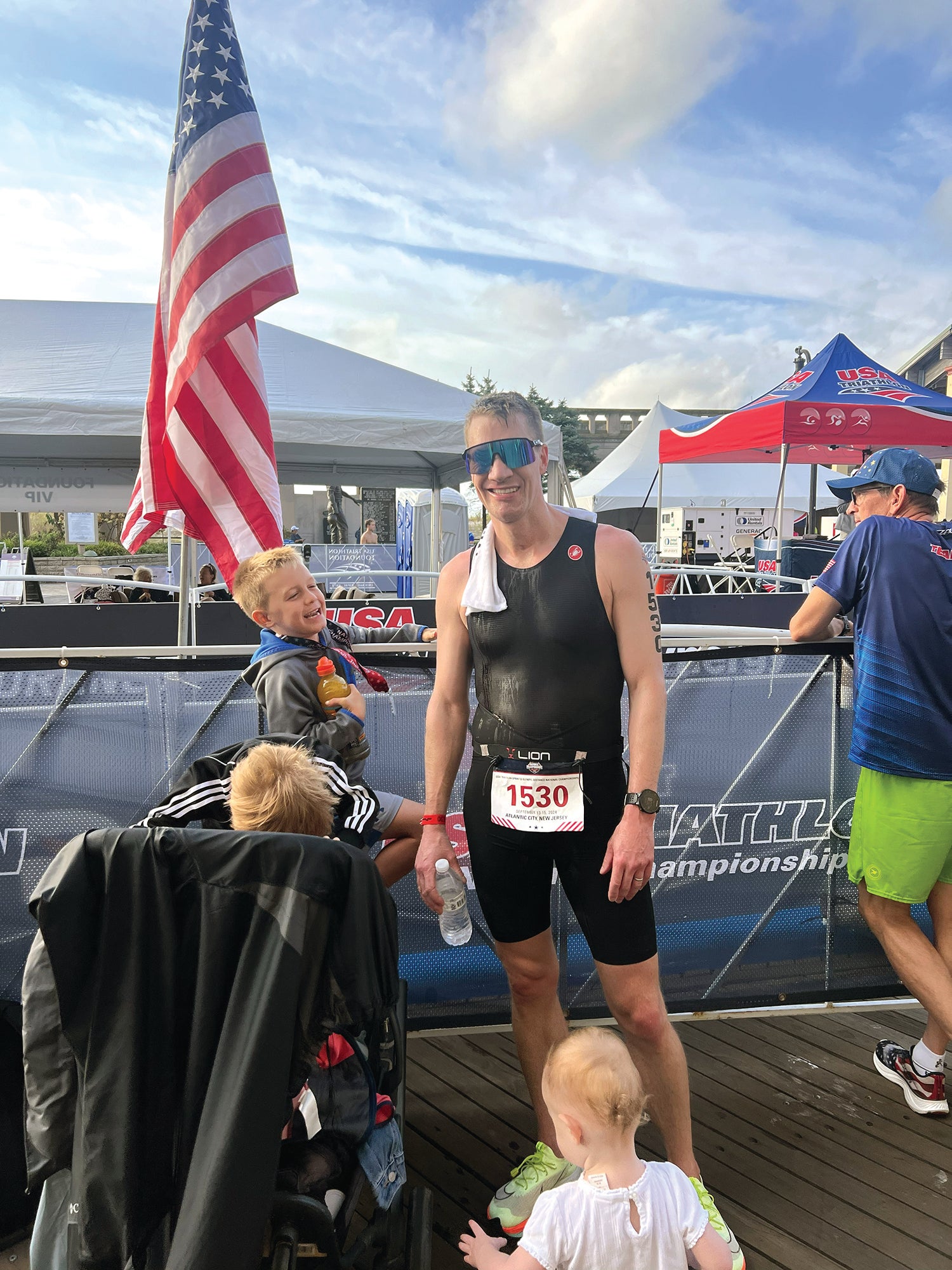
Dr. Matthew Miller is a former D1 swimmer and an elite amateur triathlete.
Athletes learn to turn off their conscious mind and allow the subconscious mind to take over during competition, said Matthew Q. Miller, MD, a former D1 swimmer and elite amateur triathlete who currently serves as director of the UNC Facial Nerve Center in Chapel Hill, N.C.
“In sports, you learn that you’ve got to have extremely intense focus during training. But when it comes to race day, you’ve just got to stop thinking. The same is true for surgery,” Dr. Miller said.
Physicians, of course, have to think during clinical encounters and surgery. Questioning and second-guessing every move, though, is counterproductive; at a certain point, you must trust your training, preparation, and plan.
Leave a Reply