• Home
  • Practice Focus
    • Facial Plastic/Reconstructive
    • Head and Neck
    • Laryngology
    • Otology/Neurotology
    • Pediatric
    • Rhinology
    • Sleep Medicine
    • How I Do It
    • TRIO Best Practices
  • Business of Medicine
    • Health Policy
    • Legal Matters
    • Practice Management
    • Tech Talk
    • AI
  • Literature Reviews
    • Facial Plastic/Reconstructive
    • Head and Neck
    • Laryngology
    • Otology/Neurotology
    • Pediatric
    • Rhinology
    • Sleep Medicine
  • Career
    • Medical Education
    • Professional Development
    • Resident Focus
  • ENT Perspectives
    • ENT Expressions
    • Everyday Ethics
    • From TRIO
    • The Great Debate
    • Letter From the Editor
    • Rx: Wellness
    • The Voice
    • Viewpoint
  • TRIO Resources
    • Triological Society
    • The Laryngoscope
    • Laryngoscope Investigative Otolaryngology
    • TRIO Combined Sections Meetings
    • COSM
    • Related Otolaryngology Events
  • Search
  • Facial Plastic/Reconstructive
  • Head and Neck
  • Laryngology
  • Otology/Neurotology
  • Pediatric
  • Rhinology
  • Sleep Medicine
  • How I Do It
  • TRIO Best Practices

Practice Focus » Pediatric

Corticosteroid Confusion: Evidence lacking for most conditions, panelists say

October 10, 2011

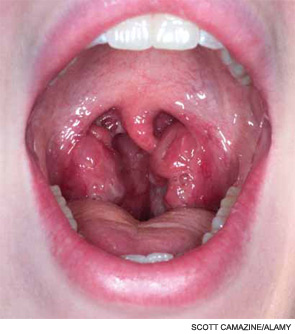
Although steroids are widely used to treat a variety of otolaryngologic conditions, the short- and long-term side effects remain a concern and fuel the need to better understand their proper role. Contributing to the ongoing controversy over their use are gaps in the evidence, panelists said here Sept. 12 at the American Academy of Otolaryngology-Head and Neck Surgery Annual Meeting.

Pages: 1 2 3 | Multi-Page

Sleep Studies Clarified: New guidelines amplify the role of PSG for children with sleep-disordered breathing

August 2, 2011

For otolaryngologists seeing increasing numbers of children with sleep-disordered breathing, whether or not to refer children for a polysomnography (PSG) prior to surgery is not a decision easily made. Currently, only about 10 percent of otolaryngologists request a sleep study in children with sleep-disordered breathing prior to surgery.

Pages: 1 2 3 4 | Multi-Page

Making the Diagnosis: Sleep expert warns about OSA risk in obese children

July 4, 2011

The most significant danger to children now is obesity, and of the many related comorbidities that affect obese children, obstructive sleep apnea (OSA) will impact a child’s life more than anything else, according to Carole Marcus, MD, an invited lecturer here last month at SLEEP 2011, the 25th Annual Meeting of the Associated Professional Sleep Societies.Dr. Marcus is a professor of pediatrics at the University of Pennsylvania and director of the sleep center at Children’s Hospital of Philadelphia.

Pages: 1 2 | Multi-Page

An Unofficial First-Line Treatment: Propranolol gains widespread use for infantile hemangiomas

July 4, 2011

Since the first report in 2008 of the effectiveness of propranolol to treat infantile hemangiomas, its use has grown among physicians who treat these tumors, which arise in 5 to 10 percent of infants. Among these infants, approximately 10 percent will require treatment to correct functional impairment or prevent lasting cosmetic deformity caused by the hemangioma.

Pages: 1 2 3 4 5 | Multi-Page

Change of Course?: Studies point to antibiotics as optimal treatment for otitis media

April 4, 2011

The question of how soon to give antibiotics to children with acute otitis media (AOM) is receiving renewed attention with the publication of two studies that show the benefit of immediate treatment over the “wait-and-see” approach recommended in the 2004 guidelines of the American Academy of Pediatrics and the American Academy of Family Physicians (AAP/AAFP).

Pages: 1 2 3 | Multi-Page

Closing the Knowledge Gap: New food allergy guidelines provide clarity to some otolaryngologists

February 28, 2011

Ronald A. Simon, MD, often illustrates a major food allergy misconception by showing a “Peanuts” cartoon of a bleary-eyed Snoopy lying atop his doghouse. “I think I’m allergic to morning,” Snoopy says.

Pages: 1 2 3 4 5 6 | Multi-Page

Tonsillectomy Revisited: New guidelines represent a clinical shift for some otolaryngologists

February 7, 2011

In its ongoing commitment to develop and practice evidence-based medicine, the American Academy of Otolaryngology-Head and Neck Surgery (AAO-HNS) recently issued a new clinical practice guideline on tonsillectomy in children.

Pages: 1 2 3 4 5 | Multi-Page

A Coping Mechanism: Child life specialists can ease hospital stays for pediatric patients

December 1, 2010

Seven-year-old Michael is scheduled to have a hemangioma removed from his face at the Arkansas Children’s Hospital (ACH) Ambulatory Surgery Center in Little Rock. The morning of surgery, he and his mother meet with child life specialists Cassandra C. James, MS, CCLS, and Camille Dante, MS, CCLS, who show him pictures of the operating room. They let him play with an anesthesia mask and a pulse oximeter, and talk about what to expect when he goes to sleep.

Pages: 1 2 3 4 | Multi-Page

The End of the Food Challenge Test?: Researchers seek new ways of diagnosing food allergy

October 8, 2010

New ways of diagnosing food allergies are on the horizon, with allergy experts hoping that it might be possible one day for many patients to avoid the traditional food challenge test (FCT).

Pages: 1 2 3 | Multi-Page

Room for Improvement: Pediatric ambulatory centers could benefit from guidelines, panelists say

October 8, 2010

Pediatric ambulatory surgery centers are fast-paced, high-volume places with many of the ingredients that can contribute to safety concerns, a patient safety expert from Children’s National Medical Center (CNMC) said at the 2010 Annual Meeting of the American Academy of Otolaryngology-Head and Neck Surgery (AAO-HNS), held here Sept. 26-29.

Pages: 1 2 3 | Multi-Page
  • « Previous Page
  • 1
  • …
  • 13
  • 14
  • 15
  • 16
  • 17
  • …
  • 20
  • Next Page »

The Triological SocietyENTtoday is a publication of The Triological Society.

Polls

Do you use TXA to reduce intraoperative and post-op bleeding?

View Results

Loading ... Loading ...
  • Polls Archive

Top Articles for Residents

  • A Resident’s View of AI in Otolaryngology
  • Call for Resident Bowl Questions
  • Resident Pearls: Pediatric Otolaryngologists Share Tips for Safer, Smarter Tonsillectomies
  • A Letter to My Younger Self: Making Deliberate Changes Can Help Improve the Sense of Belonging
  • ENTtoday Welcomes Resident Editorial Board Members
  • Popular this Week
  • Most Popular
  • Most Recent
    • Office Laryngoscopy Is Not Aerosol Generating When Evaluated by Optical Particle Sizer

    • Call for Resident Bowl Questions

    • Empty Nose Syndrome: Physiological, Psychological, or Perhaps a Little of Both?

    • Ethical Obligations and Duty to Advocate for Patients in Prior Authorization for Surgery

    • The Dramatic Rise in Tongue Tie and Lip Tie Treatment

    • The Dramatic Rise in Tongue Tie and Lip Tie Treatment

    • Rating Laryngopharyngeal Reflux Severity: How Do Two Common Instruments Compare?

    • Is Middle Ear Pressure Affected by Continuous Positive Airway Pressure Use?

    • Otolaryngologists Are Still Debating the Effectiveness of Tongue Tie Treatment

    • Keeping Watch for Skin Cancers on the Head and Neck

    • Growing Use of Tranexamic Acid in Otolaryngology
    • Reconnect, Recharge, Relax, and Choose Joy This Season
    • A Resident’s View of AI in Otolaryngology
    • Faculty Mentorship of Academic Surgeons
    • CMS’ New Rule Aims to Streamline the Prior Authorization Process

Follow Us

  • Contact Us
  • About Us
  • Advertise
  • The Triological Society
  • The Laryngoscope
  • Laryngoscope Investigative Otolaryngology
  • Privacy Policy
  • Terms of Use
  • Cookies

Wiley

Copyright © 2025 by John Wiley & Sons, Inc. All rights reserved, including rights for text and data mining and training of artificial technologies or similar technologies. ISSN 1559-4939